
Your skeleton is not the inert scaffold you might imagine it to be. Bone is living tissue, constantly being broken down and rebuilt in a process called remodelling, orchestrated by two types of cells working in opposition: osteoclasts, which dissolve old bone, and osteoblasts, which build new bone. In your twenties and into your early thirties, this balance tips toward building — you are, quite literally, at peak skeletal strength. From approximately age 35 onward, the equation shifts. Resorption begins to outpace formation, and bone density begins its slow, steady, imperceptible decline. You will not feel this happening. There is no pain, no symptom, no warning. The bone simply, quietly, becomes less dense — until one day it isn’t dense enough to absorb the forces placed on it.
Cartilage, the slippery, shock-absorbing tissue that lines your joints, operates under a similar principle of quiet depletion. Unlike bone, cartilage has no blood supply and cannot regenerate once damaged. It receives nutrients only through the compression and release of movement — essentially, through being used. As people in this decade become more sedentary, spend more time sitting, and engage less in varied movement, cartilage receives less mechanical stimulus and fewer nutrients. Combined with the gradual depletion of synovial fluid that lubricates joints, this produces the creaking, stiffness, and dull aching that many people in their late thirties and forties begin to notice in their knees, hips, and lower backs — and dismiss as inevitable ageing. It is not inevitable. It is a signal, and it is addressable.
The underlying driver of both bone and cartilage decline is, again, the hormonal environment. Oestrogen plays a critical protective role in bone metabolism, suppressing osteoclast activity and preserving bone density. As women progress toward perimenopause across their forties, declining oestrogen accelerates bone loss substantially — in the years immediately following menopause, some women lose bone density at a rate of 2–4% per year. For men, declining testosterone also contributes to bone loss, though typically at a slower rate. This makes the decade between 35 and 45 the last substantial window in which either sex can meaningfully build skeletal resilience before hormonal protection is fully withdrawn.
Why this age group specifically
One of the least-discussed consequences of sedentary professional life in this age group is its effect on bone and joint health. Bones respond to mechanical loading — to the forces of impact, weight, and resistance — by signalling osteoblasts to build denser tissue. When the primary physical activity of your day is walking from your desk to your car, this stimulus is largely absent. The body interprets low mechanical loading as permission to downregulate bone-building activity. Simultaneously, prolonged sitting creates asymmetric mechanical forces on the spine, hips, and knees that stress cartilage unevenly and promote inflammatory pathways in joint tissue. The modern office worker’s body is, from a skeletal perspective, in slow decline from the middle of the fourth decade of life.
Warning signs to watch for
⚠ Warning signs
- Morning joint stiffness lasting more than 20–30 minutes — a common early sign of degenerative joint changes
- Persistent knee, hip, or lower back discomfort that worsens with prolonged sitting or standing
- A history of stress fractures or fractures from low-force impacts — a red flag for compromised bone density
- Visible loss of height over time — often an underrecognised indicator of vertebral bone changes
- Muscle cramps, particularly at night — can signal calcium or vitamin D deficiency affecting bone metabolism
- A family history of osteoporosis — genetic risk significantly elevates your own baseline risk
What actually helps
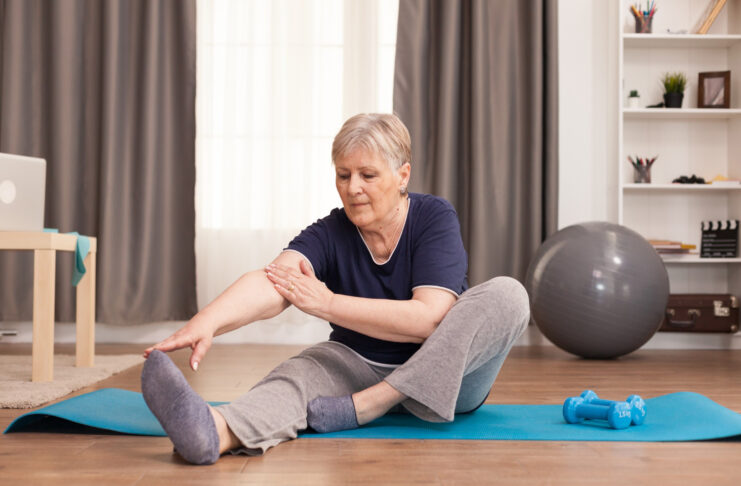
Resistance and impact exercise are the most powerful bone-protective interventions available without a prescription. Weight-bearing exercise — activities where your bones must support your body against gravity — provides the mechanical stimulus that drives osteoblast activity. Running, jumping, brisk walking, and resistance training all qualify. Studies consistently show that people who engage in regular resistance training maintain significantly higher bone mineral density than their sedentary peers, even into their sixties and seventies. For joints specifically, low-impact but varied movement — swimming, cycling, yoga, and daily walking — maintains cartilage nutrition, synovial fluid production, and the muscular support structures that reduce joint stress.
Nutritionally, calcium and vitamin D are the non-negotiables. Calcium is the primary mineral component of bone, and many adults in this age group are chronically under-consuming it. Dairy, fortified plant milks, leafy greens, almonds, and tinned sardines with bones are all excellent sources. Vitamin D is essential for calcium absorption in the gut, and deficiency is extraordinarily common in adults who work indoors — as the majority of this age group does. A serum vitamin D test is inexpensive and widely available; if your levels are low, supplementation is simple and effective. Vitamin K2 is increasingly recognised as an important co-factor that directs calcium into bone rather than into arterial tissue, and is found in fermented foods and some animal products.
Action plan checklist
✓ Action plan
- Request a DEXA scan — the gold-standard bone density test — especially if you are a woman over 40 or have risk factors
- Incorporate impact-based and resistance exercise into your weekly routine: aim for at least three sessions per week
- Ensure daily calcium intake of 1,000mg (1,200mg for women over 50); prioritise food sources over supplements where possible
- Test your serum vitamin D levels and supplement to maintain levels between 50–125 nmol/L
- Break prolonged sitting every 45–60 minutes with movement — even a two-minute walk changes joint mechanics meaningfully
- If you smoke, cessation is critical — smoking directly inhibits osteoblast activity and accelerates bone loss
The collagen and inflammation angle
There is a dimension of joint health that receives too little attention in mainstream health guidance: the role of systemic inflammation and collagen metabolism. Collagen is the primary structural protein of cartilage, tendons, and ligaments, and its production declines with age and under chronic inflammatory conditions. Diets high in refined sugar, processed meat, and seed oils promote inflammatory cytokines that accelerate cartilage degradation and suppress collagen synthesis. Conversely, diets rich in omega-3 fatty acids — from oily fish, walnuts, and flaxseed — have measurable anti-inflammatory effects on joint tissue. Some research supports the use of collagen peptide supplementation taken with vitamin C to support cartilage repair, though the evidence is still emerging. What is unambiguous is this: chronic, low-grade inflammation is one of the most destructive forces acting on your joints in this decade, and addressing it through diet is both the most accessible and most powerful tool at your disposal.

