
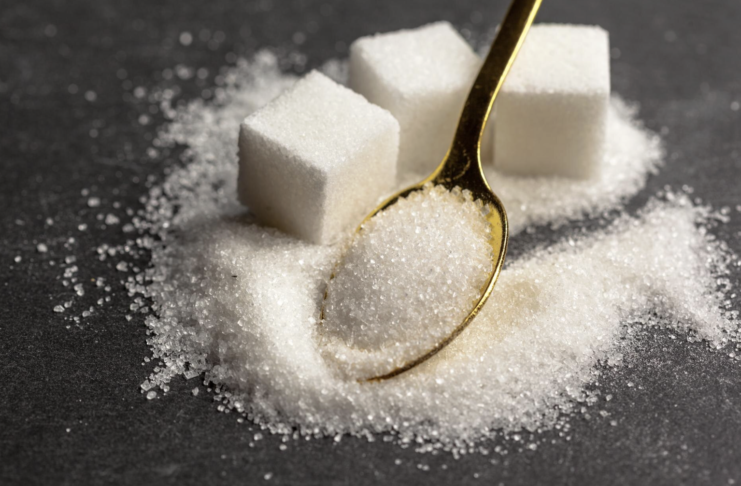
The slow, invisible damage of everyday sugar consumption is quietly wrecking your skin, joints, and energy — and most people have no idea.
KEY STATISTICS
- Advanced glycation end-products (AGEs) accumulate up to 3.5 times faster in people who consume high-sugar diets, according to research published in the Journal of Clinical Endocrinology & Metabolism.
- Adults aged 35–45 consume an average of 17 teaspoons of added sugar daily — more than double the American Heart Association’s recommended limit, per CDC data.
- A 2023 study in JAMA Dermatology linked high dietary sugar intake to accelerated skin aging, including loss of elasticity and increased wrinkle depth in adults under 50.
You eat reasonably well — or at least, you think you do. But if you’re 35 to 45 and noticing that your skin looks duller, your joints ache more than they should, and your energy crashes mid-afternoon no matter how much sleep you get, there’s a process quietly happening inside your body that most doctors don’t mention at annual checkups. It’s called glycation, and your daily sugar intake — even the so-called healthy kind — may be accelerating it right now.
What Glycation Does Inside
When you consume sugar, some of it doesn’t get burned for fuel or stored efficiently. Instead, it binds to proteins and fats in a chemical reaction called glycation, producing harmful compounds known as advanced glycation end-products, or AGEs.
AGEs are not a minor inconvenience. They stiffen collagen fibers, damage elastin in the skin, inflame joint tissue, and interfere with cellular repair mechanisms that your body depends on to stay functional and resilient.
Over time, AGEs accumulate faster than your body can clear them. The result is a kind of internal rusting — tissues become less supple, inflammation becomes low-grade but chronic, and the signals that regulate energy and mood grow increasingly erratic.
What makes this particularly insidious is that the damage is cumulative and largely invisible for years. By the time you notice the external signs — stiff mornings, persistent fatigue, skin that seems to have aged overnight — the glycation process has typically been underway for a decade.
Why Your Thirties Change Everything
Between the ages of 35 and 45, your body’s natural ability to neutralize AGEs begins to decline. Cellular repair pathways slow, antioxidant enzyme production drops, and your metabolism becomes less efficient at processing glucose quickly — all of which allow AGEs to build up faster than in your twenties.
Hormonal shifts compound the problem. Declining estrogen and testosterone — even subtle early changes well before menopause or andropause — reduce collagen synthesis and impair the inflammatory regulation that would otherwise help your tissues bounce back.
This is also the decade when dietary habits formed in your twenties start showing structural consequences. The Friday pizza and nightly glass of juice that once seemed harmless are now interacting with a body that no longer has the same metabolic buffer it once did.
Warning Signs to Watch
- Skin that appears dull, less firm, or more wrinkled than expected for your age — especially around the jawline and under the eyes
- Joint stiffness in the morning that takes longer than 20–30 minutes to ease, particularly in the knees, fingers, or lower back
- Persistent mid-afternoon energy crashes that occur 1–2 hours after eating, even after a seemingly balanced meal
- Frequent low-grade inflammation symptoms — unexplained puffiness, skin redness, or minor digestive discomfort after meals
- Brain fog or difficulty concentrating that worsens throughout the day and correlates with higher-carbohydrate meals
Diet and Lifestyle Changes That Help
The most effective dietary intervention is reducing added sugar to below 25 grams per day — the AHA’s recommended ceiling for women, with 36 grams for men. This means auditing not just obvious sources like desserts and soda, but hidden ones: flavored yogurts, protein bars, bottled salad dressings, and fruit juices that many people consider health foods.
Pairing carbohydrates with fiber, protein, or healthy fat dramatically slows glucose absorption and reduces the glycation spike that follows a meal. Swapping a banana eaten alone for a banana with almond butter, or choosing whole grain bread over white, creates a meaningfully different glycemic response in your tissues.
Exercise plays a direct anti-glycation role, not just a caloric one. Resistance training and aerobic exercise both improve insulin sensitivity, meaning your cells absorb glucose more efficiently and leave less free sugar circulating in your bloodstream to trigger AGE formation.
Antiglycation nutrients found in food can also offer meaningful protection. Carnosine, found in beef and chicken, directly inhibits AGE formation. Polyphenols in green tea, berries, and dark chocolate help neutralize existing AGEs.
Vitamins B1 and B6, found in whole grains and legumes, act as natural AGE inhibitors at the cellular level.
Your Anti-Glycation Action Plan
- Read ingredient labels and eliminate products with added sugar listed in the first four ingredients — this single habit removes the highest-glycation offenders from your daily diet
- Adopt a ‘pair your carbs’ rule at every meal: always combine starchy or sweet foods with a protein or fat source to blunt the glucose spike
- Swap one high-sugar item per week with a whole-food alternative — flavored oats for plain oats with berries, juice for whole fruit, sweetened yogurt for plain Greek yogurt with honey
- Add two resistance training sessions per week to your routine — even 30 minutes twice weekly significantly improves insulin sensitivity and reduces circulating glucose levels
- Incorporate one cup of green tea daily and increase berry consumption to at least three servings per week to support your body’s natural AGE-clearing mechanisms
The Stress and Sleep Factor
One of the most overlooked drivers of glycation in this age group isn’t dessert — it’s stress. When cortisol rises chronically, it triggers gluconeogenesis, a process where your liver releases stored glucose into the bloodstream even when you haven’t eaten anything sugary at all.
This means that a high-stress lifestyle at 35 to 45 can create a glycation burden that mirrors a high-sugar diet, independent of what you’re actually eating. Managing cortisol through sleep, exercise, and nervous system regulation isn’t a wellness luxury — it’s a direct intervention against internal aging.
Sleep deprivation amplifies this further. Studies published in the journal Sleep show that just five nights of restricted sleep significantly impairs glucose metabolism in otherwise healthy adults, effectively pushing your blood sugar behavior toward a pre-diabetic pattern. Prioritizing seven to nine hours of sleep per night is one of the most evidence-backed anti-glycation strategies available to you — and it costs nothing.
Bottom Line
Sugar’s damage isn’t dramatic or immediate — it’s quiet, cumulative, and accelerating in ways that show up on your face, in your joints, and in your energy levels long before any blood test flags a problem. At 35 to 45, your metabolic buffer is narrowing, which means the dietary and lifestyle choices you make now will determine how your body feels and functions at 55 and beyond. Reducing added sugar, pairing carbohydrates intelligently, training consistently, and protecting your sleep are not optional upgrades — they are the core interventions that slow the clock from the inside out.
Always consult a qualified healthcare provider before making changes to your health routine.
Sources
- Dietary advanced glycation end-products and their role in health and disease — Journal of Clinical Endocrinology & Metabolism
- Added sugars and cardiovascular disease risk in adults: A scientific statement — American Heart Association / Circulation
- Dietary sugar and skin aging: association with collagen degradation markers — JAMA Dermatology
- Sleep restriction impairs glucose metabolism and insulin sensitivity in healthy adults — Sleep (Oxford Academic Journal)
- Cortisol and glucose dysregulation: mechanisms and metabolic consequences — Journal of Clinical Investigation

