
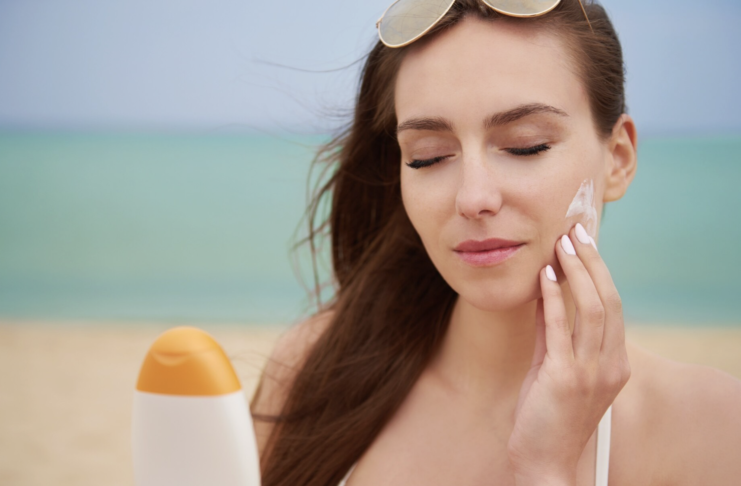
The bottle promising protection may be making your dark patches darker — here’s what dermatologists want you to switch to.
KEY STATISTICS
- Melasma affects up to 35% of women aged 35–45, with hormonal fluctuation identified as the primary trigger — Journal of the American Academy of Dermatology.
- Oxybenzone, a chemical UV filter found in over 70% of U.S. sunscreens, has been detected in blood within two hours of application and flagged as a potential endocrine disruptor — FDA 2020 Sunscreen Study.
- Women with melasma who switched from chemical to mineral sunscreen reported a measurable reduction in pigmentation recurrence within 12 weeks — International Journal of Dermatology.
You apply sunscreen every morning because you know UV exposure worsens melasma — and yet the patches keep darkening anyway. It may not be the sun failing you. It may be the very product you’re trusting to protect your skin.
Why Chemical Filters Backfire
Most mainstream sunscreens rely on chemical UV filters — compounds like oxybenzone, avobenzone, octinoxate, and homosalate — that work by absorbing UV radiation and converting it into heat within the skin. The problem is that these molecules do not simply sit on the surface. Research published by the FDA confirmed that multiple chemical filters absorb systemically into the bloodstream at concentrations far exceeding safe thresholds after a single day of use.
For women managing melasma, this matters enormously. Melasma is driven by melanocytes — the pigment-producing cells — becoming overactive in response to UV light, heat, and crucially, hormonal signals. Chemical filters that mimic or disrupt estrogen signaling can feed exactly the hormonal environment that triggers melanocyte overactivity.
Oxybenzone in particular has been classified as a potential endocrine disruptor, meaning it can interfere with hormone receptor activity. When a woman over 35 already has fluctuating estrogen levels, adding a daily estrogenic compound to the skin creates a compounding effect that dermatologists are increasingly taking seriously.
Your 35–45 Hormonal Window
Women between 35 and 45 occupy a particularly vulnerable hormonal window. Perimenopause can begin as early as 35, bringing erratic estrogen surges that prime melanocytes to overreact to even minor UV exposure.
This is the decade when melasma most frequently appears or worsens for the first time. The combination of declining progesterone, fluctuating estrogen, and daily use of hormonally active chemical sunscreen filters creates a three-way trigger that many women — and their doctors — have not yet connected.
Adding heat to the equation makes it worse. Chemical sunscreens absorb UV and release it as thermal energy directly into the skin. Visible light and heat are independent triggers for melasma, meaning a chemical sunscreen can darken patches even on a cloudy day spent mostly indoors near a window.
Warning Signs To Watch
- Dark patches on your upper lip, cheeks, or forehead that worsen despite consistent sunscreen use
- Pigmentation that deepens in summer or during hormonal shifts such as your cycle, or after starting new contraception
- Patches that feel slightly warm or inflamed after sun exposure, suggesting heat-triggered melanocyte activation
- Breakouts or milia forming under your sunscreen, which may indicate occlusion and suggest a formula that is not suited to your skin barrier
- Pigmentation that fails to respond to topical brightening treatments — a common sign that the daily trigger has not been removed
What Actually Helps Melasma
The most effective first move is replacing chemical sunscreens with mineral alternatives using zinc oxide or titanium dioxide. These filters sit on top of the skin and physically deflect both UV and visible light without absorbing into the bloodstream or releasing heat.
Dermatologists increasingly recommend tinted mineral sunscreens for melasma patients specifically. The iron oxide pigments in tinted formulas block visible light — the blue and red wavelengths that chemical sunscreens do not address — which is a meaningful advantage since visible light independently triggers melanin production.
Beyond sunscreen, managing internal hormone balance supports the skin. Women in their late 30s and early 40s benefit from talking to their GP or gynecologist about estrogen levels, particularly if melasma appeared or worsened after starting hormonal contraception.
Diet plays a supporting role. Foods rich in antioxidants — particularly vitamin C, niacinamide, and polyphenols — help calm the inflammatory signaling that activates melanocytes. Reducing alcohol, which is metabolized in ways that influence estrogen clearance, can also reduce hormonal skin triggers over time.
Your Melasma Action Plan
- Audit your sunscreen label: if it lists oxybenzone, octinoxate, avobenzone, or homosalate, replace it with a zinc oxide or titanium dioxide mineral formula
- Choose a tinted mineral sunscreen with iron oxides for full-spectrum visible light and UV protection — this is the dermatologist-preferred standard for melasma
- Apply sunscreen as the final step of your morning routine, using enough to cover your full face and neck (a quarter teaspoon is the clinical benchmark)
- Reapply every two hours when outdoors and wear a wide-brimmed hat — mineral filters degrade faster in direct sun than chemical alternatives
- Book a hormone panel with your GP if your melasma worsened after starting hormonal contraception or during perimenopause — addressing the internal trigger is as important as the topical one
Screens Are Also Triggering You
One factor almost no one discusses is the role of blue light from screens in feeding melasma. Research from the Journal of Investigative Dermatology found that visible light — including the high-energy visible light emitted by phones, tablets, and monitors — stimulates melanin production in people with darker skin tones and in those already prone to melasma.
This means your morning sunscreen applied before a day at your desk offers limited protection from the device six inches from your face. Only tinted mineral sunscreens with iron oxides block this wavelength range effectively. If you spend more than four hours a day in front of a screen, this is not a minor variable — it may be the reason your melasma is not clearing despite every other effort.
Stress compounds this further. Cortisol elevation directly stimulates melanocyte-stimulating hormone (MSH), which tells melanocytes to produce more pigment. Women in high-stress phases of life often notice their melasma worsening simultaneously with burnout, not just sun exposure — and no sunscreen, mineral or chemical, addresses that upstream trigger.
Bottom Line
If your melasma persists despite diligent sun protection, the most likely culprit is the type of sunscreen you are using, not the frequency. Switching to a tinted mineral formula with zinc oxide blocks UV, heat, and visible light simultaneously — and removes the hormonally active chemical filters that may be silently feeding your pigmentation from within.
Always consult a qualified healthcare provider before making changes to your health routine.
Sources
- Sunscreen Drug Products for Over-the-Counter Human Use: Proposed Rule — U.S. Food and Drug Administration, Federal Register 2020
- Melasma: A Review of the Basic Science and Treatment Options — Journal of the American Academy of Dermatology
- Visible Light and Pigmentation: New Evidence for Melanocyte Stimulation — Journal of Investigative Dermatology
- Mineral vs Chemical Sunscreens in Melasma Management — International Journal of Dermatology
- Endocrine Disruption and Dermatological Implications of UV Filters — Environmental Health Perspectives

