
*Why cutting through trending diets and AI promises matters most for your 40s*
KEY STATISTICS
- Active nutrition — combining smart eating with movement — becomes harder to sustain when overwhelmed by conflicting wellness advice.
- GLP-1 medications and AI-driven diet apps are reshaping how people think about nutrition, yet foundational habits often get overlooked.
- Adults in their late 30s and 40s report nutrition decision fatigue as a major barrier to consistent healthy eating.
You’ve probably noticed the noise: a new AI app promising to decode your metabolism, headlines about GLP-1 drugs transforming weight, influencers swearing by the latest macro ratio. By your 40s, you’ve lived through enough wellness fads to know something is off. The real issue isn’t that these tools are all useless — it’s that they distract from what actually works: simple, repeatable nutrition tied to movement.
This article cuts through the clutter and shows you how to build an approach that lasts.
Why Basic Nutrition Never Goes Out
Your body’s nutrient needs don’t change dramatically with trends, but how you absorb and use nutrients does shift subtly in your 40s. Metabolism slows slightly, muscle breakdown accelerates without consistent resistance work, and your gut efficiency can decline if microbiota balance isn’t maintained. The science behind durable nutrition remains unchanged: adequate protein, whole foods, regular movement, and hydration form the foundation — not exotic supplements or algorithm-optimized meal timing.
- Protein synthesis efficiency drops 1-2% per decade after 30; maintaining muscle requires consistent protein intake and strength work, not trendy powders.
- Whole foods deliver fiber, micronutrients, and phytocompounds AI apps cannot quantify; processed optimization misses what whole foods provide.
- Microbiota diversity depends on fiber variety and fermented foods, not probiotic strains marketed as panaceas — foundation beats supplementation.
- Movement amplifies nutrient absorption and metabolic flexibility far more than meal timing; active eating (nutrition paired with motion) is the real strategy.
Why Your 40s Are Different
Your 40s represent a critical inflection point: accumulated dietary habits start showing metabolic consequences, recovery from poor nutrition slows, and decision fatigue makes you vulnerable to oversimplified promises. The irony is that just when your body needs the most consistency, the wellness industry offers the most complexity.
- Metabolic adaptation deepens; years of restrictive dieting or erratic eating become harder to reverse without sustained behavioral change.
- Insulin sensitivity begins declining if sedentary habits persist; this makes simple carbohydrate choices more impactful than macronutrient tinkering.
- Recovery capacity drops; eating poorly one week takes longer to correct; consistency matters more than perfection.
- Hormonal shifts (estrogen in women, testosterone gradual decline in men) make nutrient density and strength-building nutrition non-negotiable.
Signs You Need a Nutrition Reset
- You can name five trendy diets you’ve tried but can’t sustain eating habits from any of them for more than six weeks.
- Your energy crashes mid-afternoon despite eating breakfast; likely indicator of blood sugar dysregulation or insufficient protein at earlier meals.
- You rely on supplements or meal-replacement shakes more than whole foods; sign that nutrient density and food literacy need rebuilding.
- You’ve gained 10+ pounds in the last two years despite no major life change; metabolic drift from reduced movement or creeping portion sizes.
- You feel bloated or have unpredictable digestion; suggests microbiota imbalance or food choices misaligned with your actual tolerance.
- You track calories obsessively but feel hungrier than ever; indicates calorie reduction without adequate protein or satiety-building nutrients.
- You struggle to stay full between meals; often a sign of missing whole fats, adequate fiber, or protein at previous meal.
What Actually Keeps You Consistent
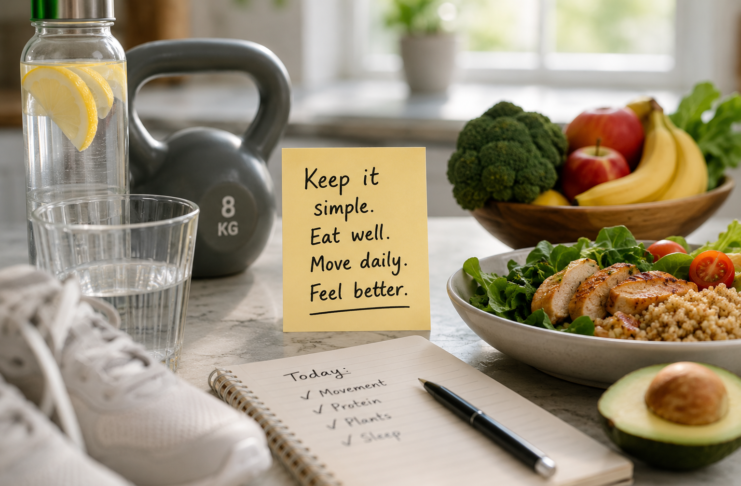
The best nutrition strategy for your 40s is boring on purpose: base meals on vegetables, lean or plant proteins, whole grains, and healthy fats — then tie that eating pattern directly to movement. Skip the AI meal planner and the algorithm-driven macros. Instead, focus on three anchors: eating protein at every meal, moving your body daily, and choosing foods you actually enjoy enough to repeat.
- Protein at every meal (20-30g per meal for most adults 40+) stabilizes blood sugar, extends fullness, and supports muscle maintenance without calorie obsession.
- Add movement to eating: walk 10-15 minutes after main meals to blunt blood sugar spikes and improve nutrient partitioning naturally.
- Build meals around foods you eat now, not foods you think you should eat; sustainability beats optimization every single time.
- Embrace ‘active nutrition’ as a mindset: combine consistent eating patterns with regular resistance training and daily movement, not isolated diet change.
Your Five-Step Action Checklist
- Write down what you actually eat for three days (no judgment); identify one repeated meal you like and build that as your anchor breakfast or lunch.
- Add 20-30g protein to every meal starting tomorrow; choose the easiest source for you (eggs, Greek yogurt, canned tuna, cottage cheese, lentils).
- Commit to 20 minutes of movement on six days this week; walking, strength training, or swimming — choose something you’ll actually do.
- Remove one ‘trend’ you’re currently following (special supplement, meal timing rule, macro calculator app); notice if anything changes after two weeks.
- Schedule one meal per week where you eat intuitively without tracking; use hunger and fullness as feedback, not guilt as motivation.
Sleep and Stress Shape Eating Choices
Sleep quality and stress management underpin nutrition effectiveness more than most people realize. Poor sleep erodes willpower, increases hunger hormones, and makes consistent eating harder — yet it rarely appears in trendy nutrition advice. If you’re eating well but still tired or struggling with cravings, sleep and stress are likely the real barriers.
- Sleep debt increases ghrelin (hunger hormone) and lowers leptin (satiety signal); seven to nine hours is non-negotiable for stable appetite.
- Chronic stress raises cortisol, which promotes visceral fat storage and sugar cravings; no diet fixes this without addressing stress source.
- Morning sunlight and evening wind-down routines improve sleep quality faster than any supplement; implement these before adding melatonin or magnesium.
- Movement reduces both stress and improves sleep architecture; a 30-minute walk outdoors often achieves what a trending supplement cannot.
Bottom Line
The simplest nutrition approach is also the most effective: eat whole foods with protein, move daily, sleep well, and manage stress. You don’t need AI to tell you what to eat, a new macro ratio, or a supplement stack. By your 40s, you’ve intuited what works — trust that instinct, eliminate the noise, and double down on consistency.
The wellness industry profits from complexity; your health depends on clarity.
Live Long Daily — always consult a qualified healthcare provider before making changes to your health routine.
Sources
- NutraCast: BODi CEO on keeping active nutrition simple amid AI, GLP-1s and wellness trends — NutraIngredients.com
- General guidance on nutrition and metabolic health — Mayo Clinic
- Protein and muscle health across the lifespan — NIH

