
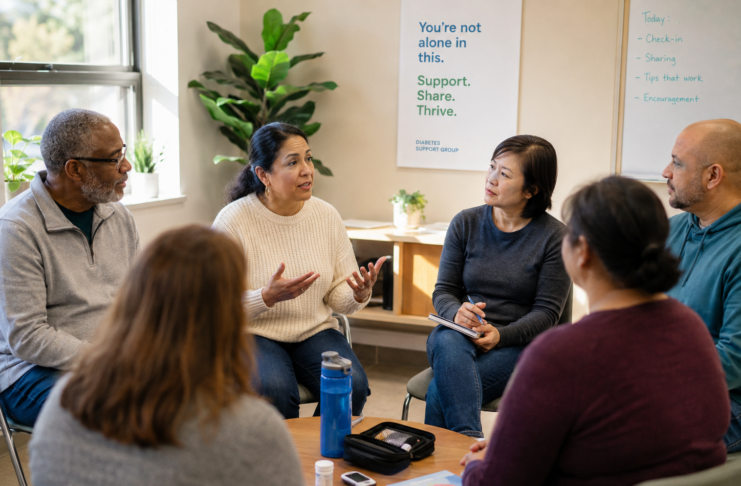
Connection and practical strategies reduce isolation and improve long-term blood sugar control
KEY STATISTICS
- Adults living with diabetes report significantly lower depression and anxiety when regularly connected to peer support
- People who attend support groups show better medication adherence and self-monitoring habits than those managing alone
- Social isolation increases diabetes-related complications by elevating stress hormones that worsen blood sugar control
Managing diabetes alone is exhausting. You’re tracking carbs, monitoring blood sugar, adjusting medication, and worrying about complications—often without anyone around you truly understanding what that burden feels like. Support groups exist for exactly this reason: to connect you with people navigating the same daily battles.
Research consistently shows that structured peer support doesn’t just ease the emotional weight; it actually improves health outcomes, reduces hospitalizations, and helps you stay consistent with the strategies that matter most.
How Social Connection Affects Blood Sugar
Diabetes is more than a metabolic condition—it’s a chronic stressor that affects your nervous system, hormone balance, and emotional health. When you’re managing it in isolation, stress hormones like cortisol actually worsen blood sugar control, creating a feedback loop that makes management harder. Support groups interrupt this cycle by providing accountability, practical problem-solving, and the psychological relief that comes from feeling understood.
- Chronic stress from isolation elevates cortisol, which directly raises fasting glucose and insulin resistance
- Peer support reduces anxiety and depression, both of which destabilize blood sugar levels and medication effectiveness
- Shared coping strategies help members identify barriers earlier and adjust habits before problems escalate
- Regular connection strengthens adherence to medication, diet, and monitoring—the three pillars of control
Why This Age Matters Most
Adults aged 35 to 45 often face a unique pressure: managing diabetes while juggling career demands, family responsibilities, and aging parents. This middle-stage life phase is when complication risks begin rising, yet many people delay seeking support out of shame, busy schedules, or the false belief that they should manage alone. Your risk for complications and burnout is highest right now—exactly when peer connection matters most.
- By 35–45, uncontrolled diabetes begins showing signs of long-term damage to nerves, blood vessels, and kidneys
- Work and family stress peak during these years, making solo management emotionally and physically exhausting
- Burnout—feeling tired of constant self-care—becomes more common and directly worsens blood sugar control
- Many people this age have prediabetic or newly diagnosed adult-onset relatives, expanding your support role at home
Warning Signs You Need Support
- Skipping blood sugar checks because tracking feels pointless or overwhelming
- Eating inconsistently or binge eating as an emotional response to frustration with your condition
- Feeling ashamed, isolated, or disconnected from non-diabetic friends and family
- Blood sugar readings becoming erratic despite consistent medication use, signaling stress-driven dyscontrol
- Avoiding doctor appointments or delaying medication refills due to denial or emotional avoidance
- Experiencing persistent anxiety about complications or future health outcomes
- Managing your condition entirely alone with no one in your life who understands what you’re dealing with
What Support Groups Teach You
Support groups work because they combine emotional validation with actionable strategies. Members share meal-planning tips, exercise modifications, medication side-effect solutions, and mental-health approaches that most doctors simply don’t have time to discuss. The practical benefit is real: you learn what actually works for people like you, not just generic medical advice.
- Meal and carb-counting strategies from people who’ve solved the same obstacles you face daily
- Exercise routines adapted to your energy levels and insulin timing—not one-size-fits-all fitness advice
- Stress-management and emotional-regulation tools specifically designed for chronic disease management
- Navigation strategies for family dynamics, workplace discussions, and social eating situations with diabetes
Action Plan Checklist
- Search for local diabetes support groups through your doctor, hospital endocrinology department, or community health center
- If in-person feels uncomfortable, try online support groups (many diabetes organizations offer virtual meetings with healthcare facilitators)
- Attend at least three meetings before deciding if a group fits—the right community takes trial and adjustment
- Look for groups led or monitored by certified diabetes educators or mental health professionals, not just peer-led
- Set a specific commitment: attend monthly, bi-weekly, or weekly depending on your current stress level and control
- Bring one question or concern to your first meeting—listening first, sharing later, reduces anxiety
- Ask about support groups for partners or family members; managing diabetes is a household experience
The Overlooked Power of Belonging
The loneliness factor deserves special attention. Unlike managing high blood pressure or cholesterol, diabetes is intensely personal—every meal, every stress spike, every sick day forces you to think about your condition. Partners and friends who don’t have diabetes often minimize the daily burden or offer oversimplified advice.
Support groups restore your sense of belonging in a way that individual therapy or even family support sometimes cannot.
- Members normalize the emotional labor of diabetes—shame and frustration decrease when others validate your struggle
- You learn that ‘imperfect’ blood sugar control is normal, reducing the perfectionism that drives burnout and avoidance
- Regular contact with others reduces the cognitive burden of always being ‘the sick one’ in your regular social circles
- Friendships formed in groups often extend beyond meetings, creating lasting accountability partners and genuine peers
Bottom Line
Support groups are not a replacement for medical care, but they are a proven complement that addresses the emotional, social, and practical gaps that medication and doctor visits alone cannot fill. For adults aged 35 to 45 managing diabetes, this is the phase when complications begin, burnout peaks, and isolation hits hardest. A support group—whether in-person or online, professionally facilitated or peer-led—can be the difference between struggling alone and managing with confidence, community, and real strategies that work.
The investment of a few hours per month often pays back in better blood sugar control, lower stress, and the simple human relief of being truly understood.
Live Long Daily — always consult a qualified healthcare provider before making changes to your health routine.
Sources
- Support groups offer help, connection for people living with diabetes — WIBW
- General guidance on diabetes management and complications — CDC
- Chronic disease self-management and psychosocial support — Mayo Clinic

