
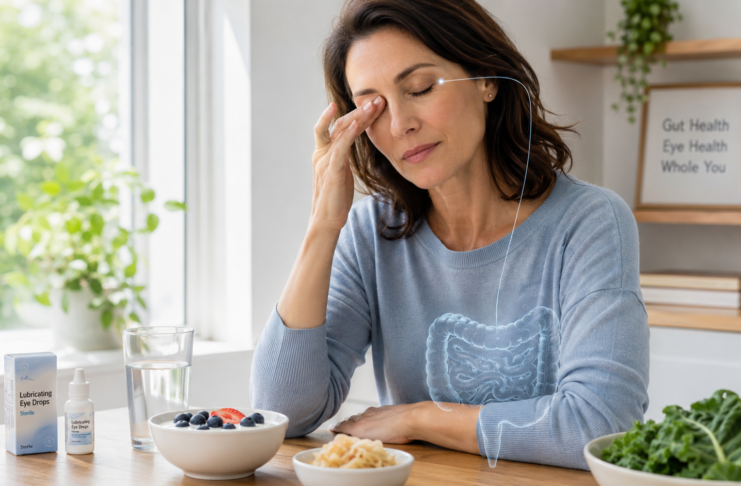
*How microbiota imbalance drives inflammation on your ocular surface—and what to eat to reverse it*
KEY STATISTICS
- Dry eye disease affects approximately 5–50% of adults globally, with prevalence rising sharply after age 35.
- The ocular surface microbiota directly influences tear film stability and immune function at the eye.
- Dietary patterns that support healthy gut bacteria show measurable effects on ocular surface inflammation within weeks.
You’ve noticed your eyes feel gritty by afternoon, or they water unexpectedly—classic dry eye. You’ve tried rewetting drops, but the relief never sticks. What most people don’t realize is that your eye’s health depends partly on bacteria living miles away, in your gut.
Recent research reveals that the community of microorganisms in your intestinal tract directly influences inflammation, immune tolerance, and tear production at your ocular surface. This isn’t abstract biology—it’s a concrete link between what you eat and whether your eyes stay comfortable.
The Microbiota-Eye Connection
Your eyes aren’t isolated from the rest of your body. The ocular surface—your cornea, conjunctiva, and tear gland tissue—hosts its own microbial community and connects to systemic immunity through shared mucosal pathways. When your gut microbiota is unbalanced (a condition called dysbiosis), it triggers a cascade of inflammatory signals that reach your eyes.
- Dysbiotic gut alters intestinal barrier integrity, allowing bacterial lipopolysaccharides (LPS) to enter circulation and activate eye tissue inflammation.
- Healthy gut bacteria produce short-chain fatty acids (especially butyrate) that suppress inflammatory T cells and stabilize the ocular immune system.
- The ocular surface itself maintains a distinct microbiota; imbalance here directly reduces antimicrobial peptides and destabilizes the tear film.
- Dysbiosis reduces diversity of bacterial species, weakening the protective effect of commensals against pathogenic overgrowth.
Why Your 30s and 40s Are Critical
Adults aged 35–45 face a perfect storm: metabolic shifts slow nutrient absorption, hormonal changes affect tear gland function, and accumulated years of processed-food diets have already altered microbiota diversity. This is the window when dry eye symptoms often first appear—or worsen markedly.
- Microbiota diversity naturally declines with age; processing high-sugar, low-fiber diets accelerates this loss in midlife.
- Reduced estrogen and androgen levels in this age range impair meibomian gland function, while dysbiosis worsens inflammation—a dual hit to tear stability.
- Cumulative oxidative stress and chronic low-grade inflammation (‘inflammaging’) intensify the microbiota-ocular surface axis dysfunction.
- Years of antibiotic use, stress-driven dysbiosis, and sedentary habits compound microbiota damage before symptoms become severe.
Watch for These Signs
- Persistent grittiness, foreign-body sensation, or burning that worsens toward evening despite frequent artificial tears.
- Eyes that water excessively during wind, bright light, or screens—paradoxical tearing from ocular surface irritation.
- Red, inflamed conjunctiva with no obvious allergy or infection; often accompanied by fatigue or digestive bloating.
- Blurred vision that fluctuates throughout the day, correlating with eating patterns or stress levels.
- Simultaneous digestive symptoms (bloating, irregular stools, or food sensitivities) alongside eye discomfort.
- Difficulty tolerating contact lenses that previously fit comfortably; ocular surface becoming more reactive.
What Diet and Lifestyle Help
Eating to support your microbiota isn’t about trendy ‘superfoods’—it’s about feeding the bacteria that protect your eyes. Fiber-rich, fermented, and polyphenol-dense foods rebuild microbial diversity and reduce intestinal permeability. These changes have cascading effects on systemic inflammation within weeks.
- Increase soluble and insoluble fiber to 30–40 g daily (legumes, whole grains, vegetables) to feed beneficial butyrate-producing bacteria.
- Add fermented foods (unsweetened yogurt, kefir, sauerkraut, kimchi, miso) regularly to introduce live cultures and strengthen intestinal barrier.
- Consume polyphenol-rich foods (berries, dark leafy greens, olive oil, tea, dark chocolate) to promote bacterial taxa associated with lower inflammation.
- Reduce refined sugars, ultra-processed foods, and excessive alcohol—all accelerate dysbiosis and ocular surface inflammation.
Your 4-Week Action Plan
- Week 1: Audit your diet for fiber and fermented foods; identify gaps and plan one fermented food to add daily.
- Week 2: Increase fiber intake gradually (sudden jumps worsen bloating); aim for leafy greens, legumes, and whole grains at each meal.
- Week 3: Add one polyphenol-rich beverage daily (green tea, pomegranate juice) and track any change in eye comfort or redness.
- Week 4: Eliminate or drastically reduce one major processed/sugary item; observe energy, digestion, and eye symptoms over the following week.
- Ongoing: Maintain consistent fiber (30–40 g), include fermented foods 3–5 times weekly, and re-evaluate eye symptoms monthly as microbiota rebalances.
The Sleep and Stress Factor
Sleep and stress aren’t separate from microbiota health—they actively reshape your bacterial community. Poor sleep directly increases intestinal permeability and reduces anti-inflammatory bacterial strains, while chronic stress suppresses the immune regulators that keep ocular inflammation in check.
- Sleep deprivation shifts microbiota toward pro-inflammatory species; aim for 7–9 hours nightly to stabilize bacterial composition.
- Chronic stress elevates cortisol, which increases intestinal permeability (‘leaky gut’) and allows endotoxins to trigger ocular surface inflammation.
- Practices like meditation, gentle exercise, or time outdoors measurably improve sleep quality and shift microbiota toward protective bacterial strains.
Bottom Line
Dry eyes often feel like a local problem requiring drops and ointment, but the root cause frequently lies in systemic microbiota imbalance and intestinal inflammation. By focusing on fiber, fermented foods, and polyphenol-rich plants over the next 4 weeks, you’re not just feeding your gut—you’re directly supporting the immune tolerance and inflammatory balance your ocular surface needs. This approach takes longer than a new eye drop, but the results are often more durable because you’re addressing the mechanism, not just the symptom.
Live Long Daily — always consult a qualified healthcare provider before making changes to your health routine.
Sources
- Nutrition and microbiota in ocular surface and dry eye disease — Archivos de la Sociedad Española de Oftalmología
- General information on dry eye disease — Mayo Clinic
- Microbiota and systemic health — NIH

