
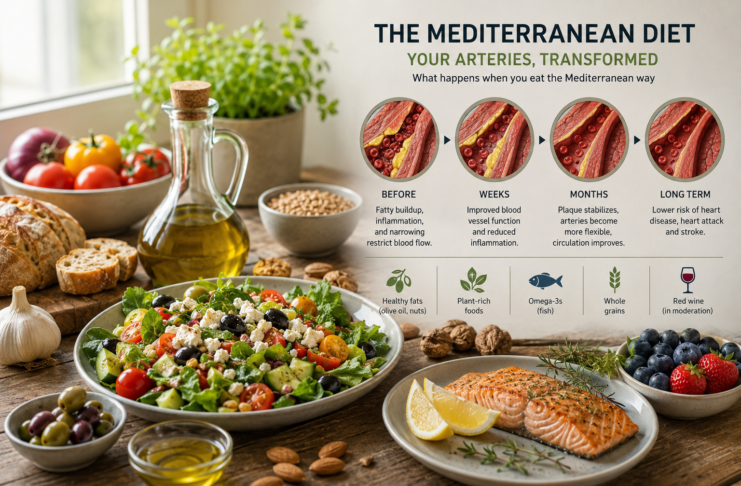
The science behind olive oil, fish, and vegetables—and how to adapt it to your life at 35-45.
KEY STATISTICS
- The Mediterranean diet emphasizes fish, olive oil, and plant foods over red meat and processed ingredients.
- This eating pattern has been associated with reduced cardiovascular risk when adopted consistently over time.
- The transition from processed Western diets to Mediterranean-style eating typically shows measurable benefits within 8-12 weeks.
You’ve heard it before: the Mediterranean diet is good for your heart. But if you’re in your late thirties or early forties, the casual recommendation might not stick. What actually happens in your arteries when you eat this way?
And more importantly, how do you make it work when you have a job, a family, and a schedule that doesn’t revolve around a leisurely dinner in southern Europe? Understanding the real mechanism—and the specific window of opportunity you have right now—changes everything.
The Science: What’s Happening Inside
The Mediterranean diet works by addressing the root causes of cardiovascular damage: inflammation in your arteries, oxidative stress in your cells, and the buildup of harmful cholesterol particles. Rather than focusing on restriction, this approach floods your body with protective compounds—polyphenols from olive oil, omega-3 fatty acids from fish, and fiber from whole grains and vegetables—that actively defend your heart tissue.
- Olive oil contains polyphenols that reduce inflammation in artery walls and improve endothelial function (the lining that keeps blood flowing smoothly).
- Fatty fish like salmon and sardines provide omega-3s that lower triglycerides and reduce blood clot risk.
- Legumes, whole grains, and vegetables supply soluble fiber that directly lowers LDL (bad) cholesterol levels.
- The pattern reduces processed food intake, eliminating refined carbohydrates and added sugars that spike inflammation markers.
Why Your Age Matters Most
Your age group sits at a critical inflection point. Cardiovascular disease doesn’t announce itself—plaque begins accumulating silently in your thirties and forties, often with no symptoms. The good news is that dietary changes made now have a dramatically larger impact than changes made later, because you still have time to reverse early damage before it becomes structural.
- Arterial plaque formation accelerates after age 35, making dietary intervention in this decade exceptionally powerful.
- Men aged 40-45 and women in perimenopause face rising cardiovascular risk due to hormonal and metabolic shifts.
- Adopting Mediterranean eating patterns now can prevent or delay the need for medication later in life.
- Early lifestyle changes compound over time—ten years of protective eating at 40 yields dramatically better outcomes than starting at 55.
Warning Signs Not to Ignore
- Shortness of breath during moderate exertion (climbing stairs, brisk walking) that wasn’t present six months ago.
- Chest discomfort, pressure, or tightness—especially during or just after meals or stress.
- Unusual fatigue or heaviness in your arms, neck, or jaw during activity.
- Irregular heartbeat or heart palpitations, particularly if accompanied by dizziness.
- Elevated resting heart rate (consistently above 80 bpm) or high blood pressure readings at home.
- Persistent bloating or digestive discomfort after fatty meals (can signal poor lipid metabolism).
- Swelling in your legs, ankles, or feet at the end of the day.
What Actually Helps: Practical Diet Changes
The Mediterranean diet isn’t a temporary fix—it’s a pattern you build into weekly shopping, cooking, and eating decisions. The barrier for most people isn’t understanding the science; it’s making the shift practical. This means identifying which Mediterranean foods you actually like, finding realistic substitutions for your current habits, and building a meal structure that fits your schedule.
- Swap red meat for fish 2-3 times weekly; frozen wild salmon or canned sardines are convenient, affordable options.
- Use extra-virgin olive oil as your primary cooking fat; aim for 2-3 tablespoons daily for polyphenol intake.
- Build meals around legumes (beans, lentils) and whole grains (oats, farro, brown rice) instead of refined carbs.
- Eat a rainbow of vegetables—aim for non-starchy options at lunch and dinner, cooked or raw.
Your Action Plan This Week
- Buy one new Mediterranean ingredient this week (quality olive oil, canned white beans, frozen fish, or dried lentils).
- Plan one fish-based dinner for next week; use a simple recipe (roasted salmon with lemon, olive oil, herbs).
- Identify your current most frequent source of red meat or processed food and replace it once weekly.
- Stock your pantry with nuts, seeds, and whole grains; keep frozen vegetables on hand for quick meals.
- Schedule a lipid panel and blood pressure check if you haven’t had one in the past year.
- Download a simple meal-planning app or use index cards to sketch three Mediterranean-style dinners for next week.
The Sleep-Stress Connection You’re Missing
Sleep and stress management often get overlooked when discussing diet, but they directly sabotage Mediterranean eating benefits. Poor sleep disrupts hunger hormones and insulin sensitivity, making you crave processed foods even when you know better. Chronic stress triggers cortisol spikes that promote visceral fat storage and inflammation—undoing the anti-inflammatory work of olive oil and fish.
- Sleep deprivation increases cravings for sugar and refined carbs by 30-40%, actively counteracting your diet shift.
- Stress-driven cortisol elevation promotes fat storage around your organs (visceral fat), which accelerates arterial inflammation.
- Aim for 7-9 hours nightly; prioritize this alongside dietary changes for cardiovascular protection.
- Breathing exercises, walking, or meditation for 10-15 minutes daily lower cortisol and reinforce Mediterranean eating adherence.
Bottom Line
The Mediterranean diet protects your heart through proven anti-inflammatory mechanisms—but only if you actually follow it. At 35-45, you have a unique window to reverse early cardiovascular damage before it becomes irreversible. Start small: swap one meal, add one new oil, embrace one fish dish.
Small shifts sustained over weeks become habits that compound into years of heart protection.
Live Long Daily — always consult a qualified healthcare provider before making changes to your health routine.
Sources
- Mediterranean diet is good for our hearts. Doctor tells us why — The Oklahoman
- General information on cardiovascular disease prevention and nutrition — CDC
- Mediterranean diet and heart health guidance — Mayo Clinic

