
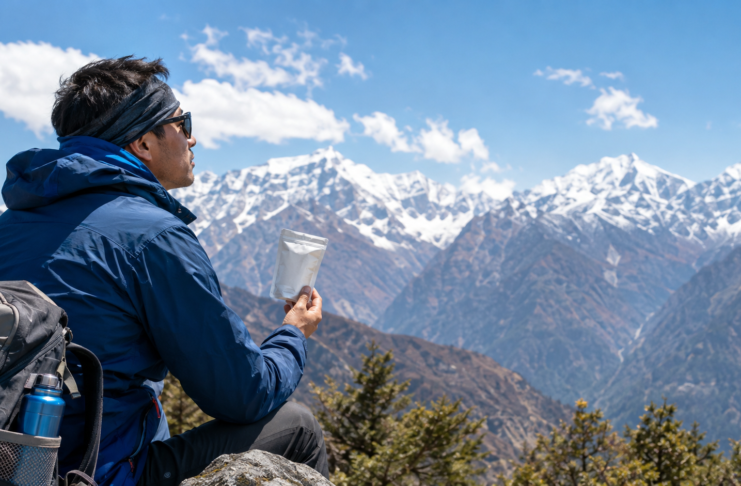
A surprising clinical finding about short-term high-altitude exposure and why popular amino acid supplements may not deliver what you’d expect.
KEY STATISTICS
- Six hours at 4,500 meters (14,760 feet) produces measurable physiological stress on the body.
- Glutamine supplementation did not significantly reduce altitude-related cognitive or physical strain in recent research.
- Most altitude-related symptoms resolve within 24-72 hours of descent or acclimatization in healthy adults.
You’ve bought the amino acid supplements. You’ve heard the promises about faster recovery at altitude. But a recent randomized controlled trial raises a hard question: what if one of the most popular nutritional interventions for high-altitude travel simply doesn’t work the way we thought?
For busy professionals aged 35 to 45 who travel to mountain destinations or exercise at elevation, this matters. Understanding what actually protects your mind and body at altitude—and what doesn’t—can save you money and help you prepare smarter.
What Happens at Altitude
When you climb to high altitude, your body faces a real metabolic challenge: less oxygen available in the air forces your cells to work harder. Short exposures—like a 6-hour stint at 4,500 meters—trigger measurable changes in oxygen saturation, heart rate, and how your brain processes information. The question researchers asked was whether supplementing with glutamine, an amino acid thought to support cellular energy and immune function, would ease that burden.
- Reduced oxygen availability forces your cardiovascular and respiratory systems into higher gear almost immediately.
- Cognitive function, mood, and physical coordination may feel altered within the first few hours of exposure.
- Glutamine is involved in cellular energy metabolism and immune response, but the body produces it naturally.
- A randomized, placebo-controlled study found no significant difference in psychological or biological markers between supplemented and non-supplemented groups after 6 hours at 4,500 m.
Why Your 40s Matter
Adults in their late 30s and 40s occupy a middle ground: younger than those experiencing age-related cardiovascular decline, but older than the 20-somethings often studied in altitude research. Your body’s oxygen-handling capacity and recovery speed are still robust, but chronic stress, fitness level, and underlying cardiovascular health begin to matter more. This age group is also more likely to travel to high-altitude destinations—ski resorts, mountain retreats, hiking expeditions—making the stakes personal.
- Cardiovascular fitness at this age is the strongest predictor of altitude tolerance; sedentary adults struggle more.
- Pre-existing conditions like hypertension or sleep apnea amplify altitude sensitivity, even over short exposures.
- Recovery from altitude stress depends partly on sleep quality and baseline hydration—both often compromised in this age group.
- Practical altitude exposure (weekend mountain trips, business travel to Denver or Mexico City) is common, making real-world risk assessment relevant.
Signs You’re Not Adapting Well
- Persistent headache, nausea, or dizziness lasting more than 2-3 hours after arrival at elevation.
- Shortness of breath during light activity (walking slowly on flat terrain) that feels disproportionate to your fitness level.
- Sleep disruption, vivid dreams, or waking frequently despite fatigue—a sign of oxygen desaturation during rest.
- Cognitive fog, difficulty concentrating, or mood changes (irritability, anxiety) beyond normal travel stress.
- Rapid or irregular heartbeat at rest, or chest discomfort—seek medical attention if present.
- Excessive fatigue that doesn’t improve after 24 hours of rest and hydration.
What Actually Protects You
The research suggests that chasing supplement solutions may distract from the fundamentals that actually work. Hydration, gradual ascent, adequate sleep, and realistic activity pacing are the pillars of altitude tolerance—not a capsule. The study’s null finding doesn’t mean glutamine is harmful; it means it’s not a shortcut for what your body needs most: time, oxygen, and smart preparation.
- Arrive a day early and spend your first evening at altitude resting, not hiking or exercising intensely.
- Drink 3-4 liters of water daily; altitude increases insensible fluid loss and dehydration worsens all symptoms.
- Avoid alcohol and sleeping pills on the first night; both suppress breathing and worsen oxygen saturation during sleep.
- Keep aerobic activity light for the first 24-48 hours; your VO₂ max is temporarily reduced at altitude.
Your Pre-Altitude Checklist
- Confirm your fitness baseline: a simple 20-minute moderate-pace walk should feel comfortable before traveling to high altitude.
- Schedule arrival one day before your main activities; use that time for hydration, light movement, and sleep.
- Pack a reusable water bottle and commit to drinking to pale urine output, not just thirst.
- Skip glutamine and pricey altitude-specific supplements; invest in quality sleep, a light meal schedule, and gradual activity progression instead.
- Monitor your heart rate and cognitive function on day one; if either feels significantly off, reduce activity and reassess on day two.
Sleep: The Overlooked Safeguard
Sleep quality plummets at altitude, and that disruption amplifies every other stress on your system. Ironically, the very supplement interventions people pursue often distract from the one intervention that moves the needle: consistent sleep in a cool, dark room. Your brain’s ability to recover from altitude-induced cognitive strain depends far more on how many hours you log than on any amino acid.
- Altitude disrupts REM and deep sleep, reducing restorative cycles—quality matters more than duration at elevation.
- Cool bedroom temperature (around 65–68°F) improves sleep consolidation and oxygen saturation during rest.
- Melatonin (0.5–3 mg taken 30–60 minutes before bed) is evidence-backed for altitude sleep and carries no known interaction with normal physiology.
- Avoid screens 30 minutes before bed; the cognitive load of planning tomorrow’s activities keeps your sympathetic nervous system engaged when you need rest.
Bottom Line
A recent clinical trial found that glutamine supplementation did not meaningfully reduce the body’s physiological or cognitive response to short-term high-altitude exposure—a sobering finding for those betting on supplements. The evidence points instead to basics: arrive early, hydrate aggressively, prioritize sleep, and pace your activity. For adults in their 40s, whose fitness and cardiovascular health vary widely, these fundamentals are more personalized and more powerful than any single supplement.
Before your next mountain trip, skip the marketing and focus on preparation.
Live Long Daily — always consult a qualified healthcare provider before making changes to your health routine.
Sources
- Six hours of hypoxia at 4500 m does not affect psychobiological parameters, regardless of glutamine supplementation: A randomized, double-masked, placebo-controlled clinical trial — Nutrition and Health
- Acute Mountain Sickness — Mayo Clinic
- High Altitude and Health — CDC

