
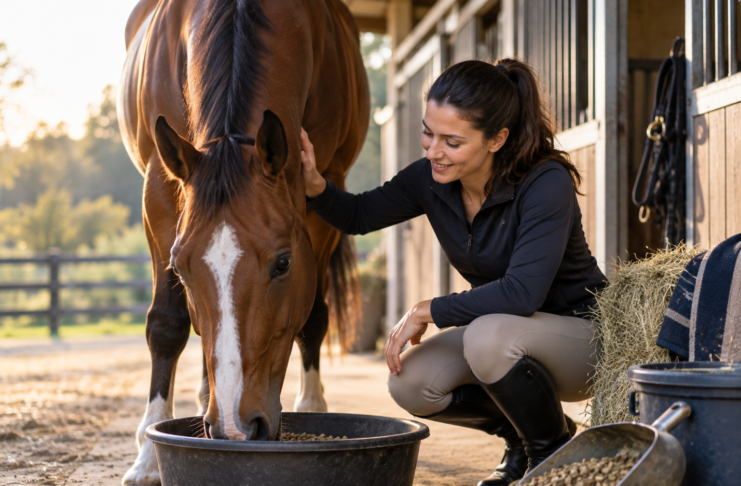
*How microbial metabolites shape digestive function, immunity, and long-term soundness in equine athletes*
KEY STATISTICS
- The equine gut harbors over 500 microbial species that collectively influence metabolic function, immune response, and nutrient absorption.
- Dietary changes can shift the microbial composition within days, with measurable effects on short-chain fatty acid production.
- Microbial metabolites—particularly butyrate—directly modulate intestinal barrier integrity and systemic inflammation in horses.
If you own or manage horses, you’ve likely heard about gut health. But the conversation often stops at ‘fiber and water. ‘ The reality is far more intricate.
Your horse’s gut microbiome produces metabolites—chemical compounds generated during microbial fermentation—that act as signaling molecules throughout the body. These aren’t minor byproducts; they influence digestion, immune function, metabolic efficiency, and even behavioral health. Understanding this mechanism transforms how you feed and care for equine athletes and working horses.
The Microbial Metabolite System
The equine gut microbiome is a living ecosystem. Billions of bacteria, fungi, and other microorganisms ferment dietary fiber and other substrates, producing metabolites that your horse’s intestinal cells and immune system depend on. The most studied of these are short-chain fatty acids—butyrate, propionate, and acetate—which nourish the intestinal lining, regulate pH, and suppress pathogenic bacteria.
- Short-chain fatty acids (butyrate especially) are primary energy sources for colonocytes and maintain intestinal barrier function.
- Microbial metabolites interact with epithelial immune cells, shaping systemic and mucosal immune tolerance and response patterns.
- Dysbiosis—imbalance in microbial composition—reduces metabolite production, compromising gut barrier integrity and increasing disease susceptibility.
- Diet composition (forage quality, grain type, concentrate ratio) directly determines which species thrive and which metabolites they produce.
Why Adult Performance Horses Struggle
While the microbiome is established early in life, adult horses aged 5 to 15 years old often experience cumulative dietary stress, stress-induced dysbiosis, and age-related shifts in microbial diversity. Performance horses, those on high-grain diets, or those experiencing transport, training intensity, or medication use face accelerated dysbiotic episodes. The metabolic demands of this age group also mean that even subtle reductions in metabolite production can manifest as reduced athletic performance, poor coat quality, or recurrent digestive upset.
- High-grain diets common in sport horses favor lactate-producing bacteria over butyrate producers, destabilizing the microbiome.
- Chronic stress, antimicrobial treatment, and transport deplete microbial diversity, reducing metabolite output and barrier resilience.
- Aging microbiomes show declining butyrate production, limiting the gut’s ability to repair and maintain immune homeostasis.
- Horses in training face repeated dietary changes, travel-related disruption, and immune activation that challenge microbial stability.
Signs Your Horse’s Microbiome May Be Compromised
- Recurrent or chronic loose stool, diarrhea, or unexplained hind-gut sensitivity despite adequate forage intake.
- Sudden changes in body condition, coat dullness, or poor muscle development despite appropriate nutrition and training.
- Behavioral changes including irritability, reduced exercise tolerance, or altered temperament coinciding with dietary or management changes.
- Recurrent respiratory or skin infections, or slow recovery from minor wounds or training-induced inflammation.
- Colic episodes, impaction colic history, or signs of gastric ulceration despite standard preventive management.
- Poor performance metrics: reduced stamina, muscle soreness, or lack of training response despite consistent workload.
Diet and Management for Microbial Balance
Feeding strategy is the primary lever for supporting microbial health and metabolite production. Forage quality, consistency, and proportion form the foundation; from there, careful selection and timing of concentrate feeds, supplements, and management practices amplify microbial resilience. The goal is to maximize fiber fermentation while minimizing disruption from sudden dietary shifts or excessive grain intake.
- Prioritize high-quality forage (grass or legume hay) as the base diet—minimum 1.5 to 2% of body weight daily to sustain butyrate-producing fiber fermenters.
- If grain is necessary, introduce it gradually over 7–10 days and keep daily grain below 0.5% of body weight to limit lactate-producing dysbiosis.
- Provide consistent feed timing and composition; sudden changes in hay source, grain type, or feeding schedule trigger rapid dysbiotic shifts.
- Include fermented or prebiotic feeds (beet pulp, chicory inulin) that directly support beneficial bacterial populations and metabolite production.
Your Microbiome Support Checklist
- Audit your current forage: source a trusted hay sample analysis to confirm digestible fiber content and mold/mycotoxin levels.
- Reduce grain dependency: if feeding grain, cut portion by 25% and substitute with quality forage, hay stretcher, or non-grain calories.
- Introduce dietary changes over 7–10 days minimum, mixing old and new feed proportionally to allow microbial adaptation.
- Consider a targeted prebiotic or live yeast supplement designed for equine hindgut fermentation—especially during high-stress periods.
- Establish a feeding routine: same times, same feeds, same amounts daily to minimize microbial shock from unpredictability.
- Monitor digestive indicators weekly: stool consistency, body condition, attitude, and performance—these are your earliest microbiome signals.
Stress and Microbial Stability
Stress—physical, psychological, or environmental—triggers a cascade of cortisol release that directly shifts microbial composition and suppresses metabolite production. Even subacute stressors like frequent trailering, training intensity, or social disruption can reduce butyrate-producing bacteria within days. Sleep quality, turnout time, and herd stability thus become microbial factors, not just welfare factors.
- Cortisol elevation during stress increases gut permeability and favors pathogenic bacteria, reducing beneficial fermenters.
- Horses with limited turnout or social isolation show accelerated dysbiotic profiles compared to those on full-time pasture access.
- Adequate rest (minimum 6 hours uninterrupted sleep daily) and consistent routines directly support microbial stability and metabolite production.
- Minimize unnecessary antimicrobial use; each course disrupts the microbiome for weeks to months, requiring deliberate dietary support during recovery.
Bottom Line
Your horse’s microbiome is not static. It responds to diet, stress, management, and time with remarkable speed. By understanding that microbial metabolites—not just ‘fiber’—are the currency of gut health, you can make informed decisions about feed selection, concentrate ratios, and daily routine.
Small, consistent adjustments to forage quality, grain reduction, and stress management pay dividends in digestive resilience, athletic performance, and long-term soundness. Start with an honest audit of your current feeding program and one targeted change. The microbiome rewards stability and responds quickly to improvement.
Live Long Daily — always consult a qualified healthcare provider before making changes to your health routine.
Sources
- Role of the Gut Microbiome and Microbial Metabolites in Horses — Veterinary Sciences

