
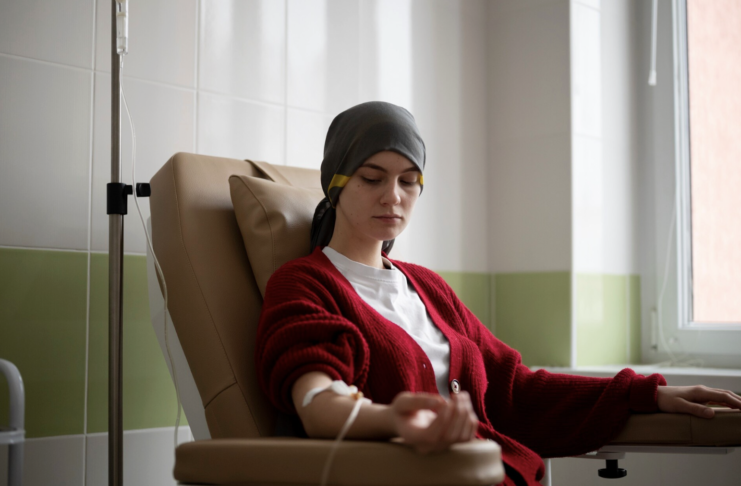
A diagnosis changes your blood — but what it does to your mind is the crisis no one warns you about.
KEY STATISTICS
- Up to 40% of blood cancer patients meet clinical criteria for anxiety or depression within the first year of diagnosis, according to research published in the Journal of Clinical Oncology.
- Adults aged 35–45 with hematologic cancers report significantly higher psychological distress than older patients, largely due to unresolved life responsibilities such as dependent children and career obligations — per a 2022 Leukemia & Lymphoma Society report.
- Structured psycho-oncology support has been shown to reduce anxiety symptoms by up to 35% in blood cancer patients and improve treatment adherence, according to findings from The Lancet Oncology.
The moment a doctor says leukemia, lymphoma, or myeloma, the body becomes a battleground — but the mind often collapses first. For adults in midlife, a blood cancer diagnosis doesn’t just threaten the body; it detonates a life that was already stretched thin with careers, mortgages, and children who still need you. What gets almost no attention in those early consultations is the psychological free-fall that follows, and the very real clinical consequences of leaving it untreated.
What Happens Inside Your Brain
Blood cancer triggers what psychologists call anticipatory anxiety — a chronic state of dread tied not to what is happening now, but to what might happen next. Unlike solid tumors, hematologic cancers often involve prolonged treatment phases, remission monitoring, and the constant possibility of relapse, which means the psychological threat rarely has a clean endpoint.
This sustained uncertainty activates the brain’s threat-detection system, the amygdala, keeping cortisol and adrenaline elevated far beyond what the body can safely sustain. Over time, chronic stress hormones suppress immune function, impair sleep architecture, and reduce the efficacy of the very treatments patients are enduring.
Researchers have found that psychological distress in cancer patients is not merely a reaction to fear — it has measurable physiological consequences. Elevated inflammatory markers linked to depression have been observed in blood cancer patients, creating a feedback loop where mental illness worsens the biological environment that treatment is trying to repair.
Why Midlife Makes It Harder
Adults between 35 and 45 occupy a uniquely pressured life stage. They are old enough to understand exactly what a blood cancer diagnosis means, and young enough to carry the full weight of what they stand to lose — financial stability, their children’s formative years, a career they spent two decades building.
This combination of clear-eyed awareness and high-stakes responsibility amplifies anxiety in ways that older patients, whose life structures are often more settled, do not experience to the same degree. The psychological literature refers to this as the ‘biographical disruption’ of cancer in midlife — when illness doesn’t just threaten life, it derails identity.
Midlife patients also tend to suppress emotional distress more aggressively, often prioritising the appearance of strength for partners, children, and colleagues. That suppression delays help-seeking and allows clinical-level anxiety and depression to entrench before anyone around them — or even the patient themselves — recognises that a mental health crisis is already underway.
Warning Signs to Watch
- Persistent intrusive thoughts about disease progression or death that interfere with daily functioning, even during remission or stable treatment phases
- Sleep-onset insomnia characterised by racing thoughts specifically tied to treatment outcomes, scan results, or fear of relapse
- Emotional numbness or detachment from family members and close relationships — sometimes misread as ‘staying strong’ but actually a hallmark of depressive withdrawal
- Hypervigilance to physical sensations — interpreting every ache, bruise, or fatigue as evidence that the cancer is worsening, regardless of medical reassurance
- Avoidance of medical appointments or deliberate delay in seeking results, driven by unbearable anxiety about what the news might be
What Actually Helps Psychologically
The most effective psychological interventions for blood cancer patients combine structured therapy with biological support — and they work best when started early, not as a last resort. Cognitive Behavioural Therapy adapted for oncology settings, known as CBT-O, has the strongest evidence base, helping patients reframe catastrophic thought patterns around uncertainty and regain a functional sense of control.
Mindfulness-Based Stress Reduction, or MBSR, has also shown measurable reductions in cortisol and self-reported anxiety in hematologic cancer patients, with studies from the NIH noting improvements in sleep quality and immune marker profiles after eight-week programmes. These aren’t passive feel-good practices — they are structured clinical tools that change neurological stress responses.
Physical activity, even light and adapted to treatment tolerance, plays a critical role. Exercise elevates BDNF — a brain-derived protein that counteracts the neurological effects of chronic stress — and gives patients a rare experience of agency over their own body during a time when that sense of control has been stripped away.
Social connection is equally non-negotiable. Peer support groups specifically for blood cancer patients have demonstrated reductions in isolation-driven depression, partly because they normalise the psychological experience in a way that well-meaning friends and family often cannot.
Your Mental Health Action Plan
- Request a formal psychological screening — such as the PHQ-9 or GAD-7 — at your next oncology appointment; do not wait for your care team to offer it unprompted
- Ask your oncologist for a referral to a psycho-oncologist or oncology social worker who specialises in hematologic cancers specifically, not general counselling
- Begin a structured mindfulness or CBT-O programme within the first three months of diagnosis — evidence shows early intervention prevents anxiety from becoming entrenched
- Identify one peer support network, such as those run by Leukaemia Care or the Lymphoma Association, and attend at least two sessions before deciding it is or isn’t for you
- Create a ‘scan protocol’ — a written personal plan for managing the 48–72 hours before and after scan results, including who you will contact, how you will ground yourself, and what activity will anchor you
The Scanxiety Nobody Addresses
One of the most consistently overlooked factors in blood cancer mental health is what clinicians call ‘scanxiety’ — the acute psychological crisis that occurs in the days surrounding diagnostic imaging and results appointments. For many patients, this period is more emotionally destabilising than the original diagnosis, yet it receives almost no structured support in standard oncology care plans.
The anticipatory dread of scan results can trigger cortisol spikes equivalent to acute trauma responses, disrupting sleep, appetite, and cognitive function for days at a time — and for patients on ongoing monitoring schedules, this cycle repeats every few months without resolution. Left unmanaged, repetitive scanxiety episodes erode psychological resilience and contribute significantly to the cumulative mental health burden of living with blood cancer.
Some oncology centres in the UK and US have begun implementing dedicated pre-scan psychological check-ins, brief structured conversations with a trained counsellor in the 24 hours before a results appointment. The evidence from these pilot programmes is striking — patients who receive even a single structured pre-scan support session report significantly lower distress and higher trust in their care team, outcomes that translate into better long-term treatment engagement.
Bottom Line
A blood cancer diagnosis is a physical crisis that immediately becomes a psychological one — and for adults in midlife, the mental toll is disproportionately severe and dangerously under-supported. The evidence is unambiguous: structured mental health intervention started early improves not just quality of life, but biological treatment outcomes. Asking for psychological help is not a sign that you are struggling to cope — it is one of the most clinically intelligent decisions you can make.
Always consult a qualified healthcare provider before making changes to your health routine.
Sources
- Prevalence and predictors of anxiety and depression in patients with haematological malignancies — Journal of Clinical Oncology
- Psychological distress in adults with blood cancers: age-stratified outcomes and unmet support needs — Leukemia & Lymphoma
- Psycho-oncology interventions and their effect on treatment adherence and survival markers in haematological cancers — The Lancet Oncology
- Mindfulness-Based Stress Reduction in cancer patients: immune and psychological outcomes — NIH National Cancer Institute
- Cognitive behavioural therapy for cancer-related anxiety: a systematic review — BMJ Supportive and Palliative Care

