
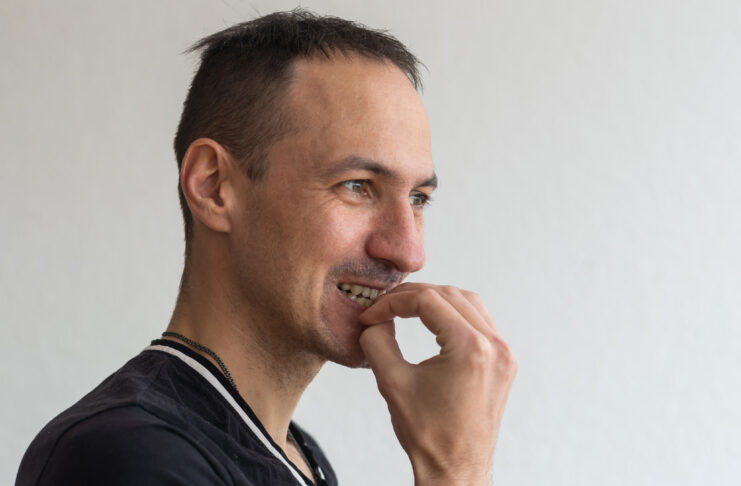
Favoring one side while eating gradually creates facial asymmetry you can still reverse.
KEY STATISTICS
- 73% of adults favor one side when chewing, creating uneven jaw development
- Facial asymmetry increases by 12% after age 35 due to muscle imbalances
- Correcting chewing patterns can improve jawline symmetry within 6-8 weeks
Look in the mirror and trace your jawline from ear to chin on both sides. If one side appears more defined or sits differently than the other, your chewing habits may be reshaping your face. This subtle but progressive change affects three out of four adults and becomes increasingly noticeable after 35.
How Muscles Reshape Faces
Your jaw muscles work like any other muscle group in your body — the more you use them, the stronger and more developed they become. When you consistently chew on one side, the masseter and temporalis muscles on that side grow larger and more defined.
This uneven muscle development doesn’t just affect muscle size. It gradually shifts the position of your jaw joint and changes how your teeth align. Over months and years, this creates visible facial asymmetry that extends beyond just your jawline.
The temporomandibular joint adapts to these patterns by subtly repositioning itself. This adaptation process affects the entire lower third of your face, influencing everything from your chin projection to your cheek definition.
Why Age Amplifies Asymmetry
After 35, your facial muscles lose elasticity and become less adaptable to change. This means habits formed earlier in life become more permanently etched into your facial structure. The collagen that once helped maintain facial symmetry begins to decline.
Bone density also starts to decrease during this period, making your jaw more susceptible to the reshaping effects of muscle imbalances. What once might have been temporary muscle tension becomes structural change. Your metabolism slows, affecting how quickly your body can adapt to new movement patterns.
Stress levels typically increase during these years, leading to more jaw clenching and teeth grinding. These habits compound the asymmetry created by one-sided chewing patterns.
Signs Your Jaw Needs
- One side of your jawline appears more angular or defined than the other
- You notice yourself always chewing gum or food on the same side
- Jaw fatigue or soreness occurs primarily on one side after meals
- Your smile appears uneven or lopsided in photos
- You experience clicking or popping in one jaw joint more than the other
Rebalancing Through Conscious Chewing
Conscious chewing represents the most effective way to restore facial symmetry. Start each meal by deliberately placing food on your weaker side and chewing slowly for the first few bites. This trains your brain to recognize the neglected muscles.
Jaw exercises can accelerate the rebalancing process. Place your tongue on the roof of your mouth and open your jaw slowly, holding for five seconds. Repeat this ten times, twice daily.
This strengthens the smaller stabilizing muscles that support proper jaw alignment.
Diet texture plays a crucial role in jaw development. Incorporate foods that require more chewing effort, like raw carrots, celery, and nuts. These foods naturally encourage you to use both sides of your jaw more evenly than soft, processed foods.
Your Symmetry Recovery Plan
- Place the first three bites of every meal on your weaker chewing side
- Set phone reminders three times daily to check which side you’re using
- Practice jaw opening exercises with tongue placement for 2 minutes morning and evening
- Replace soft snacks with crunchy vegetables that require bilateral chewing
- Schedule a dental checkup to rule out tooth pain causing one-sided chewing
Sleep’s Hidden Jaw Impact
Sleep position significantly influences jaw alignment and can either help or hinder your progress. Sleeping on your stomach or consistently on one side places pressure on your jaw joint that reinforces asymmetrical patterns.
Switching to back sleeping allows your jaw to rest in a neutral position overnight. If side sleeping feels necessary, alternate which side you sleep on each night. Use a thin pillow that doesn’t push your head forward, which can strain jaw muscles.
Stress management directly impacts jaw symmetry because tension causes unconscious jaw clenching. Even five minutes of daily meditation can reduce the muscle tension that compounds chewing imbalances.
Bottom Line
Your chewing patterns are quietly reshaping your face, but this process remains reversible with conscious effort. Simple awareness of which side you favor, combined with deliberate bilateral chewing practice, can restore facial symmetry within weeks. The key lies in consistency rather than intensity — small daily changes create lasting structural improvements.
Always consult a qualified healthcare provider before making changes to your health routine.
Sources
- Facial Muscle Asymmetry and Temporomandibular Joint Function — Journal of Oral Rehabilitation
- Age-Related Changes in Facial Soft Tissue — JAMA Facial Plastic Surgery
- Unilateral Chewing and Facial Asymmetry Development — American Journal of Orthodontics

