
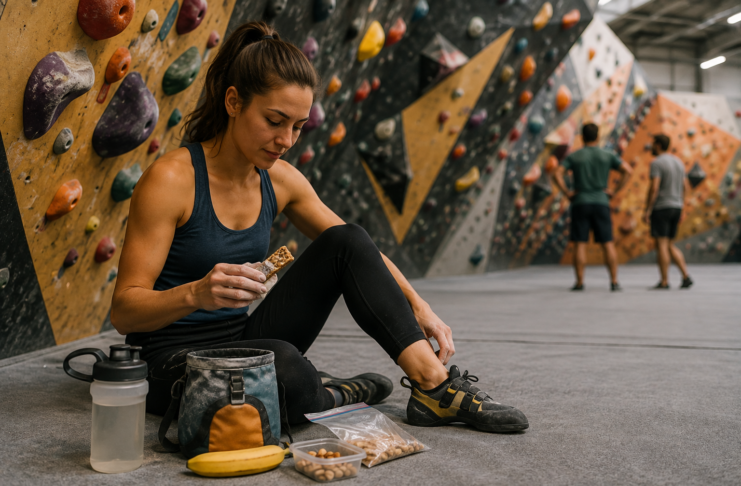
A new review reveals sport-specific fueling strategies most climbers miss—and how to fix them.
KEY STATISTICS
- Most climbing athletes lack evidence-based nutrition guidance tailored to their sport’s unique demands.
- Climbers typically rely on general athletic nutrition rather than sport-specific fueling protocols.
- Research shows nutrition timing and macronutrient composition significantly affect climbing performance and recovery.
You’ve logged the hours on the wall. You know your grades, your projects, your weaknesses on overhanging terrain. But when it comes to what you eat before, during, and after climbing, you’re probably winging it—and you’re not alone.
A recent comprehensive review published in Frontiers in Sports and Active Living found that climbing athletes operate largely without evidence-based nutrition guidance specific to their sport. While general athletic nutrition gets plenty of attention, climbing’s unique metabolic and physiological demands remain poorly addressed in mainstream sports nutrition advice. For climbers aged 35 to 45, whose recovery is slower and whose nutritional needs have shifted with age, this gap isn’t trivial.
The Science of Climbing Metabolism
Climbing imposes distinct physiological stresses that differ fundamentally from endurance sports, team sports, and traditional strength training. Your body demands repeated short bursts of intense muscle recruitment, isometric grip strength, and precise neuromuscular control—often all at once. The metabolic picture is complicated, mixing aerobic and anaerobic pathways depending on whether you’re working a 30-second boulder problem or a 10-minute sport route.
- Climbing relies on mixed energy systems: aerobic base for endurance routes and anaerobic power for short, intense efforts.
- Grip strength and forearm endurance depend on neuromuscular efficiency and intramuscular energy availability, not just general fitness.
- Body composition matters differently for climbing than for other sports—lighter absolute weight aids vertical movement, but lean muscle supports power.
- Recovery between pitches, sessions, and days requires specific nutrient repletion that standard sports nutrition doesn’t always address.
Why Your Age Changes Climbing Nutrition
At 35 to 45, your metabolic flexibility decreases, meaning your body is less efficient at switching between fuel sources mid-climb. Your protein synthesis also declines by approximately 1 percent per year after 30, making post-climbing nutrition timing more critical than it was a decade ago. Joint cartilage and connective tissue recover more slowly, a process nutrition directly influences.
- Slower metabolic switching means inconsistent fueling between climbing sessions hits your performance harder than in your 20s.
- Reduced protein synthesis demands higher daily protein intake and better-timed post-climbing amino acid delivery.
- Tendon and ligament recovery depend on adequate micronutrient status and anti-inflammatory nutrition—deficiencies compound injury risk.
- Glycogen resynthesis takes longer, making between-session carbohydrate intake more strategic.
Warning Signs You Need Better Climbing Nutrition
- Plateau or decline in finger and grip strength despite consistent training volume.
- Difficulty recovering grip strength between climbing sessions or within 48 hours of hard climbing days.
- Unusual muscle soreness, joint stiffness, or prolonged fatigue lasting more than two days after intense sessions.
- Unexplained energy crashes mid-climb or inability to sustain performance on repeats.
- Frequent minor injuries (pulleys, elbow tendinitis, shoulder inflammation) despite proper progression.
- Brain fog, irritability, or mood changes during heavy climbing blocks.
What Actually Helps Climbing Performance
Research shows that climbing-specific nutrition should address three distinct phases: pre-climb fueling, intra-climb energy management, and post-climb recovery. Most climbers focus loosely on one or ignore them entirely. The evidence points toward specific macronutrient and timing strategies that differ from general gym-goer guidance.
- Pre-climb meals (2–3 hours before) should combine moderate carbohydrate with adequate protein; timing prevents energy crashes mid-session.
- Intra-climb fueling (for sessions over 90 minutes) requires accessible carbohydrate; sports drinks, dates, or gels prevent glycogen depletion on longer routes.
- Post-climb protein within 30–60 minutes accelerates recovery and supports tendon adaptation, particularly important after 40.
- Hydration status directly affects grip strength and decision-making; consistent fluid intake beats reactive drinking.
Your Nutrition Action Plan
- Log your pre-climb meals and post-climb recovery nutrition for one week; identify gaps where you’re either underfueling or timing poorly.
- Set a baseline: consume 0.25–0.3 grams of protein per kilogram of body weight within 60 minutes of finishing your session.
- Plan intra-climb fueling for any climbing block lasting over 90 minutes; pack 30–60 grams of carbohydrate in accessible form.
- Schedule one nutrition consultation with a sports dietitian familiar with climbing (not just general athletics).
- Track grip strength monthly; if it plateaus despite training, reassess carbohydrate timing and total daily energy intake.
Sleep: The Overlooked Nutrition Factor
Sleep quality directly determines whether your climbing nutrition actually builds strength and endurance. Poor sleep disrupts hormone signaling that controls protein synthesis, glycogen storage, and hunger regulation—making perfect fueling useless without it. At 35 to 45, sleep efficiency declines faster than at younger ages, making this factor especially critical for climbers.
- Inadequate sleep impairs growth hormone release, reducing protein synthesis benefits from post-climb nutrition.
- Evening carbohydrate intake (within reason) supports serotonin production and sleep quality—not a weight-gain risk if total calories are balanced.
- Magnesium status declines with age and training stress; low magnesium disrupts both sleep architecture and neuromuscular recovery.
- Late caffeine intake after afternoon climbing sessions disrupts sleep and negates recovery nutrition benefits from earlier meals.
Bottom Line
Climbing athletes operate in a nutrition vacuum—advised by general sports nutrition that misses climbing’s unique demands, and left to guess at timing, macronutrients, and periodization. Recent research makes clear that sport-specific strategies improve performance and reduce injury risk, especially for athletes over 35 whose recovery windows have narrowed. The fix isn’t complex: map your current fueling to the climbing demands you actually face, prioritize post-climb protein and carbohydrate, and don’t overlook sleep.
Start today with one week of honest logging, and adjust from there.
Live Long Daily — always consult a qualified healthcare provider before making changes to your health routine.
Sources
- Nutrition prescription for climbing athletes on rock or artificial surfaces: are we guessing? — Frontiers in Sports and Active Living

