
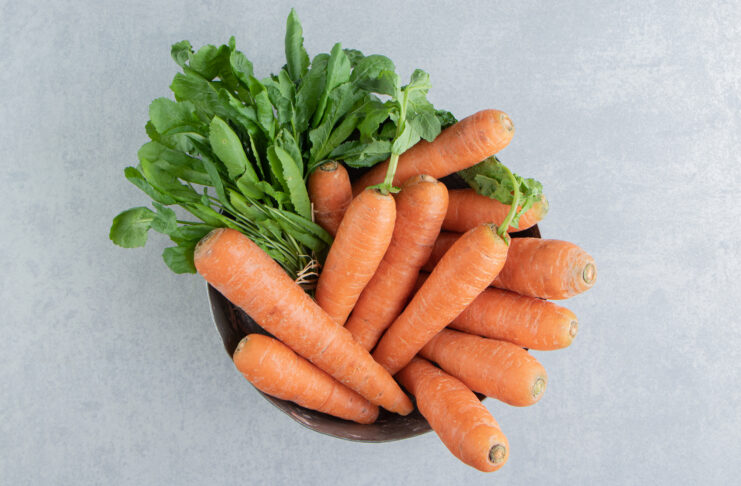
Carrots, the bright orange veggies that are most commonly associated with healthy vision, really have a multitude of other health benefits in addition to their ability to improve eyesight. Carrots are a powerhouse for your skin since they are packed with necessary nutrients, minerals, and antioxidants. Eating carrots regularly can help improve the health and appearance of your skin. In this article, we will explore five astonishing ways in which carrots can improve your skin, leaving you with a complexion that is vibrant and healthy.
Packed with Vitamins, Minerals, and Antioxidants:
Carrots are an excellent food choice for maintaining a healthy complexion because they are loaded with vitamins A, C, and E. In particular, vitamin A plays an essential function in the process of maintaining healthy skin by stimulating the regeneration of skin cells and warding off dryness and flakiness. In addition, the antioxidants included in carrots are beneficial in the fight against free radicals, which are the cause of skin damage. If you eat carrots, you can give your skin the vitamins, minerals, and antioxidants it needs to look radiant and youthful for as long as you can. Carrots are a healthy addition to any diet.
Retaining the Skin’s Natural Hydration and Moisture:
The secret to skin that is supple and moisturized is to drink enough water throughout the day. Because of their high water content, carrots are a good natural hydrating agent. Carrots can be found in most grocery stores. Carrots, when ingested on a regular basis, assist the body retain its natural moisture levels, which protects the skin from becoming dry and drab. In addition, the potassium that is found in carrots contributes to the regulation of moisture levels in the skin, so preserving its suppleness and smoothness. Carrots contribute considerably to a dewy and young complexion since they help your skin retain its natural moisture and hydration from the inside out.
Helps Maintain a Uniform Skin Tone While Diminishing Blemishes:
Many people experience feelings of frustration as a result of their skin’s uneven tone and/or the presence of pimples. Carrots, fortunately, have properties that can assist you in bouncing back from disappointments like this. This is because they contain a high concentration of beta-carotene, a compound that, once inside the body, is transformed into vitamin A. As a result, vitamin A encourages the turnover of skin cells, which in turn helps remove dark spots and blemishes by reducing the synthesis of melanin. Because of this, eating carrots on a regular basis can help you achieve a more uniform skin tone while also minimizing the visibility of acne scars and hyperpigmentation.
Reduces the Appearance of Signs of Aging:
Carrots have great anti-aging properties, which make them an excellent choice for anyone concerned about the appearance of their skin. Carrots contain antioxidants that protect the skin from the damage caused by free radicals, inhibiting the breakdown of collagen and elastin fibers in the process. Essential proteins called collagen and elastin are responsible for the suppleness and firmness of the skin. The production of these proteins naturally decreases as we get older, which is what causes our skin to become more wrinkled and saggy. You may help maintain the youthful structure of your skin and reduce the appearance of fine lines and wrinkles by adding carrots to your diet. This will have the same effect as eating more carrots.
Alleviates the Symptoms of Skin Conditions:
Carrots are good not only for the overall health of the skin but also for the treatment of particular skin disorders. Carrots’ high vitamin A content makes them a useful treatment for a variety of skin conditions, including acne, eczema, and psoriasis. Carrot juice is also beneficial for treating psoriasis. Vitamin A controls the production of sebum, hence reducing the risk of blocked pores and acne outbreaks. Carrots, due to their anti-inflammatory qualities, are also beneficial to people who suffer from skin problems such as eczema and psoriasis. This is because the anti-inflammatory components of carrots help to calm irritated skin. Adding carrots to your diet will drastically enhance the overall appearance and texture of your skin, making it clearer and healthier in the process. Carrots are rich in beta-carotene, an antioxidant that helps protect against sun damage.
Concluding remarks:
Including carrots as a regular part of your diet can do wonders for the appearance of your skin. It doesn’t matter if you like to snack on raw carrots, drink carrot juice, or include them into your favorite recipes; the fact remains that carrots are beneficial to your skin in a variety of ways. Carrots offer a natural and efficient solution for obtaining a beautiful and healthy complexion. They do this by delivering necessary nutrients and antioxidants, as well as by encouraging hydration, even skin tone, and preventing indications of age. So go ahead and make this unassuming vegetable a regular part of your diet if you want to see a change in the appearance of your skin and embrace a more vibrant and young appearance.

