
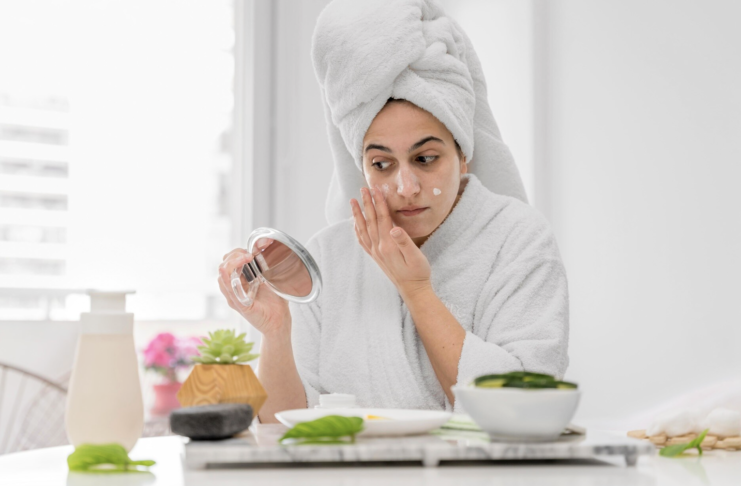
Three evidence-backed ingredients already in your kitchen that calm hormonal breakouts without wrecking your skin barrier.
KEY STATISTICS
- Approximately 26% of women aged 31–40 experience adult hormonal acne, according to research published in the Journal of the American Academy of Dermatology.
- A 2019 NIH-supported study found that zinc supplementation reduced inflammatory acne lesions by up to 49% compared to placebo.
- Raw honey has demonstrated measurable antibacterial activity against Cutibacterium acnes, the primary bacterium driving hormonal breakouts, in multiple peer-reviewed lab studies.
You have a full skincare shelf, a sensible routine, and still — every month like clockwork — your chin or jaw flares up with deep, stubborn breakouts that no cleanser seems to touch. Adult hormonal acne in your 30s and 40s is not a hygiene problem; it is a biochemical one, rooted in shifting androgen levels and inflammation. The good news is that three ingredients you likely already own have genuine, peer-reviewed evidence behind them.
Why Hormonal Breakouts Form
Hormonal acne forms when androgens — primarily testosterone and its derivative DHT — spike relative to estrogen, signalling sebaceous glands to overproduce oil. That excess oil, combined with skin-cell buildup inside the pore, creates the anaerobic environment that C. acnes bacteria thrive in.
Inflammation is the second driver. Even before a visible blemish forms, inflammatory cytokines are already active inside the follicle, which is why hormonal breakouts feel painful and cystic rather than surface-level.
This is also why topical antibiotics and harsh cleansers often fail these breakouts — they target bacteria without addressing the underlying inflammatory and sebum-production cascade.
Why Your 30s Change Skin
Between 35 and 45, estrogen levels begin their slow decline toward perimenopause while androgen activity remains relatively stable, tipping the hormonal ratio in a direction that favours acne formation. This window is sometimes called the ‘second puberty’ of skin, and it catches many adults off guard because they stopped expecting breakouts decades ago.
Stress compounds the problem significantly at this life stage. Elevated cortisol stimulates the adrenal glands to produce androgens, meaning a demanding career, disrupted sleep, or family pressure can directly trigger a breakout cycle.
The skin barrier also becomes subtler and more reactive after 35, which means harsh conventional acne treatments — high-percentage salicylic acid, benzoyl peroxide — are more likely to cause dryness, irritation, and post-inflammatory hyperpigmentation than they were in your teens.
Warning Signs To Watch
- Recurring breakouts that appear in the same location each month, particularly along the jawline, chin, or lower cheeks
- Breakouts that feel deep, tender, or cystic rather than surface-level whiteheads
- Skin that becomes oilier around ovulation or in the week before your period
- Breakouts that worsen noticeably during high-stress periods, even outside your usual hormonal window
- Increased facial hair growth or irregular periods accompanying the skin changes — these warrant a GP visit to rule out PCOS
Three Ingredients That Work
Raw honey is the most well-supported kitchen remedy for inflammatory acne. A study in the Asian Pacific Journal of Tropical Biomedicine confirmed its broad-spectrum antimicrobial properties, largely attributed to hydrogen peroxide activity and its low pH. Applying a thin layer as a five-minute mask two to three times per week can visibly reduce redness and lesion size without stripping the barrier.
Turmeric — specifically its active compound curcumin — has been studied for its ability to inhibit NF-kB, a key inflammatory signalling pathway active in acne formation. A 2021 review in Nutrients confirmed curcumin’s anti-inflammatory and sebum-reducing effects when applied topically. Mix a small amount with raw honey to offset the temporary yellow staining and apply directly to blemishes as a targeted spot treatment.
Green tea, the third ingredient, contains epigallocatechin gallate (EGCG), a polyphenol shown in a randomised controlled trial in the Journal of Investigative Dermatology to reduce sebum production and inflammatory lesions. Brew a strong cup, allow it fully to cool, and use it as a toner applied with a cotton pad morning and evening. All three work best as additions to — not replacements for — a gentle, barrier-supportive routine.
Your Skin Clearing Plan
- Apply raw Manuka or wildflower honey as a five-minute mask three times per week — rinse with lukewarm water only, never hot
- Mix one-quarter teaspoon of turmeric with one teaspoon of raw honey and apply as a spot treatment to active cysts for ten minutes before rinsing
- Brew and cool green tea daily, store it in the fridge for up to 48 hours, and apply as a morning and evening toner with a cotton pad
- Log your breakouts against your menstrual cycle for two months to confirm the hormonal pattern — this information is valuable for any GP or dermatologist consultation
- Replace any foaming or alcohol-based cleansers with a gentle, pH-balanced cleanser (pH 4.5–5.5) to protect the barrier while using these remedies
The Gut-Skin Connection
The overlooked factor in adult hormonal acne is gut-skin axis disruption. Research published in Gut Microbes has shown that gut dysbiosis — an imbalance in intestinal bacteria — elevates systemic inflammation and can increase circulating androgen levels, directly fuelling breakout cycles.
For the 35–45 age group, antibiotic use, high-sugar diets, and chronic stress are the most common disruptors of gut bacteria. Adding fermented foods — plain kefir, kimchi, or live-culture yoghurt — to your daily diet is a practical first step supported by emerging clinical evidence.
Zinc is the micronutrient most strongly linked to acne reduction in this context. Pumpkin seeds are one of the richest dietary sources, and a daily small handful provides a meaningful contribution toward the 8–11mg daily requirement — enough to support both the anti-inflammatory response and healthy sebum regulation.
Bottom Line
Hormonal breakouts after 35 are not a cosmetic nuisance — they are a biochemical signal that androgen activity, inflammation, or gut health needs attention. Raw honey, turmeric, and green tea each have genuine scientific backing and can meaningfully reduce lesion severity when used consistently alongside a barrier-supportive routine. If your breakouts are severe, cyclically predictable, or accompanied by other hormonal symptoms, book a GP appointment — these remedies work best as part of a broader, informed strategy.
Always consult a qualified healthcare provider before making changes to your health routine.
Sources
- Prevalence of acne in adults: a systematic review and meta-analysis — Journal of the American Academy of Dermatology
- Zinc therapy in dermatology: a review — Dermatology Research and Practice, NIH National Library of Medicine
- Antimicrobial activity of honey against common skin pathogens — Asian Pacific Journal of Tropical Biomedicine
- Curcumin and its anti-inflammatory effects on sebaceous gland activity — Nutrients
- Epigallocatechin gallate reduces sebum production and inflammatory acne lesions — Journal of Investigative Dermatology

