
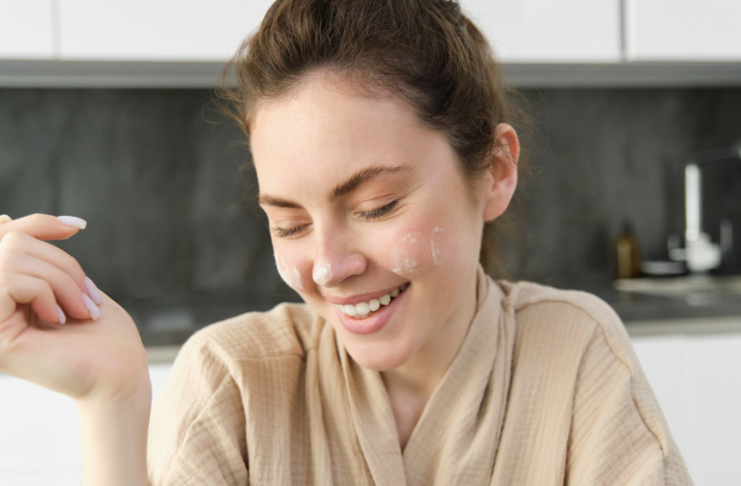
The gut-skin connection is real — and dermatologists say targeted probiotic strains are finally changing the game for women over 35 with hormonal breakouts.
KEY STATISTICS
- A 2021 review in Frontiers in Microbiology found that oral probiotics significantly reduced acne lesion counts in adult women within 12 weeks.
- Research published in the Journal of Dermatological Science shows that gut dysbiosis is present in up to 54% of adult acne patients.
- Women aged 35–44 now account for the fastest-growing demographic seeking dermatology treatment for adult hormonal acne, according to the American Academy of Dermatology.
You have tried the serums, the spot treatments, and the gentle cleansers everyone recommends — and your skin still breaks out around your chin and jawline every single month. What no one told you is that the problem may not be on your face at all. Emerging dermatology research points directly to your gut as the hidden driver of adult hormonal breakouts and persistent dullness in women over 35.
How Gut Drives Skin
Inside your gut lives a vast ecosystem of bacteria, fungi, and microorganisms collectively called the microbiome. When this ecosystem falls out of balance — a state known as dysbiosis — it triggers a low-grade inflammatory response that travels through the bloodstream and surfaces directly on your skin.
The gut and skin are linked through what researchers now call the gut-skin axis. Inflammatory signals originating in a disrupted gut microbiome activate immune pathways that overstimulate sebaceous glands, increase skin cell turnover irregularities, and compromise the skin’s natural barrier function.
Specific probiotic strains — particularly Lactobacillus rhamnosus and Lactobacillus acidophilus — have been shown in clinical trials to reduce systemic inflammation markers like interleukin-6 and TNF-alpha. Lower inflammation means less sebum overproduction, reduced pore congestion, and visibly clearer, more luminous skin over time.
Why 35+ Changes Everything
After 35, a woman’s hormonal landscape shifts in ways that make gut-related skin problems significantly worse. Fluctuating oestrogen and progesterone levels during perimenopause alter gut motility, reduce microbial diversity, and directly influence how inflamed the skin becomes in the second half of the menstrual cycle.
Years of antibiotic use, dietary stress, alcohol, and chronic low-grade cortisol exposure have also progressively depleted the beneficial bacteria many women had in their twenties. By 35 to 45, the gut microbiome is often far less diverse and far more inflamed than it was a decade earlier — and the skin reflects that damage visibly.
Hormonal acne in this age group tends to cluster along the chin, jaw, and neck rather than the T-zone. This pattern is a classic sign that androgens and insulin-like growth factor are driving sebum production — both of which are worsened by gut inflammation and can be measurably improved with the right probiotic intervention.
Warning Signs To Watch
- Recurring breakouts along the chin, jawline, or neck that worsen in the week before your period
- Skin that looks dull, grey, or flat despite adequate sleep and hydration
- Redness or inflammation that flares after eating certain foods — particularly sugar, dairy, or alcohol
- Skin that feels sensitised or reactive without a clear topical cause or new product trigger
- Bloating, irregular bowel movements, or digestive discomfort alongside skin flare-ups — the gut-skin connection is active
What Actually Clears Skin
The most effective probiotic approach for adult hormonal skin is not a generic supermarket yoghurt. Clinical dermatology research points to multi-strain oral probiotic supplements containing at least 10 billion CFU of Lactobacillus and Bifidobacterium species taken consistently for a minimum of eight to twelve weeks before measurable skin improvements appear.
Diet plays an equally critical role in feeding the beneficial bacteria you are introducing. A high-fibre diet rich in prebiotic foods — garlic, leeks, onions, oats, and green bananas — provides the substrate these bacteria need to colonise and thrive in the gut environment.
Reducing ultra-processed food and refined sugar is non-negotiable alongside probiotic supplementation. Sugar feeds opportunistic bacteria and yeast species that out-compete beneficial strains, which means a poor diet will actively undermine even a high-quality probiotic protocol.
Topical probiotics are also emerging as a complementary strategy. Probiotic-infused skincare products containing Lactobacillus ferment filtrate help reinforce the skin’s microbiome directly, reducing surface inflammation, strengthening barrier integrity, and improving overall radiance alongside an internal approach.
Your Probiotic Action Plan
- Choose an oral probiotic supplement with at least 10 billion CFU containing both Lactobacillus rhamnosus and Bifidobacterium longum — take it daily for a minimum of 12 weeks
- Add one serving of a prebiotic food daily — garlic, leeks, oats, or chicory root — to actively feed your new beneficial bacteria
- Remove refined sugar and ultra-processed snacks for at least 30 days to stop feeding the bacterial strains that drive skin inflammation
- Introduce a topical skincare product containing Lactobacillus ferment filtrate or postbiotic ingredients to directly support your skin’s surface microbiome
- Track your skin, digestion, and cycle together in a simple journal — patterns between gut symptoms and breakout timing will confirm whether the gut-skin axis is active for you
Stress Is Wrecking Your Gut
One factor almost no one connects to hormonal skin is chronic stress and its direct effect on gut microbiome composition. Cortisol — the primary stress hormone — significantly alters gut permeability, a condition commonly called leaky gut, which allows inflammatory bacterial byproducts to enter the bloodstream and trigger skin flares.
Women in the 35–45 range are often carrying peak life stress: career pressure, family demands, perimenopause anxiety, and disrupted sleep. Each of these independently depletes Lactobacillus colonies in the gut, which means the skin is often fighting a battle on two fronts simultaneously — hormonal disruption and stress-driven microbiome damage.
Building a stress-reduction practice — even ten minutes of daily breathwork or a consistent sleep schedule — has been shown to measurably improve gut microbial diversity within weeks. Treating the nervous system as part of your skin routine is not soft advice; it is backed by the same gut-skin axis research that supports probiotic supplementation.
Bottom Line
Your skin is a mirror of your gut — and for women over 35 dealing with hormonal breakouts and chronic dullness, the most powerful intervention may not be in your bathroom cabinet at all. Targeted oral probiotics, a prebiotic-rich diet, and stress management work together to reduce the gut inflammation that is driving your skin problems from the inside out. Give it twelve consistent weeks and the research suggests you will see a real difference.
Always consult a qualified healthcare provider before making changes to your health routine.
Sources
- Probiotics and acne: a systematic review and meta-analysis — Frontiers in Microbiology
- The gut microbiome in adult acne vulgaris: a systematic review — Journal of Dermatological Science
- Adult female acne: a guide to clinical practice — Anais Brasileiros de Dermatologia
- The gut-skin axis and its role in inflammatory skin disease — International Journal of Molecular Sciences
- Oral probiotics reduce cutaneous inflammation in acne patients — Beneficial Microbes

