
*Why medication-related jaw bone loss happens—and how new treatments are changing outcomes*
KEY STATISTICS
- Medication-related osteonecrosis of the jaw (MRONJ) is a rare but serious condition linked to certain cancer and osteoporosis drugs.
- The condition most commonly affects the lower jaw and can develop months or even years after dental procedures or injury.
- Advanced biomaterial scaffolds are emerging as a promising approach to repair damaged bone tissue and restore function.
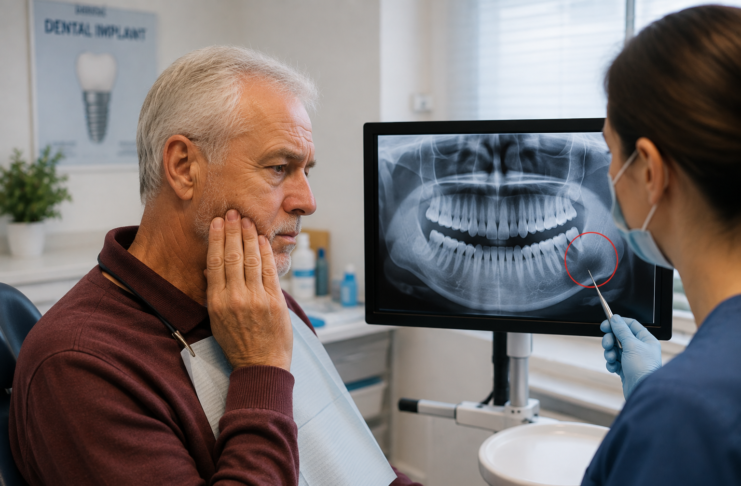
You’ve taken your osteoporosis medication faithfully for years, or your cancer treatment is keeping you alive—then you need a tooth extraction or dental implant. Weeks later, your jaw begins to ache. A section of bone isn’t healing; it’s dying.
This is medication-related osteonecrosis of the jaw (MRONJ), a condition most people have never heard of until it happens to them. While it remains uncommon, understanding the risk and knowing what new treatment options exist can mean the difference between permanent damage and recovery.
The science behind bone death
MRONJ occurs when certain medications disrupt the body’s ability to maintain healthy jawbone tissue, especially after dental procedures trigger bone injury. The condition involves a complex breakdown of the bone’s blood supply and cellular repair mechanisms, leaving dead bone exposed in the mouth.
- Bisphosphonates and denosumab, drugs used for osteoporosis and cancer treatment, accumulate in bone and interfere with normal remodeling and blood flow.
- Dental procedures—extraction, implant placement, or even scaling—can create a trigger point where the compromised bone fails to heal.
- The result is necrotic (dead) bone that becomes exposed and chronically inflamed, potentially spreading deeper into the jaw.
- Advanced biomaterials now allow researchers to scaffold new bone growth and restore blood supply to damaged areas.
Why your age group faces risk
Adults in their late 30s through 50s taking long-term bisphosphonates or denosumab for osteoporosis or cancer are at particular risk. The cumulative dose and duration of medication use, combined with dental procedures common in midlife, create a vulnerable window.
- Women over 50 taking bisphosphonates for osteoporosis prevention represent a significant portion of at-risk patients.
- Cancer survivors on denosumab or IV bisphosphonates have higher risk, especially if dental work occurs during or shortly after treatment.
- Longer medication duration increases risk; patients on these drugs for 5+ years should be especially cautious around dental procedures.
- Men and women with multiple risk factors—smoking, diabetes, poor oral hygiene—face compounded danger.
Warning signs to watch for
- Persistent jaw or tooth pain that doesn’t improve weeks after a dental procedure
- Swelling, redness, or drainage in the gum or jaw area
- Exposed bone visible in the mouth or feeling of bone spicules on the tongue
- Loose teeth or difficulty chewing without obvious decay or gum disease
- Numbness or tingling in the lower lip, chin, or jaw
- Foul taste or odor in the mouth despite good oral hygiene
What diet and habits help
Prevention is far more effective than treatment. If you’re on bisphosphonates or denosumab, optimizing oral health, avoiding unnecessary dental trauma, and timing procedures carefully can substantially reduce risk. Recent research into biomaterial-based repair also offers new hope for those who do develop the condition.
- Maintain meticulous oral hygiene with soft toothbrushes and regular professional cleanings to prevent infections that trigger breakdown.
- Postpone elective dental procedures if possible; discuss timing with both your oncologist or rheumatologist and your dentist.
- Avoid tobacco and limit alcohol, both of which impair bone healing and increase infection risk in the jaw.
- Ensure adequate calcium and vitamin D intake through diet or supplements, supporting overall bone health and healing capacity.
Action plan checklist
- Inform every dentist and surgeon that you take bisphosphonates or denosumab—this single conversation changes their approach to your care.
- Schedule a baseline dental exam before starting these medications if possible, and establish a regular prevention schedule.
- Delay non-urgent dental work (cosmetic crowns, implants) at least 6–12 months after starting medication, if clinically feasible.
- If extraction is necessary, ask your dentist about atraumatic techniques and antibiotic protocols designed to minimize bone trauma.
- Report any jaw pain, swelling, or exposed bone to your dentist and physician immediately—early intervention prevents progression.
- Discuss with your prescribing physician whether a medication holiday or alternative drug is possible before dental procedures.
The emerging biomaterial revolution
Beyond prevention and antibiotics, new biomaterial scaffolds offer genuine hope for patients who develop MRONJ. These engineered materials can guide new bone formation and restore blood supply, transforming outcomes for those facing permanent damage.
- Biomaterial scaffolds act as temporary frameworks that encourage the body’s own bone-forming cells to migrate, proliferate, and regenerate healthy tissue.
- These materials are designed to gradually dissolve as new bone forms, eliminating the need for permanent implants and reducing infection risk.
- Early clinical research suggests biomaterial approaches may reduce healing time and improve restoration of jaw function compared to traditional bone grafting.
- Ongoing trials are refining which scaffold compositions and implantation techniques work best for different MRONJ presentations.
Bottom Line
Medication-related osteonecrosis of the jaw is serious but largely preventable through careful communication with your healthcare and dental teams and smart timing of procedures. If you do develop symptoms, new biomaterial-based treatments are offering encouraging results for bone repair and restoration. The key is awareness: tell your dentist about your medications, maintain impeccable oral health, and seek immediate care if warning signs appear.
Live Long Daily — always consult a qualified healthcare provider before making changes to your health routine.
Sources
- Advanced biomaterial-based approaches for medication-related osteonecrosis of the jaw — Open Life Sciences
- General guidance on osteonecrosis and oral health — NIH National Institute of Dental and Craniofacial Research

