
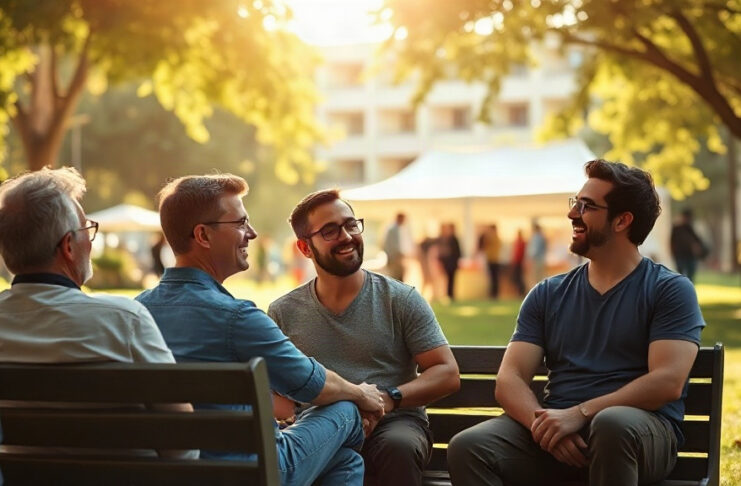
Community health events work better when men help design them
KEY STATISTICS
- Men aged 35-45 report significantly lower attendance at community health screenings compared to women in the same age group
- Community-designed health fairs show measurable increases in male participation when planning includes input from local men
- Behavioral medicine research confirms that men engage more with health services when messaging and logistics address their specific barriers
You’ve seen the flyers: free health screenings, blood pressure checks, fitness assessments at your local community center. Yet many men your age walk past them without a second glance. That’s not laziness—it’s a design problem.
Recent behavioral medicine research shows that when health fairs are planned with input from the men they’re meant to serve, attendance climbs and real health outcomes improve. Here’s what that research reveals and how your community can get it right.
The Science Behind Engagement
Men and women face different psychological and logistical barriers to engaging with preventive health services. When health fairs are designed by planners without direct input from their male audience, they often miss what actually stops men from showing up—or what would make them willing to attend.
- Men cite time pressure, scheduling conflicts, and unclear relevance as top reasons for skipping health events more often than structural barriers alone
- Community-guided event design—where organizers directly ask men what would make them attend—increases both intentions and actual participation
- Messaging matters: health fairs framed around performance, prevention, or practical benefit attract more male participants than symptom-focused messaging
Why This Age Group Matters
Men in their late 30s and 40s face a unique moment. Chronic disease risk is rising, yet many still feel ‘too young’ for health screening. If health fairs don’t account for this mindset and these men’s competing demands, they’ll remain invisible to the very group most likely to benefit from early detection.
- Men 35-45 often balance caregiving, work peaks, and early retirement planning—making traditional 9-to-5 event timing less effective
- This age group shows lower health literacy about preventable conditions like hypertension and metabolic syndrome, yet responds well to peer-to-peer outreach
- Early intervention at this life stage yields stronger long-term health gains than waiting until age 50 or 55
Red Flags Your Fair May Fail
- Your community fair has no male input in planning—no surveys, focus groups, or advisory panel with men from the target area
- Events are scheduled during hours that conflict with typical work or family logistics for your local male population
- Messaging emphasizes illness and disease rather than strength, performance, or practical benefit for active adults
- No outreach uses trusted male messengers—physicians, coaches, workplace leaders, or peer networks in your community
- Event location or format creates a barrier: no parking, no childcare, or requires sitting in a waiting room for hours
What Actually Moves the Needle
Practical changes rooted in behavioral research—not willpower—shift how men engage with community health services. The most effective strategies involve community input from the start and address the real obstacles men face.
- Host planning meetings with local men aged 35-45 to ask directly: What time works? What would you want screened? How should we reach you?
- Anchor events in trusted male spaces: workplaces, fitness centers, barbershops, or faith communities rather than traditional clinic settings
- Offer results-focused incentives: performance metrics, fitness benchmarks, or personalized risk scores rather than generic health information pamphlets
Build It Right: Action Steps
- Form a male advisory group of 8-12 community members aged 35-45 and survey them quarterly about event barriers and preferences
- Schedule fairs outside 9-to-5 hours—early morning, lunch hour, or Saturday—and confirm timing with your advisory group first
- Partner with male health ambassadors: coaches, barbers, workplace wellness leads, or trusted physicians to co-promote and co-host events
- Design a simple screening flow that takes 20-30 minutes max—offer online pre-registration and results delivery to reduce friction
- Test one location or format with your advisory group before scaling; measure attendance and gather feedback within 2 weeks
The Overlooked Power of Peer Influence
Trust and social proof matter more for men’s health decisions than clinical data alone. When peer networks and trusted community figures endorse a health fair, attendance and follow-up care both improve dramatically—yet this lever is often overlooked in standard health promotion.
- Men respond more to personal invitations from friends or respected mentors than to mass flyers or emails
- Events with visible male participation from your community create social proof and reduce stigma around health screening
- Train male peer ambassadors from within your community—they become your most effective recruitment tool and trusted source
Bottom Line
The gap in men’s health screening isn’t a knowledge problem—it’s a design problem. When your community health fair includes input from the men it serves, schedules realistically, leverages trusted male messengers, and cuts unnecessary friction, attendance climbs and health outcomes follow. Start by asking men directly what would make them show up, then build the event around those answers.
Live Long Daily — always consult a qualified healthcare provider before making changes to your health routine.
Sources
- Community-Guided Strategies for Men’s Health Fair Design — Translational Behavioral Medicine
- General guidance on preventive health screening — CDC

