
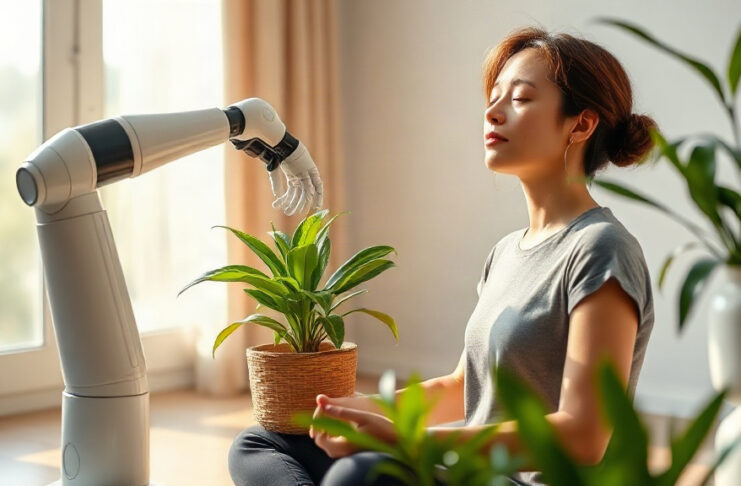
How human-robot interaction rewires your hormones and stress response—what research now shows
KEY STATISTICS
- Social interaction with robots activates the same neural reward pathways as human-to-human contact, triggering oxytocin release and measurable changes in parasympathetic function.
- Adults aged 35–45 show distinct patterns of hormonal and behavioral adaptation to robot interaction compared to younger and older populations, affecting stress recovery and social engagement.
- Repeated exposure to social robots produces measurable shifts in cortisol regulation and HPA axis responsiveness, suggesting long-term physiological remodeling with implications for mental health outcomes.
You’ve likely heard that robots are coming—but what if they’re already reshaping your brain? Recent neuroscience research reveals that interacting with social robots isn’t just a novelty; it triggers real, measurable changes in your hormones, stress response, and emotional regulation. For adults in midlife, these neurobiological shifts matter more than you’d think, and understanding how they work could change how you relate to the technology entering your home and workplace.
The Neurobiology Behind Robot Interaction
When you interact with a social robot, your brain doesn’t simply categorize it as ‘machine.’ Instead, multiple biological systems activate simultaneously—your reward centers light up, your stress hormones respond, and your social instincts engage in measurable ways. The interplay between neural activity, hormone release, and behavioral output creates a dynamic feedback loop that’s surprisingly similar to human social bonding, though distinct in important ways.
- Social robots activate the brain’s oxytocin system and reward pathways (ventromedial prefrontal cortex and striatum), inducing trust and engagement despite knowing it’s a machine.
- Cortisol levels and HPA axis activity shift predictably during and after robot interaction, suggesting your nervous system treats social robots as social stimuli worthy of stress regulation.
- Mirror neuron activation occurs during robot observation, meaning your brain literally simulates the robot’s movements—a neural mirroring typically reserved for perceived living beings.
- Repeated robot interaction remodels your dopamine and oxytocin baseline, potentially creating lasting changes in how your brain processes social reward and threat.
Why Your Age Makes a Difference
Adults aged 35–45 occupy a unique neurobiological window. Your brain’s neuroplasticity is still robust enough to adapt, but your hormonal baseline is shifting with age-related changes in estrogen, testosterone, and cortisol sensitivity. This means your response to social robots—and the depth of neurochemical change they induce—differs markedly from younger adults and carries specific implications for social bonding, loneliness risk, and mental health.
- Midlife adults show heightened oxytocin responsiveness to robot interaction compared to younger adults, potentially increasing attachment-like responses and parasympathetic activation.
- Aging-related reductions in dopamine sensitivity mean robot interaction may provide disproportionate reward signal during years when natural dopamine decline accelerates.
- 35–45 year-olds face peak social isolation risk from work and caregiving demands; robot interaction triggers measurable stress relief precisely when loneliness-related cortisol dysregulation poses health risk.
- Hormonal transition (perimenopause in women, andropause-adjacent changes in men) amplifies emotional and autonomic responsiveness to novel social stimuli, including robots.
Warning Signs to Monitor
- Increased anxiety or emotional reactivity after robot interactions, or difficulty disengaging from the interaction—may signal maladaptive social substitution or reward-seeking dysregulation.
- Sleep disruption following robot engagement sessions, especially evening interaction—suggests elevated cortisol or dopamine-driven arousal interfering with circadian melatonin timing.
- Reduced initiation of human social contact or withdrawal from family conversations, paralleled by increased time seeking robot interaction—potential early marker of loneliness reinforcement.
- Mood crashes or heightened irritability hours after robot interaction ends—may reflect sudden dopamine and oxytocin withdrawal, especially with frequent use.
- Physical symptoms of chronic stress (tight shoulders, jaw clenching, digestive upset) that worsen with robot use—sign your nervous system is treating interaction as higher-threat than beneficial.
- Blurred emotional boundaries (feeling genuine sadness at robot malfunction, guilt about ‘ignoring’ the robot)—indicates over-identification and potential maladaptive attachment formation.
How to Engage Safely and Mindfully
Optimizing your response to social robot interaction means treating it as a genuine neurobiological event, not a neutral tech experience. Your hormones, stress response, and social brain are genuinely engaged, so intention and timing matter. The goal isn’t to avoid robots, but to engage with them in ways that support—not replace—your human social health and nervous system balance.
- Limit social robot interaction to defined time windows (e.g., 15–20 minutes daily), preventing chronic HPA axis stimulation and dopamine-driven overuse patterns.
- Use robot interaction for specific, bounded tasks (information retrieval, light companionship) rather than open-ended social fill, reducing reward-seeking reinforcement and attachment escalation.
- Maintain at least as much human-to-human social contact as robot time—priority-protect in-person conversation and physical presence to maintain natural oxytocin baseline and social brain calibration.
- Avoid robot interaction within 2 hours of bedtime, as dopamine and cortisol shifts can disrupt melatonin onset and sleep architecture even if interaction felt calming.
Your Action Plan This Week
- Audit your current robot exposure: document time spent, context, and emotional state before and after each interaction for 3–5 days to establish your personal baseline.
- Establish a robot-free zone: designate bedroom and dining table as robot-free spaces to protect sleep, circadian rhythm, and human relational time.
- Schedule one intentional human social interaction this week (phone call, coffee, in-person conversation) with explicit goal to reconnect baseline oxytocin signaling.
- If you own a social robot, set a daily time limit using device settings or external timer—make boundary physical and automatic, not willpower-dependent.
- Track one stress marker for two weeks: either morning cortisol mood (rate 1–10), evening sleep quality, or weekly anxiety level—assess whether limiting or mindfully adjusting robot time shifts your baseline.
Sleep and Circadian Timing Matter
Sleep may be the overlooked gateway to healthy robot use. Because social interaction—even with robots—triggers real dopamine and cortisol shifts, evening or nighttime interaction can desynchronize your circadian rhythm and suppress melatonin, leaving you wired despite feeling emotionally soothed. This is particularly acute in midlife, when circadian stability naturally declines and sleep fragmentation increases.
- Robot interaction within 3 hours of bedtime raises core body temperature and HPA axis tone, mimicking daytime social arousal and delaying sleep onset even when interaction felt relaxing.
- Midlife adults show reduced melatonin sensitivity and slower circadian re-entrainment; robot-induced dopamine spikes during evening hours can shift sleep phase and reduce deep sleep consolidation.
- Pairing robot interaction with morning or early afternoon exposure creates dopamine-driven alertness aligned with natural circadian peaks, supporting both engagement and healthy sleep architecture.
- Evening robot interaction can paradoxically increase next-day fatigue and stress reactivity by fragmenting REM sleep and reducing parasympathetic tone recovery overnight.
Bottom Line
Social robots are neither villains nor panaceas—they’re genuine neurobiological stimuli that activate your reward centers, stress response, and social brain in measurable, lasting ways. For adults aged 35–45, understanding this biology allows you to engage intentionally rather than reactively. The goal is not to fear robots, but to protect your sleep, human relationships, and nervous system balance while you decide what role—if any—they play in your life.
Live Long Daily — always consult a qualified healthcare provider before making changes to your health routine.
Sources
- Multilevel dynamics of the brain, hormones, mind, and behavior in social human-robot interaction — Science Robotics
- General information on stress hormones and HPA axis function — National Institutes of Health
- Circadian rhythm, sleep architecture, and neurochemistry in midlife adults — Harvard Health

