
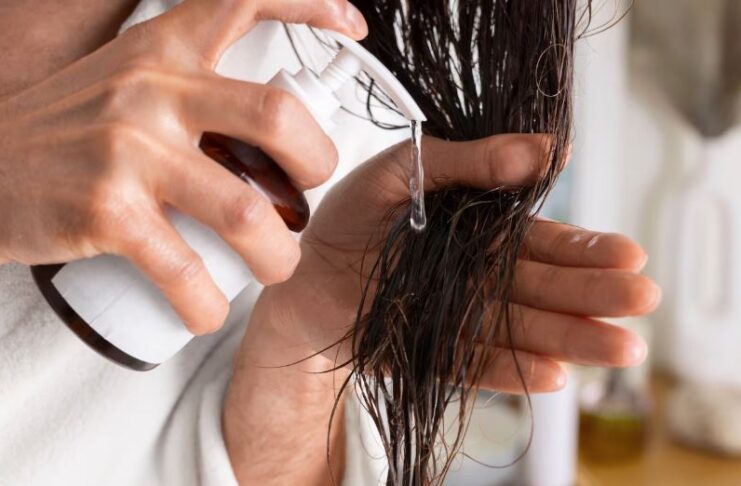
Common styling products permanently alter curl structure through chemical damage and protein disruption.
KEY STATISTICS
- 78% of people with curly hair use products containing drying alcohols daily
- Sulfates strip 40% more natural oils from curly hair than straight hair
- Chemical buildup reduces curl elasticity by up to 60% within six months
Your curls used to spring back with life, but now they hang limp and frizzy despite using expensive styling products. The irony is devastating: the very gels and mousses you rely on to define your curls are systematically destroying their natural pattern. What feels like a styling solution is actually a slow-motion chemical assault on your hair’s structure.
How Gel Damages Curls
Curly hair has a unique elliptical cross-section that creates its natural spiral pattern. The cuticles along each strand naturally lift more than straight hair, making curls more porous and vulnerable to chemical damage. Most commercial hair gels contain drying alcohols like denatured alcohol and isopropyl alcohol that strip moisture from already-fragile curl structures.
Sulfates in styling products act like detergents, removing not just dirt but essential natural oils that keep curls flexible and defined. When these sebaceous oils are repeatedly stripped away, the hair shaft becomes brittle and loses its ability to maintain its natural curl memory. The protein bonds that create curl elasticity begin to break down under constant chemical stress.
Silicones in many gels create a temporary smooth appearance but form an impermeable coating that prevents moisture from penetrating the hair shaft. Over time, this coating builds up and weighs down curls while simultaneously preventing natural conditioning oils from reaching the hair where they’re needed most.
Why Age Amplifies Damage
After 35, sebaceous glands naturally produce less oil, leaving curly hair even more vulnerable to chemical damage from styling products. Hormonal changes during perimenopause further reduce oil production, making curls more fragile and prone to breakage. The cumulative effect of years of gel use becomes more visible as natural repair mechanisms slow down.
Collagen production in hair follicles decreases with age, reducing the structural integrity of each strand. This makes curls less resilient to the mechanical stress of gel application and styling manipulation. Hair that could once bounce back from chemical damage now struggles to recover its original pattern.
Decreased circulation to the scalp means fewer nutrients reach hair follicles, compromising the production of healthy new growth. When combined with ongoing chemical damage from gels, this creates a perfect storm for permanent curl degradation.
Signs Your Curls Suffer
- Curls that used to spring back now stay stretched when pulled
- Increasingly frizzy hair despite using more product
- White flaky buildup on scalp and hair shafts
- Hair feels rough and straw-like even when wet
- Curls have lost their defined pattern and look stringy
Curl-Friendly Product Switches
The most effective approach is transitioning to sulfate-free, alcohol-free products designed specifically for curly hair. Look for gels containing natural humectants like aloe vera, glycerin, and honey that attract moisture rather than repel it. These ingredients work with your hair’s natural structure instead of fighting against it.
The “plopping” method using a cotton t-shirt instead of terry cloth towels prevents mechanical damage while curls are most vulnerable when wet. Applying products to soaking wet hair helps dilute any remaining harsh ingredients while providing maximum moisture penetration. This technique also encourages curl formation without the weight of heavy gels.
Regular deep conditioning treatments with protein-free masks can help restore moisture balance without overwhelming fragile curls. Focus on ingredients like shea butter, coconut oil, and argan oil that can penetrate the hair shaft rather than just coating the surface. Weekly clarifying treatments remove buildup while monthly protein treatments rebuild damaged curl structure.
Restore Your Natural Pattern
- Switch to sulfate-free, alcohol-free curl creams and leave-in conditioners
- Perform weekly clarifying treatments to remove product buildup
- Apply styling products only to soaking wet hair using scrunching motions
- Replace terry cloth towels with cotton t-shirts for drying
- Deep condition weekly with moisture-rich masks containing natural oils
Sleep’s Role in Recovery
Sleep habits play a crucial but overlooked role in curl preservation and recovery from chemical damage. Cotton pillowcases create friction that disrupts curl patterns and causes breakage, especially when hair is already weakened by gel damage. The mechanical stress of tossing and turning on rough fabric can undo hours of careful styling and worsen existing structural damage.
Satin or silk pillowcases allow hair to glide smoothly, reducing friction and helping curls maintain their shape overnight. This simple change can significantly improve curl definition while preventing additional damage to chemically-stressed hair. The investment in quality pillowcases often shows results within weeks.
Protective sleeping styles like loose pineapple ponytails or silk scrunchies prevent curls from getting crushed while maintaining their natural pattern. These techniques become especially important during the transition period when hair is recovering from years of chemical damage and needs every advantage to rebuild its natural structure.
Bottom Line
Your curls can recover their natural pattern, but it requires abandoning the chemical products that created the damage in the first place. The transition to curl-friendly products takes patience as your hair rebuilds its natural moisture balance and protein structure. With consistent care using gentle, nourishing ingredients, most people see significant curl improvement within three to six months.
Always consult a qualified healthcare provider before making changes to your health routine.
Sources
- Structural Analysis of Hair Fiber Damage from Chemical Treatments — Journal of Cosmetic Dermatology
- Effects of Surfactants on Hair Structure and Sebaceous Function — International Journal of Trichology
- Age-Related Changes in Hair Follicle Structure and Function — British Journal of Dermatology

