
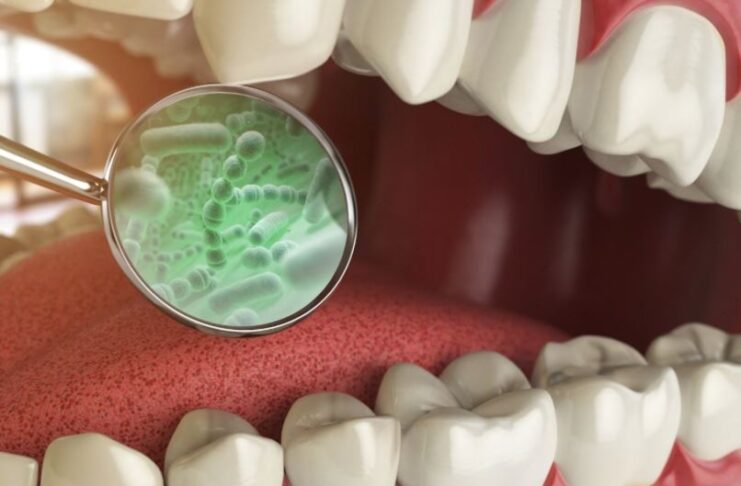
New research reveals that the bacteria living in your mouth may be silently driving cardiovascular inflammation — starting in your late thirties.
KEY STATISTICS
- Adults with severe gum disease are 2 to 3 times more likely to suffer a heart attack, according to the American Heart Association.
- A 2023 study in the European Heart Journal found that specific oral bacteria strains were detected in arterial plaque samples from 79% of cardiovascular patients.
- The CDC reports that nearly half of American adults over 30 have some form of periodontal disease — most without knowing it.
You brush your teeth, you floss occasionally, and you consider your oral hygiene good enough. But researchers now believe that what is living inside your mouth — specifically a handful of aggressive bacterial species — may be quietly inflaming the arteries that keep your heart alive. This is not a distant risk.
It is happening in people in their late thirties and forties right now.
Your Mouth Enters Arteries
Your mouth hosts over 700 species of bacteria, and most of them are harmless or actively helpful. The problem begins when the balance shifts — a condition researchers call oral dysbiosis — allowing pathogenic species like Porphyromonas gingivalis, Fusobacterium nucleatum, and Treponema denticola to dominate.
These bacteria do not simply stay in the mouth. They release lipopolysaccharides, a type of toxic molecule that enters the bloodstream through inflamed gum tissue and travels directly to the cardiovascular system. Once in circulation, these molecules trigger the immune system to produce C-reactive protein and interleukin-6, two well-established markers of systemic inflammation strongly linked to arterial damage.
Researchers at the European Heart Journal identified fragments of P. gingivalis DNA embedded inside atherosclerotic plaque — the hardened buildup that narrows arteries and causes heart attacks. This is not a correlation.
It is direct physical evidence that oral bacteria are participating in arterial disease.
Why Thirties Amplify Risk
Between the ages of 35 and 45, several biological shifts make oral dysbiosis both more likely and more dangerous. Hormonal fluctuations — especially declining estrogen in women and rising cortisol in both sexes — alter the oral environment, making gums more susceptible to bacterial invasion.
At this life stage, many adults are also dealing with chronic low-grade stress, disrupted sleep, and diets higher in refined carbohydrates. All three of these factors feed pathogenic oral bacteria, suppressing the beneficial strains that normally keep them in check.
Meanwhile, the cardiovascular system is already accumulating years of wear. Arterial elasticity begins to decline in the late thirties, meaning that the inflammatory burden introduced by oral bacteria lands on a system that is increasingly less equipped to absorb it without consequence.
Warning Signs To Watch
- Gums that bleed when you brush or floss, even mildly — this is never normal and signals active bacterial inflammation
- Persistent bad breath that does not resolve with brushing — a sign of anaerobic bacterial overgrowth deep in the gum pockets
- Gums that appear red, swollen, or are receding away from the teeth — classic markers of progressing periodontal disease
- A new or worsening metallic or bitter taste in your mouth without dietary cause — this can indicate bacterial byproduct accumulation
- Elevated CRP or inflammatory markers on routine bloodwork alongside any of the above oral symptoms — this combination warrants urgent dental and cardiovascular review
Changes That Actually Help
The most powerful intervention is also the most underused: professional periodontal cleaning. A standard dental clean does not reach the deep bacterial colonies living below the gum line. Ask your dentist specifically about subgingival scaling and root planing, which physically removes the bacterial biofilm responsible for systemic inflammation.
Diet matters more than most people realise. Pathogenic oral bacteria thrive on fermentable sugars and refined starches, so reducing ultra-processed foods, sweetened drinks, and white bread creates a measurably less hospitable environment for the bacterial species most associated with cardiovascular harm.
Polyphenol-rich foods — including green tea, pomegranate, dark berries, and extra virgin olive oil — have been shown in multiple trials to selectively suppress P. gingivalis while supporting beneficial oral strains. These are not alternative remedies.
They are foods with peer-reviewed evidence behind them.
Oil pulling with sesame or coconut oil has some early evidence suggesting it reduces oral bacterial load, but it should be viewed as a complement to evidence-based care, not a replacement. The fundamentals — consistent brushing technique, daily interdental cleaning, and regular dental visits — remain the non-negotiable foundation.
Your Action Plan Today
- Book a dental appointment specifically requesting a periodontal assessment — not a standard check-up — and ask about your probing depth measurements
- Switch to an electric toothbrush and brush for a full two minutes twice daily using fluoride toothpaste proven to reduce bacterial plaque
- Floss or use interdental brushes every single day — this is the only way to disturb the bacterial colonies forming between teeth and below the gum line
- Add at least one polyphenol-rich food daily: a cup of green tea, a handful of dark berries, or a tablespoon of extra virgin olive oil
- If you have any gum bleeding, bad breath, or systemic inflammation markers, ask your GP to test your CRP and request a cardiology referral if your oral health has been poor for years
The Sleep Connection Nobody Mentions
Sleep is the overlooked driver of oral microbiome collapse. During deep sleep, saliva production drops significantly — and saliva is one of the body’s primary defences against pathogenic bacterial overgrowth, containing antimicrobial proteins like lactoferrin and lysozyme.
Adults who sleep fewer than six hours a night consistently show higher rates of periodontal disease in epidemiological data. Mouth breathing during sleep — often a sign of undiagnosed sleep apnoea — compounds this dramatically, drying the oral environment and creating ideal conditions for pathogenic bacteria to multiply unchecked.
If you snore, wake frequently, or feel unrefreshed despite adequate hours in bed, ask your doctor about a sleep study. Treating sleep apnoea has been shown to reduce systemic inflammatory markers, and protecting your oral microbiome during sleep may be one of the most impactful cardiovascular interventions available to you right now.
Bottom Line
Your mouth is not separate from your cardiovascular system — it is a direct gateway into it. The bacterial balance in your gums is measurably influencing the inflammation inside your arteries, and in adults aged 35 to 45, that process is accelerating. Take your dental health as seriously as your diet, your exercise, and your blood pressure — because the evidence now shows it belongs in exactly that category.
Always consult a qualified healthcare provider before making changes to your health routine.
Sources
- Periodontal disease and atherosclerotic cardiovascular disease: a systematic review — European Heart Journal
- Oral infections and cardiovascular disease — Journal of the American Heart Association
- Prevalence of periodontitis in adults in the United States — CDC — Morbidity and Mortality Weekly Report
- Porphyromonas gingivalis in human atherosclerotic plaques — Circulation — American Heart Association
- Sleep duration and periodontal health: epidemiological associations — Journal of Clinical Periodontology

