
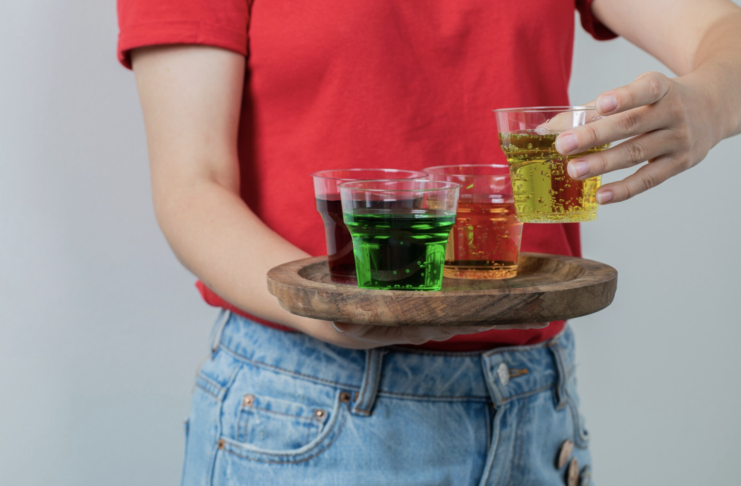
The fizzy drink sitting in your fridge may be doing more for your gut than the supplement bottle on your shelf.
KEY STATISTICS
- Only 3–4% of adults in the U.S. meet the daily recommended fiber intake of 25–38 grams, according to the American Journal of Lifestyle Medicine.
- A 2023 review in Nutrients found that prebiotic fiber supplementation improved stool frequency and consistency in adults with functional constipation more effectively than probiotic capsules alone.
- The global prebiotic beverage market is projected to reach $12.4 billion by 2028, driven largely by adults aged 30–50 seeking digestive relief without pills, per Grand View Research.
You have tried the probiotic capsules, the refrigerated shots, and the powders that turn your water murky. Yet your digestion still feels sluggish, bloated, and unpredictable. A new category of sparkling drinks is quietly outperforming those supplements — and the science behind why is more straightforward than any label claim.
How Prebiotics Actually Work
Your gut microbiome is not simply a collection of bacteria waiting to be topped up. It is a living ecosystem that requires fuel — specifically, fermentable fiber called prebiotics — to allow beneficial bacteria to multiply and thrive on their own.
Probiotics introduce live bacterial strains directly into the digestive tract. The problem is that most capsule-based probiotics never survive the acidic environment of the stomach long enough to colonize the colon in meaningful numbers.
Prebiotics work differently. They act as food for the bacteria already living in your gut, encouraging your existing microbiome to strengthen and diversify without relying on external strains to survive a hostile environment.
The most common prebiotic fibers used in sparkling drinks include inulin, chicory root fiber, and fructooligosaccharides. These compounds pass through the small intestine undigested and reach the colon intact, where fermentation produces short-chain fatty acids that reduce inflammation and support the gut lining.
This delivery mechanism — liquid, slightly carbonated, consumed with meals — also appears to improve absorption rates compared to dry capsule formats, according to research published in the Journal of Nutritional Biochemistry.
Why Your Gut Struggles Now
Between the ages of 35 and 45, the gut microbiome begins to show measurable shifts in diversity. Stress load, hormonal fluctuations, and years of inconsistent fiber intake combine to reduce populations of beneficial Bifidobacterium and Lactobacillus strains.
This decline is not dramatic overnight, but its effects accumulate quietly. Slower transit time, increased gas production, and a growing sensitivity to certain foods are early signals that the ecosystem is out of balance.
Adults in this age range are also more likely to be on medications — statins, antidepressants, NSAIDs — that further disrupt microbial balance. Probiotic supplements often cannot compensate for this disruption because they cannot survive long enough to address it at the source.
Prebiotic-rich beverages consumed consistently with meals provide the fiber substrate that this age group is chronically missing. Rather than trying to reintroduce bacterial populations, they rebuild the conditions that allow existing populations to recover.
Warning Signs to Watch
- Bloating that appears within 30 minutes of eating and does not resolve within two hours
- Fewer than three bowel movements per week, or a consistent feeling of incomplete evacuation
- Increased sensitivity to foods you previously tolerated without issue, including wheat, onions, or legumes
- Persistent low-grade fatigue after meals that is not explained by sleep deprivation or blood sugar changes
- Visible changes in stool consistency lasting more than two weeks, including alternating hard and loose stools
What Actually Helps Digestion
Switching to prebiotic sodas is not about replacing meals or adopting a rigid protocol. The most effective approach is to introduce one prebiotic beverage per day alongside a high-fiber meal, allowing the gut to adapt gradually without triggering excessive fermentation discomfort.
Brands formulated with chicory root inulin or Jerusalem artichoke fiber tend to deliver the highest concentrations of fermentable prebiotic content per serving. Look for products with at least 3 grams of prebiotic fiber per can and no more than 5 grams of added sugar, as excess sugar can feed less desirable bacterial populations.
Physical movement also plays a direct role in gut motility. A 20-minute walk after the meal in which you consume a prebiotic drink has been shown to significantly improve transit time, compounding the fiber benefit.
Hydration matters more than most people realize when increasing fiber intake. Prebiotic fibers draw water into the colon as they ferment, and inadequate fluid intake can paradoxically worsen constipation in the first two weeks of introducing these drinks.
Your Gut Reset Checklist
- Start with one prebiotic soda per day — ideally at lunch — and increase to two servings daily after two weeks if no bloating occurs
- Check the label for at least 3g of prebiotic fiber per serving and verify that the source is chicory root, inulin, or fructooligosaccharides rather than vague ‘fiber blend’ claims
- Pair each prebiotic drink with a 15–20 minute post-meal walk to actively support gut motility alongside the fiber intake
- Increase your total daily water intake by at least one additional glass for every prebiotic beverage consumed, to prevent fermentation-driven bloating
- Track your bowel habits and energy levels for four weeks using a simple daily note — consistent improvement should be visible by day 21
The Stress-Gut Connection
There is one factor almost nobody discusses when talking about gut health in this age group: chronic low-grade stress is actively suppressing the gut-brain axis in ways that no supplement or beverage can fully override alone.
The vagus nerve connects the brain and the gut in a bidirectional communication loop. When cortisol is elevated consistently — as it often is between ages 35 and 45 — vagal tone weakens, gut motility slows, and the microbiome shifts toward inflammatory bacterial profiles regardless of what you are eating or drinking.
Prebiotic fibers do support vagal signaling indirectly by increasing short-chain fatty acid production, which sends anti-inflammatory signals upward through the gut-brain axis. But pairing your prebiotic drink ritual with a deliberate five-minute breathing or decompression practice after meals amplifies this effect in ways the drink alone cannot achieve.
Think of the prebiotic soda as the input and your nervous system regulation as the environment in which that input either thrives or gets undermined.
Bottom Line
Prebiotic sodas are not a wellness trend — they are a practical, evidence-supported delivery mechanism for the fiber most adults in their 30s and 40s are critically short on. They work by feeding your existing gut bacteria rather than gambling on whether a live probiotic strain survives the journey. Choose wisely, introduce them gradually, and pair them with movement and hydration for results you will actually feel within a month.
Always consult a qualified healthcare provider before making changes to your health routine.
Sources
- Dietary fiber intake and gut microbiota composition in healthy adults — American Journal of Lifestyle Medicine
- Prebiotic versus probiotic supplementation for functional constipation: a systematic review — Nutrients
- Short-chain fatty acids and the gut-brain axis: current evidence and clinical implications — Journal of Nutritional Biochemistry
- Gut microbiome diversity and aging: longitudinal changes in adults aged 35 to 65 — Cell Host and Microbe

