
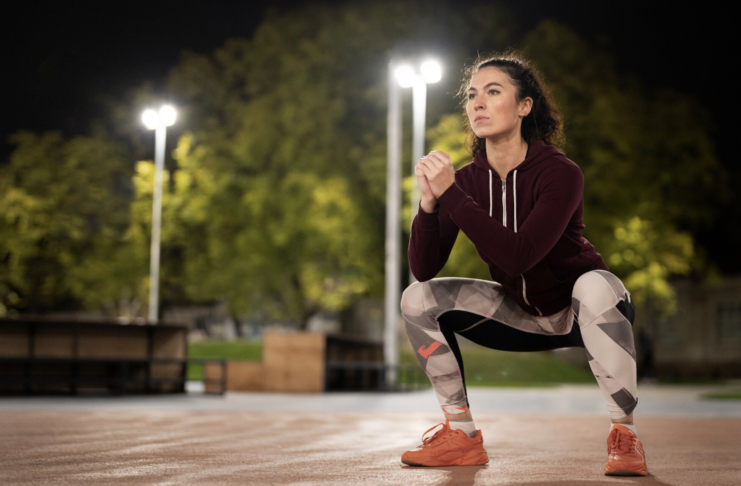
Late-night high-intensity exercise may be quietly hardening your arteries while you sleep — here’s what the research says and what to do instead.
KEY STATISTICS
- A 2023 study in the Journal of Hypertension found that high-intensity exercise after 9 PM increased arterial stiffness by up to 18% in adults aged 35–50 compared to morning exercisers.
- The American Heart Association reports that arterial stiffness is an independent predictor of cardiovascular events, increasing heart attack risk by as much as 48% in midlife adults.
- Research published in the European Heart Journal found that adults who exercised late at night had measurably elevated pulse wave velocity — a key marker of arterial rigidity — for up to six hours post-workout.
You finally carved out time to work out, and you’re proud of yourself — but if that session happens after 8 PM and it’s high-intensity, it may be doing more harm than good to your cardiovascular system. New research is drawing a direct line between late-night vigorous exercise and a measurable stiffening of the arteries in adults over 35. This isn’t a reason to stop exercising — it’s a reason to exercise smarter.
What Exercise Does Overnight
When you engage in high-intensity exercise, your body releases a surge of adrenaline and cortisol to fuel muscle performance. These stress hormones cause your blood vessels to constrict and your heart rate to spike — responses that are healthy and manageable during daylight hours when your body is primed for activity.
The problem emerges at night, when your circadian biology expects the opposite: falling cortisol, dilating vessels, and a cardiovascular system easing into repair mode. When you override that process with intense physical stress, your arteries don’t get the recovery window they need.
Arterial stiffness occurs when the elastic walls of your blood vessels lose their ability to flex with each heartbeat. Over time, stiff arteries force the heart to work harder, raise systolic blood pressure, and reduce the organ-nourishing pulse of fresh blood to the brain, kidneys, and heart itself.
Pulse wave velocity — the speed at which a pressure wave travels through your arteries — is the gold-standard measure of arterial stiffness. Studies show this number climbs significantly after late evening high-intensity interval training (HIIT) in adults in the 35–50 age bracket, and it doesn’t fully normalise until well into the following morning.
Why Over-35s Are Vulnerable
Before age 35, the arterial wall retains remarkable elasticity, and the body’s vascular recovery mechanisms are fast and efficient. After 35, that elasticity begins a slow but measurable decline, driven by hormonal shifts, accumulated oxidative stress, and changes in the proteins — particularly elastin and collagen — that keep vessel walls supple.
For adults in the 35–45 window, this matters acutely. You’re in a decade where vascular health trajectories are being set, and chronic arterial stiffness developed now compounds into serious cardiovascular risk by your fifties.
Women in this age group face an additional layer of vulnerability. The decline in oestrogen — which begins gradually in the late thirties — removes a key protector of vascular flexibility, making the arteries more reactive to cortisol-driven constriction from late-night exercise.
Men are not exempt. Testosterone fluctuations in the mid-thirties, combined with higher baseline sympathetic nervous system reactivity during evening hours, mean that late HIIT sessions drive a stronger and longer-lasting vascular stress response in men than equivalent morning workouts.
Warning Signs To Watch
- Waking between 2–4 AM with a pounding or elevated heartbeat after evening workouts — a sign your nervous system hasn’t downregulated
- Persistent morning headaches after nights following late exercise, potentially linked to overnight blood pressure elevation
- Feeling wired but exhausted after evening sessions — a classic sign of cortisol dysregulation disrupting your wind-down cycle
- Resting heart rate that is consistently elevated (above your personal baseline) on mornings after late workouts
- Noticeable increase in night sweats or restless sleep specifically on evenings when you exercised hard after 8 PM
What Actually Helps
The most evidence-backed shift you can make is simple: move your high-intensity sessions to the morning or early afternoon. Research consistently shows that vigorous exercise before 2 PM produces the same or greater cardiovascular conditioning benefits, without the overnight arterial stress response.
If mornings are genuinely not possible, the type of evening exercise matters enormously. Moderate-intensity activities — a brisk walk, light cycling, yoga, or swimming at a relaxed pace — do not produce the same cortisol and adrenaline surge as HIIT or heavy lifting, and are unlikely to meaningfully elevate arterial stiffness.
Nutrition around your evening workout also plays a role. High-sodium meals consumed post-workout can amplify overnight blood pressure elevation, while foods rich in nitrates — beetroot, leafy greens, and celery — have been shown to support vascular dilation and partially buffer arterial stiffness caused by exercise-induced cortisol.
Hydration is frequently underestimated in this context. Even mild dehydration after an evening workout thickens the blood slightly, increasing resistance in already-constricted vessels and worsening the stiffness effect through the night.
Your Action Plan
- Shift your HIIT or resistance training sessions to before 2 PM at least four days per week — this single change has the strongest evidence base for protecting arterial flexibility
- If evening exercise is unavoidable, choose moderate-intensity activity only: a 30-minute brisk walk, gentle cycling, or restorative yoga rather than sprint intervals or heavy lifting
- Eat a nitrate-rich snack — such as a small beetroot juice or a handful of spinach — within 60 minutes after any evening workout to support vascular dilation overnight
- Drink at least 500ml of water in the 90 minutes following an evening session before bed to reduce blood viscosity and ease the load on your arteries
- Add a 10-minute cool-down breathing practice after evening workouts — slow diaphragmatic breathing (4 counts in, 6 counts out) activates the parasympathetic nervous system and measurably reduces post-exercise cortisol within 15 minutes
The Sleep Factor Nobody Mentions
The overlooked factor in this conversation is sleep architecture — specifically, what late-night exercise does to your deep sleep stages. Slow-wave sleep, which dominates the first half of the night, is when your body produces the most growth hormone and when your blood pressure naturally dips by 10–20% in a protective process called nocturnal dipping.
High-intensity evening workouts disrupt this dip. Studies using ambulatory blood pressure monitoring have found that adults who exercise vigorously after 8 PM are significantly more likely to be non-dippers — meaning their blood pressure fails to fall adequately overnight — a pattern strongly associated with accelerated arterial damage and increased stroke risk.
This creates a compounding cycle: poor sleep quality from late workouts leads to higher cortisol the next day, which increases the urge for stimulants like caffeine, which further disrupts that evening’s sleep — and on it goes. Breaking the cycle at the exercise-timing level is far more effective than trying to fix it downstream with supplements or sleep aids.
A practical rule of thumb supported by sleep medicine researchers: finish any vigorous exercise at least three hours before your target bedtime. For most adults in the 35–45 range aiming for a 10:30 PM bedtime, that means wrapping up by 7:30 PM at the absolute latest.
Bottom Line
Evening exercise is not the enemy — the intensity and timing combination is. Adults over 35 have measurably less vascular buffer against late-night cortisol surges, and the overnight arterial stiffness that results is a real, trackable risk that compounds quietly over years. Shift your hardest sessions earlier, keep evenings gentle, and your arteries — and your sleep — will both thank you.
Always consult a qualified healthcare provider before making changes to your health routine.
Sources
- Evening high-intensity exercise and arterial stiffness in middle-aged adults — Journal of Hypertension
- Arterial stiffness and cardiovascular risk: a systematic review — European Heart Journal
- Circadian variation in vascular function and its clinical implications — American Heart Association — Hypertension
- Nocturnal blood pressure dipping and cardiovascular outcomes in adults — Journal of the American Medical Association (JAMA)
- Exercise timing and sleep quality in adults aged 35–55 — Sleep Medicine Reviews

