
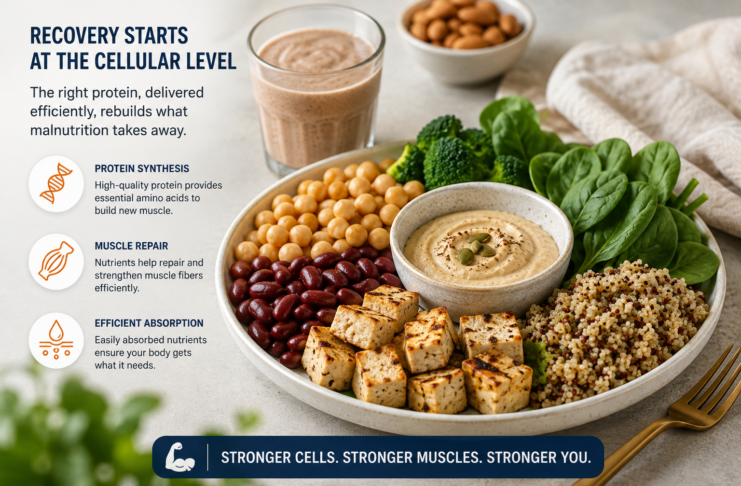
New research shows how therapeutic food formulas help the body recover from severe malnutrition.
KEY STATISTICS
- Malnutrition affects muscle recovery at the cellular level, slowing protein synthesis and tissue rebuilding.
- Plant-based therapeutic formulas are designed to deliver concentrated amino acids in easily digestible form.
- Recovery from nutritional deficiency requires sustained, targeted protein intake — not occasional supplementation.
If you’ve ever recovered from illness, surgery, or a period of poor nutrition, you know how long it takes to feel strong again. Your muscles don’t simply bounce back — they need the right building blocks, delivered consistently. New research published in Current Developments in Nutrition examined how specialized plant-based therapeutic food formulas work at the cellular level to restore muscle and tissue after malnutrition, offering fresh insight into what truly accelerates recovery.
How Malnutrition Damages Muscle at the Cellular Level
When malnutrition occurs, your body doesn’t just lose weight — it loses the cellular machinery that builds and maintains muscle tissue. Protein synthesis slows dramatically, and existing muscle fibers break down faster than new ones can form. The science shows that recovery requires not just any protein, but protein delivered in a form the body can efficiently absorb and use.
- Muscle tissue depends on amino acid availability to trigger protein synthesis — the core process rebuilding fibers.
- Plant-based therapeutic formulas concentrate amino acids in proportions engineered for rapid absorption and utilization.
- Specialized formulations enhance recovery by optimizing digestibility and nutrient bioavailability beyond standard food alone.
- Recovery involves restoring both muscle mass and metabolic function — separate processes requiring sustained nutritional support.
Why Recovery Slows After 35
Adults in their late 30s and 40s face a unique vulnerability during recovery from malnutrition or illness. Your baseline muscle synthesis is already declining naturally with age — about 3-5% per decade after 30. When malnutrition compounds this age-related loss, recovery becomes measurably harder and slower than it would be for a younger adult.
- Age-related muscle decline (sarcopenia) begins early; malnutrition accelerates this loss exponentially, not incrementally.
- Your digestive efficiency declines with age, making ordinary protein sources less available to your muscles.
- Recovery windows close faster — delayed intervention after illness or poor nutrition compounds long-term weakness.
- Midlife adults require higher absolute protein intake to stimulate the same muscle-rebuilding response as younger populations.
Warning Signs You May Be at Risk
- Unusual fatigue that persists weeks after illness, disproportionate to your normal recovery time.
- Visible muscle loss in arms, legs, or shoulders — loss that seems faster than expected.
- Difficulty with everyday tasks (climbing stairs, standing from a chair) that didn’t challenge you before.
- Slow wound healing, frequent infections, or prolonged illness recovery — signs of depleted nutritional reserves.
- Unintentional weight loss combined with weakness, even after returning to normal eating patterns.
- Brain fog, low mood, or difficulty concentrating — often overlooked signs of protein and micronutrient deficiency.
Nutrition and Lifestyle for True Recovery
Recovery from malnutrition isn’t solved by diet alone — it requires a coordinated approach pairing targeted nutrition with adequate rest and gentle movement. Specialized therapeutic foods work best when combined with realistic lifestyle adjustments that support your body’s rebuilding phase.
- Therapeutic plant-based formulas work most effectively when spread across multiple meals — consistency matters more than single large doses.
- Gentle, progressive movement (walking, light strength work) stimulates muscle rebuilding; complete rest actually slows recovery.
- Adequate sleep directly regulates protein synthesis and hormone balance — prioritize 7-9 hours during recovery phases.
- Hydration supports nutrient delivery to cells and waste removal; dehydration impairs the entire recovery process.
Your Recovery Action Plan
- Assess your protein intake baseline — aim for 1.0-1.2g per pound of body weight during active recovery from malnutrition.
- Consider therapeutic plant-based formulas if ordinary food intake is insufficient; discuss timing and frequency with your healthcare provider.
- Schedule meals and formula doses every 3-4 hours to maximize amino acid availability throughout the day.
- Pair nutrition with 20-30 minutes of gentle movement most days — walking, stretching, or light resistance work.
- Track your energy, strength, and hunger signals weekly; adjust intake based on actual recovery progress, not assumptions.
- Reintroduce whole foods gradually alongside therapeutic formulas; whole foods provide micronutrients formulas alone cannot match.
- Schedule a follow-up assessment after 4-6 weeks to confirm recovery trajectory and adjust your plan.
The Overlooked Role of Meal Timing
Most discussions of recovery nutrition focus narrowly on protein quantity, overlooking the critical role of meal timing and digestive rest. Your gut needs time to absorb nutrients between meals — constant grazing can actually reduce overall nutrient uptake.
- Spacing protein intake 3-4 hours apart allows complete digestion and absorption; clustering doses wastes amino acids.
- Your digestive capacity declines during recovery; smaller, frequent meals work better than traditional three-meal patterns.
- Therapeutic formulas are designed for rapid absorption on an empty or lightly-fed stomach — timing matters as much as amount.
- Rest between meals supports nutrient transport; constant snacking overloads a recovering digestive system.
Bottom Line
Recovery from malnutrition is not a passive process, and it’s not as simple as eating more protein. Research into specialized plant-based therapeutic formulas shows that what matters is consistent, strategically-timed nutrition paired with adequate rest and gentle movement. If you’re rebuilding after illness or periods of poor nutrition, understanding how your body actually uses protein — and when — can significantly shorten your recovery timeline and restore genuine strength rather than just weight.
Live Long Daily — always consult a qualified healthcare provider before making changes to your health routine.
Sources
- Local High-Protein, Plant-Based Ready-to-Use Therapeutic Food Enhances Recovery from Malnutrition in Rats — Current Developments in Nutrition
- General guidance on protein intake and recovery — NIH National Institute on Aging
- Sarcopenia and age-related muscle loss — Mayo Clinic

