
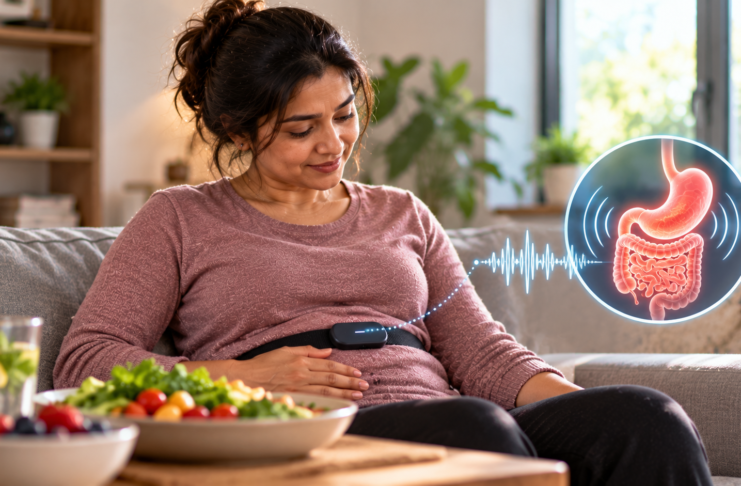
How emerging research on gut sounds could change the way you self-monitor eating habits
KEY STATISTICS
- Abdominal sound monitoring shows promise as a non-invasive dietary tracking method in recent pilot research
- Study participants ranged from young adults, revealing engagement challenges with novel tracking technologies
- Real-world dietary self-regulation requires both reliable detection systems and user-friendly design to succeed
You probably don’t think much about the sounds your stomach makes—unless you’re in a quiet meeting when it growls. But researchers in Taiwan have begun exploring whether those same gut sounds could become a legitimate tool for monitoring what you eat and how your body responds. A two-phase study examined whether a wearable system that listens to abdominal sounds could help people regulate their diet more consciously.
The findings reveal both the promise and the practical hurdles of turning body signals into real dietary behavior change.
How Your Gut Produces Trackable Sound
Abdominal sounds—the gurgles, rumbles, and clicks produced by your digestive system—reflect real physiological activity. Your gut generates acoustic signals when food moves through your stomach and intestines, when gas shifts position, and when muscles contract to propel digestion forward. Researchers theorized that by capturing and analyzing these sounds, a wearable device could provide real-time feedback about eating patterns and digestive response.
- Abdominal sounds correlate with stomach motility and food passage through the digestive tract
- A wearable sensor can detect these acoustic signals without requiring blood samples or invasive monitoring
- Sound patterns may differ depending on meal composition, portion size, and individual digestive response
Why Younger Adults Face Engagement Gaps
Young adults in their late teens through early thirties—the group studied—often struggle with unstructured eating patterns and low awareness of portion control. This age group also tends to be most comfortable adopting new technology, making them ideal candidates for testing novel health devices. However, sustained use of unfamiliar tracking systems remains a barrier even among tech-savvy populations.
- Irregular meal timing and snacking patterns are most common in college-age and early-career adults
- Tech comfort doesn’t automatically translate to sustained use of health-monitoring devices in daily life
- Motivation to track dietary intake tends to fade without immediate, meaningful feedback or social accountability
Signs You Need Better Dietary Feedback
- You eat without noticing portion size or feel full only after overeating consistently
- Your digestion feels unpredictable—bloating, gas, or discomfort after meals without clear triggers
- You skip meals, then eat large amounts later, creating erratic digestive demand on your stomach
- You can’t recall what you ate in the past 24 hours without effort or journaling
- Your energy crashes mid-afternoon, suggesting misaligned meal timing or composition
- You eat on autopilot during work or screen time, never truly aware of intake
Practical Dietary Awareness Tools Today
If sound-based monitoring eventually becomes practical, the first step is understanding what kind of feedback actually changes behavior. The research emphasized that technology alone doesn’t drive dietary change—the design, timing, and clarity of feedback matter enormously. For now, simpler interventions remain more reliable: structured meal timing, visible portion awareness, and regular self-check-in practices.
- Schedule meals at consistent times to regulate hunger cues and reduce reactive, emotion-driven eating
- Use a regular plate or bowl as a portion reference—visual cues often work better than estimates
- Eat slowly and pause halfway through to assess fullness, allowing your gut signals time to reach your brain
- Keep a simple food log for three days each week to build awareness without obsessive tracking
Action Plan Checklist
- Set three regular mealtimes tomorrow and stick to them for one full week, noting energy and hunger patterns
- Choose one meal per day this week to eat without screens, paying attention to taste and satiety cues
- Drink a glass of water before meals for three days to assess whether thirst mimics hunger signals
- Review your last three days of eating and identify one pattern (late-night snacking, skipped breakfast, etc.)
- If using any tracking app or device, commit to a two-week trial period before deciding to continue
- Ask a trusted friend or family member to check in about your meals twice weekly for accountability
Why Technology Adoption Matters Most
Emerging technologies often fail in the real world because they ignore the psychological and social reality of how people actually eat. The study revealed that even when a system accurately detects dietary patterns, users abandon it if the interface feels clunky, feedback feels delayed, or social context discourages use. The human elements—curiosity, convenience, and connection—matter as much as the science.
- Devices perceived as cumbersome or requiring frequent adjustment get abandoned within two to four weeks
- Feedback must arrive within minutes of eating to influence immediate behavior, not hours or days later
- Social eating situations often conflict with tracking systems, leading users to abandon monitoring during meals with others
- Gamification and goal-setting features increase engagement only when aligned with users’ actual dietary values
Bottom Line
Abdominal sound monitoring is an intriguing frontier in dietary self-awareness, but the research so far shows that the most important factor in lasting dietary change isn’t the technology itself—it’s whether the system fits seamlessly into your life and gives you feedback you actually trust and use. Until such systems become more refined and user-friendly, the most reliable path to better eating remains the oldest one: consistent meal timing, mindful portion awareness, and honest self-observation.
Live Long Daily — always consult a qualified healthcare provider before making changes to your health routine.
Sources
- Behavioral and human-computer interaction requirements for a candidate abdominal-sound-enabled dietary self-regulation system: a two-phase study in Taiwanese university students — Frontiers in Nutrition
- General guidance on nutrition and dietary behavior change — CDC
- Wearable health technology and behavioral engagement — NIH

