
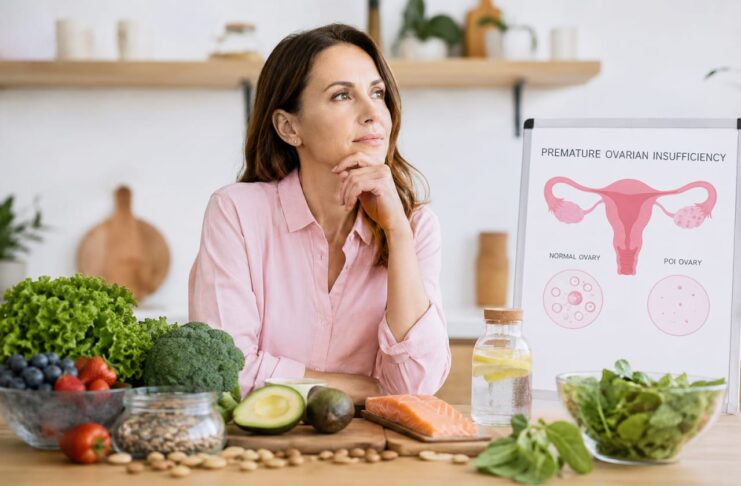
*Why what you eat matters more than you think for reproductive health after 35*
KEY STATISTICS
- Premature ovarian insufficiency affects approximately 1 in 100 women before age 40, with rates rising after 35.
- Oxidative stress and inflammation are recognized as key drivers in ovarian cell damage and dysfunction.
- Nutritional deficiencies in antioxidants, iron, and micronutrients correlate with accelerated ovarian aging in clinical research.
By your late 30s and early 40s, you may notice your cycle shifting, energy dipping, or hot flashes appearing earlier than expected. For some women, these aren’t just normal aging—they’re signs of premature ovarian insufficiency (POI), a condition where the ovaries stop functioning normally before age 40. The surprising news: emerging research shows that what’s on your plate directly influences whether your ovaries decline slowly or rapidly, and targeted dietary changes may help slow or even partially reverse the damage.
What Actually Happens Inside
Premature ovarian insufficiency involves the ovaries losing their ability to produce adequate estrogen and eggs, often years earlier than expected. This isn’t simply about running out of eggs—it’s about cellular damage driven by oxidative stress, inflammation, and nutrient depletion. Understanding the biological mechanism helps explain why certain foods and nutrients matter so much.
- Ovarian follicles are vulnerable to free radical damage; antioxidant deficiency accelerates cell death and reduces egg quality.
- Chronic inflammation disrupts the delicate signaling between the brain, pituitary gland, and ovaries that regulates hormone production.
- Mitochondrial dysfunction in ovarian cells reduces their energy capacity, impairing the follicle’s ability to develop and release eggs.
- Nutrient deficiencies in iron, zinc, selenium, and B vitamins impair DNA repair and hormone synthesis in ovarian tissue.
Why Your 40s Are Critical
Women aged 35 to 45 sit at the exact demographic window where POI risk rises sharply, yet many mistake early symptoms for normal perimenopause. Your metabolic capacity to absorb and utilize protective nutrients also declines with age, meaning dietary choices carry heavier weight during these years. Additionally, cumulative lifestyle stress, sleep debt, and prior health events converge in your 40s to amplify ovarian vulnerability.
- POI incidence climbs significantly between ages 35 and 45; early intervention during this window may preserve ovarian function.
- Estrogen sensitivity in tissues peaks in this decade; dietary phytoestrogens and healthy fat intake influence hormone availability.
- Cumulative oxidative stress from years of diet, exercise, and environmental exposure reaches a tipping point in the late 30s.
- Reproductive reserve declines rapidly after 35; nutritional support becomes more urgent as egg quality and quantity naturally fall.
Signs You Should Get Tested
- Menstrual cycles becoming irregular or lengthening, with unpredictable timing or lighter bleeding patterns.
- Hot flashes, night sweats, or sudden temperature fluctuations appearing before age 45.
- Persistent fatigue despite adequate sleep, or difficulty maintaining energy throughout the day.
- Vaginal dryness, mood changes, or brain fog that correlates with cycle changes.
- Elevated FSH (follicle-stimulating hormone) levels on blood tests, confirmed by a healthcare provider.
- Difficulty conceiving or repeated early miscarriages after age 35 without other identified causes.
What Diet and Lifestyle Changes Help
Research increasingly supports the idea that diet alone cannot reverse POI, but combined with targeted exercise and stress reduction, nutritional intervention can meaningfully slow decline and improve symptom burden. The goal is not reversal but stabilization—preserving remaining ovarian function and reducing the inflammatory cascade that accelerates cell death. Timing matters: the earlier you intervene, the more ovarian reserve you’re likely to preserve.
- Anti-inflammatory diets rich in omega-3 fatty acids, colorful vegetables, and whole grains reduce oxidative stress in ovarian tissue.
- Adequate protein intake (1.2–1.6 g/kg body weight) supports hormone synthesis and preserves lean muscle during hormonal transition.
- Micronutrient density—iron, zinc, selenium, vitamin D, and folate—directly supports DNA repair and follicle health; deficiency accelerates decline.
- Moderate aerobic exercise and strength training improve insulin sensitivity and reduce systemic inflammation linked to POI progression.
Your First Steps This Week
- Request blood tests for FSH, estradiol, and thyroid function; confirm POI diagnosis with a reproductive endocrinologist before dietary changes.
- Prioritize iron-rich foods (lean red meat, legumes, leafy greens) and pair with vitamin C sources to maximize absorption.
- Add fatty fish (salmon, sardines, mackerel) twice weekly, or take an algae-based omega-3 supplement if not eating fish.
- Eat at least 5 servings of colorful vegetables and fruits daily, emphasizing those high in antioxidants (berries, leafy greens, beets).
- Work with a registered dietitian experienced in reproductive health to personalize supplementation (vitamin D, CoQ10, inositol) based on your labs.
- Schedule moderate exercise (150 minutes weekly) and stress-reduction practices like yoga or meditation; both improve hormonal balance.
- Recheck hormone levels and symptoms every 3–6 months to assess whether dietary changes are stabilizing ovarian function.
Sleep and Stress as Hidden Drivers
Sleep quality and stress management deserve equal weight with diet in managing POI, yet they’re often overlooked in treatment discussions. Poor sleep and chronic stress elevate cortisol, which directly suppresses reproductive hormones and increases ovarian inflammation. Women in their 40s juggling career, family, and health concerns often sacrifice sleep first—a decision that may accelerate ovarian decline.
- Sleep deprivation (fewer than 7 hours nightly) elevates cortisol and inflammatory markers, both linked to faster POI progression.
- Chronic psychological stress impairs the hypothalamic-pituitary-ovarian axis, reducing FSH secretion and disrupting follicle development.
- Consistent sleep timing and 15-minute daily relaxation practices improve stress hormone balance and support ovarian function more effectively than diet alone.
- Heat exposure (hot baths, saunas, tight clothing) may temporarily worsen hot flashes; cool sleep environments and breathable bedding help stabilize body temperature.
Bottom Line
Premature ovarian insufficiency is not a life sentence—it’s a signal that your body needs targeted nutritional, physical, and emotional support. While diet cannot reverse ovarian aging entirely, an anti-inflammatory approach rich in antioxidants, healthy fats, and micronutrients, combined with adequate sleep and stress management, can slow decline and preserve ovarian function during the critical 35–45 window. The key is acting early, getting tested, and personalizing your approach with a healthcare team experienced in reproductive health.
Live Long Daily — always consult a qualified healthcare provider before making changes to your health routine.
Sources
- The Role of Diet in the Pathogenesis and Management of Premature Ovarian Insufficiency — Frontiers in Nutrition
- General Guidance on Premature Ovarian Insufficiency — Mayo Clinic
- Women’s Reproductive Health Overview — NIH National Institute of Child Health and Human Development

