
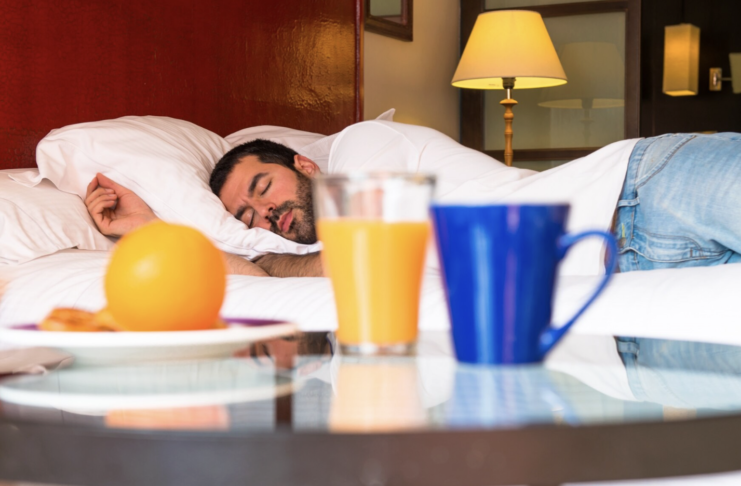
Your sleep tracker, melatonin stack, and 10-step bedtime routine may be the reason you wake up exhausted.
KEY STATISTICS
- Adults who use sleep trackers report 30% higher rates of sleep-related anxiety than non-users, according to a 2023 JAMA Internal Medicine review.
- Cortisol levels in adults aged 35–45 are measurably elevated by performance anxiety around sleep, with nighttime cortisol spikes linked to fragmented REM cycles — findings published in the journal Sleep.
- Melatonin supplement use has surged 425% in the last decade, yet clinical evidence supporting its effectiveness for healthy sleepers remains weak, per a NIH-backed meta-analysis.
You downloaded the app, bought the ring, set the blackout curtains, and take four different supplements before bed — and somehow you are sleeping worse than ever. What started as optimizing your rest has quietly become a second job that your nervous system is billing you for overnight. Sleepmaxxing, the trend of obsessively engineering perfect sleep, is backfiring on the exact people it promised to help most.
What Stress Does Overnight
When you introduce performance pressure into sleep, you activate the same threat-response pathway your brain uses during a work crisis. The hypothalamic-pituitary-adrenal axis — the body’s central stress system — cannot distinguish between fear of failure and fear of a bad sleep score. Both trigger cortisol release, and elevated cortisol at night is one of the most reliable ways to shred sleep architecture.
Cortisol is designed to peak in the morning and taper through the night. When anxiety about sleep quality keeps that curve elevated past midnight, your body suppresses slow-wave sleep — the stage responsible for physical repair — and compresses REM, the stage tied to emotional regulation and memory consolidation.
Sleep trackers compound this problem by giving you a number to catastrophize over. Research published in the Journal of Clinical Sleep Medicine identified a clinical pattern called orthosomnia — a condition where the pursuit of perfect sleep data becomes the primary driver of insomnia. The harder you chase the score, the worse the score becomes.
Why Midlife Amplifies This
Adults between 35 and 45 sit at a hormonal inflection point that makes sleep-performance anxiety especially damaging. Cortisol sensitivity increases during perimenopause and andropause, meaning the same level of psychological stress triggers a larger hormonal response than it would have a decade earlier.
This age group is also the most active consumer of wearable sleep technology and sleep supplements. The convergence of genuine sleep disruption from hormonal shifts and an optimization culture that pathologizes every deviation creates a cycle that is genuinely difficult to exit.
Additionally, midlife adults carry higher allostatic load — the cumulative wear of chronic stress — which means their baseline cortisol is already running higher than in their twenties. Adding rigid sleep schedules and supplement timing protocols onto an already-taxed stress system is like installing a performance chip in an engine that is already overheating.
Signs You’ve Gone Too Far
- You feel anxious about going to bed, or dread checking your sleep score in the morning
- You have added more than two sleep supplements in the last six months without clinical guidance
- Your sleep quality feels worse on nights when you forget to charge or wear your tracker
- You cancel or avoid evening social events to protect a fixed bedtime, causing regular stress or conflict
- You spend more than ten minutes per day reading, logging, or analyzing your sleep data
What Actually Helps Sleep
The first intervention is not a new supplement — it is removing one. Melatonin is appropriate for jet lag and circadian rhythm disorders, but taking it nightly as a healthy adult suppresses your brain’s own melatonin production over time. Tapering off exogenous melatonin and allowing natural secretion to reassert itself is often the single change that most quickly restores sleep depth.
Movement during the day is one of the most evidence-supported levers for sleep quality, and it works through cortisol rather than around it. Morning exercise drives cortisol high early — exactly where it should be — and accelerates its natural decline through the day, making it biochemically easier to fall and stay asleep by evening.
For the tracker itself, consider a data fast. Wear it if you want, but stop reading the scores for two weeks. Research from the University of California found that decoupling emotional investment from sleep data reduced pre-sleep anxiety in participants within ten days, and their objective sleep metrics actually improved without any other change.
Social connection and laughter in the evening — things sleepmaxxers often sacrifice for a rigid wind-down protocol — are genuinely protective against elevated nighttime cortisol. The nervous system responds to safety signals, and warmth with other humans is one of the most powerful ones available.
Your Reset Plan
- Eliminate all sleep supplements except one — taper melatonin over two weeks if you have been using it nightly for more than a month
- Set a single, consistent wake time and make it non-negotiable — bedtime flexibility matters far less than wake-time consistency for anchoring circadian rhythm
- Take a two-week break from reading your sleep tracker data — wear it if you want, but do not open the app
- Move your body for at least 20 minutes before noon, three or more days per week, to drive the cortisol curve in the right direction
- Replace one step of your bedtime routine with something genuinely enjoyable — conversation, light reading, or a warm shower — rather than something optimized
The Identity Trap In Sleep
The most overlooked driver of sleepmaxxing-induced insomnia is identity. For high-achieving adults in midlife, sleep optimization becomes an extension of productivity culture — another domain to master and measure. When sleep becomes a performance, the brain never fully enters the passive, surrendered state that deep sleep requires.
Cognitive arousal — the mental chatter of planning, analyzing, and evaluating — is the direct enemy of sleep onset. Sleepmaxxers are often running a quiet background program of assessment even as they lie in the dark, which keeps the prefrontal cortex partially active and delays the transition into slow-wave sleep.
The clinical term for this is hyperarousal, and it is now recognized as the central mechanism of insomnia by sleep researchers at Harvard Medical School. The solution is not another protocol. It is genuine psychological permission to sleep imperfectly — something no supplement or tracker can give you.
Bottom Line
Sleepmaxxing promises control over one of the body’s most naturally autonomous processes, and that promise is the problem. For adults in their late thirties and forties — already navigating hormonal shifts, high cortisol load, and performance pressure — adding optimization anxiety to the bedroom is a reliable way to make sleep worse. The evidence points clearly toward fewer supplements, less data, more movement, and the radical act of letting sleep be ordinary again.
Always consult a qualified healthcare provider before making changes to your health routine.
Sources
- Orthosomnia: Are Some Patients Taking the Quantified Self Too Far? — Journal of Clinical Sleep Medicine
- Sleep Tracking and Its Effect on Sleep-Related Anxiety in Adults — JAMA Internal Medicine
- Melatonin for the Prevention and Treatment of Jet Lag — NIH National Center for Complementary and Integrative Health
- Hyperarousal and the Origin of Insomnia — Sleep Medicine Reviews
- Stress and the HPA Axis: Role of Glucocorticoids in Alcohol Dependence and Sleep — Alcohol Research: Current Reviews

