
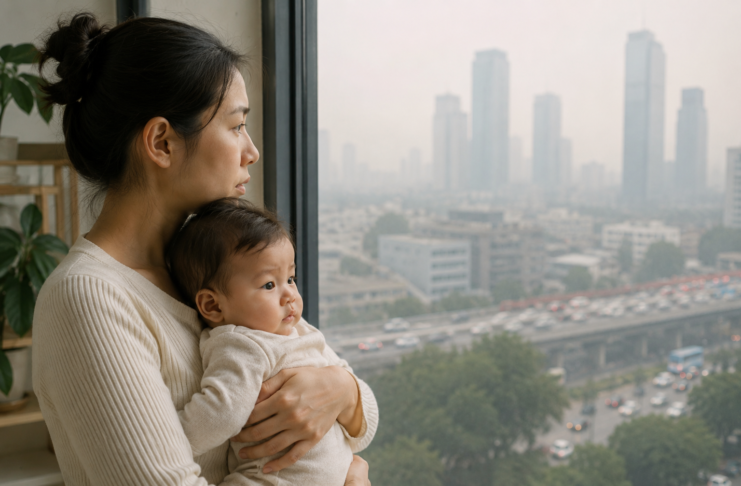
Why early exposure to dirty air increases atopic dermatitis risk in young children—and what parents can do about it.
KEY STATISTICS
- Children exposed to higher air pollution levels in infancy show increased rates of atopic dermatitis diagnosis by preschool age.
- The risk appears tied to how pollution affects the skin barrier and immune system during critical early development.
- Environmental interventions during the first months of life may help reduce this risk, though prevention remains the strongest approach.
You may not realize that the air your infant breathes could influence whether they develop eczema by age three or four. Recent epidemiological research published in *Epidemiology* has identified a measurable connection between air pollution exposure in infancy and the onset of atopic dermatitis—one of the most common skin conditions in young children. If you live in an urban area, near traffic, or in a region with seasonal air quality challenges, understanding this link matters for your family’s long-term health strategy.
How Pollution Affects Skin Development
Atopic dermatitis results from a combination of genetic predisposition and environmental triggers that compromise the skin’s protective barrier. Air pollution doesn’t cause eczema in isolation, but emerging evidence suggests pollutants may accelerate or amplify the condition in vulnerable infants. The mechanism involves both direct effects on skin cells and indirect effects on immune tolerance.
- Particulate matter and chemical pollutants penetrate infant skin more easily due to thinner, less-developed barrier function.
- Pollution-driven inflammation can dysregulate immune tolerance, pushing the immune system toward allergic responses rather than calm adaptation.
- Repeated early exposure may prime the skin for chronic inflammation, making atopic dermatitis more likely to persist into childhood.
- The first six to twelve months of life represent a critical window when the skin barrier and immune system establish their baseline response patterns.
Why Infants Face Greater Risk
Infants and very young children are uniquely vulnerable because their skin barrier is still maturing and their immune systems have not yet developed full tolerance to environmental exposures. The preschool period—ages one to five—is when eczema typically becomes clinically apparent, but the damage may have begun much earlier. Early-life pollution exposure appears to shift the odds significantly in children genetically predisposed to atopic disease.
- Infant skin has lower lipid content and higher transepidermal water loss, making it more permeable to pollutants and allergens.
- The immune system at birth is still establishing tolerance patterns; early pollutant exposure can skew this toward allergic sensitization.
- Genetic susceptibility becomes clinically apparent during ages two to four, but environmental risk factors laid the groundwork in infancy.
- Children in highly polluted areas show earlier and more severe eczema onset than those in cleaner air environments.
Signs Your Child May Be Affected
- Dry, itchy patches on cheeks, hands, or skin folds appearing between three months and two years of age.
- Recurrent skin irritation or rashes that worsen after exposure to known pollutants or during high air quality alert days.
- Sleep disruption caused by nighttime itching, suggesting systemic inflammation rather than simple irritant contact.
- Sensitivity to multiple triggers (soaps, fabrics, sweat, cold) developing progressively in the first year of life.
- Family history of eczema, asthma, or allergies combined with early skin symptoms in a child living in high-pollution areas.
- Flare-ups or worsening of existing mild dermatitis on days when outdoor air quality drops significantly.
Practical Steps to Reduce Risk
While you cannot eliminate air pollution exposure entirely, reducing your family’s burden during critical periods can lower inflammation risk. The goal is not to create a sterile environment but to minimize unnecessary inhalation of particulates during infancy and early childhood. Practical steps focus on timing outdoor exposure, improving indoor air quality, and supporting the skin barrier.
- Check air quality forecasts daily and keep infants indoors during poor or hazardous air days, especially traffic-heavy hours (7–9 a.m., 4–6 p.m.).
- Use HEPA filters in your home’s main living areas to capture particulate matter; change filters monthly during high-pollution seasons.
- Bathe your infant in lukewarm water with fragrance-free cleansers and apply emollient moisturizers immediately after bathing to strengthen barrier function.
- Dress your child in soft, breathable fabrics and wash new clothes before wearing to reduce synthetic irritants and chemical residues.
Five Actions to Start Today
- Download a real-time air quality app (AirNow, BreezoMeter, or local equivalent) and set alerts for days when AQI exceeds 100.
- Have your home’s HVAC system inspected and replace standard filters with HEPA-rated alternatives if your child is under two and you live near traffic or industry.
- Establish a twice-daily skin care routine: gentle cleanse and immediate moisturize within three minutes of bathing for all infants.
- If your family has a history of atopic disease, discuss preventive skin care and environmental monitoring with your pediatrician at the six-month visit.
- Keep a symptom diary linking skin flare-ups to air quality, weather, and other triggers to identify your child’s personal risk pattern.
Parental Stress and Immune Priming
Sleep and stress in parents often get overlooked, but they directly influence a child’s immune tolerance and skin health. When parents are stressed or sleep-deprived, they are less able to maintain consistent skin care routines, and parental stress hormones may subtly affect the child’s own regulatory systems. Prioritizing your own rest and mental health is part of the environmental intervention for your child.
- Chronic parental stress increases cortisol exposure in shared environments, which can dampen your infant’s developing immune tolerance.
- Inconsistent skin care routines driven by fatigue allow the barrier to weaken; aim for automated twice-daily cleanse-and-moisturize habits.
- Adequate parental sleep (seven or more hours) supports sustained attention to preventive measures and reduces accident-driven skin irritation.
- Regular stress-management practices (short walks, meditation, social support) indirectly protect your child by strengthening your capacity for consistent care.
Bottom Line
Air pollution in infancy appears to increase the risk of atopic dermatitis by preschool age through both direct effects on the developing skin barrier and immune tolerance shifts. While you cannot control outdoor air quality, you can meaningfully reduce your child’s exposure during vulnerable windows, maintain a robust skin care routine, and monitor for early signs. The evidence suggests that attention to these modifiable factors—particularly in the first year of life—may help prevent or delay the onset of eczema in genetically susceptible children.
Always consult a qualified healthcare provider before making changes to your health routine.
Live Long Daily — always consult a qualified healthcare provider before making changes to your health routine.
Sources
- Air Pollution Exposure in Infancy and Incidence of Atopic Dermatitis in Preschool-Aged Children — Epidemiology (Cambridge, Mass.)
- General guidance on atopic dermatitis in children — Mayo Clinic
- Air quality and respiratory health in infants — CDC

