
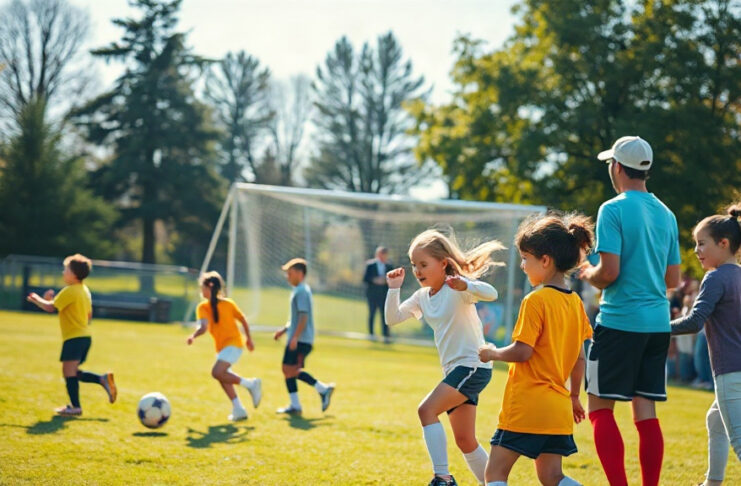
What urban families are really seeking when they enroll children in competitive training programs
KEY STATISTICS
- Urban families increasingly view youth sports as a pathway to social mobility and personal development, not just athletic skill.
- Parents aged 35–45 often project their own achievement values onto children’s sports participation without examining the real health and wellness outcomes.
- Commercial training settings in competitive environments shape how children experience movement, often emphasizing performance metrics over intrinsic enjoyment.
You’ve enrolled your child in the best soccer academy in town, paid the fees, and arranged your schedule around practice. But have you stopped to ask yourself why? A new qualitative study examining parenting patterns in urban China reveals something many of us don’t want to admit: we often push our kids into intensive sports training not for their health, but to fulfill parental aspirations, social expectations, and beliefs about what makes a child successful.
Understanding these hidden motivations isn’t about guilt—it’s about making choices that actually serve your child’s wellbeing.
The Psychology of Parental Sports Choices
When parents enroll children in commercial youth sports programs, they bring a complex web of personal values, cultural beliefs, and unexamined assumptions about what sports should accomplish. Researchers studying these patterns in urban training settings found that parental motivation shapes not just how much time children spend in sports, but how they experience movement, competition, and their own bodies.
- Parents often unconsciously transfer their own unfulfilled ambitions onto their children’s athletic pursuits.
- Commercial training environments amplify outcome-focused thinking, where parental ‘investment’ becomes tied to visible achievement and ranking.
- Children internalize parental motivations, learning to value sports for external validation rather than intrinsic satisfaction or health.
- Family structure, socioeconomic status, and cultural background all silently influence what parents believe sports should accomplish for their child.
Why Your Age Group Drives This Pattern
Parents in their late 30s and 40s are the primary decision-makers for youth sports enrollment. This age group often carries its own complicated relationship with achievement, physical activity, and parental expectations—sometimes dating back decades.
- Adults 35–45 grew up in eras where achievement and competition were heavily emphasized, shaping unconscious beliefs about childhood.
- This cohort often has the disposable income to afford expensive training programs, making commercial sports more accessible and tempting.
- Peak career and family pressures can intensify the desire to ‘optimize’ children’s development, including through structured sports.
- Parents in this age group may also harbor regrets about their own childhood opportunities, unconsciously compensating through their children’s activities.
Signs You May Be Driven by Hidden Motivations
- Your child expresses anxiety or dread about practice, not because of the activity itself but because they fear disappointing you.
- You find yourself focusing primarily on your child’s rankings, scores, or team placement rather than their enjoyment or skill growth.
- You regularly sacrifice family time, sleep, or your own health to accommodate your child’s training schedule.
- Your child plays multiple competitive sports simultaneously with minimal rest, driven more by your expectation than their request.
- You feel defensive or competitive when other parents’ children achieve recognition, viewing it as a reflection on your parenting.
- Your child has expressed wanting to quit, but you’ve encouraged them to ‘push through’ or ‘see the season out.’
Recalibrating Your Approach to Youth Sports
Reframing how you think about youth sports requires honest reflection about what you’re actually hoping to achieve—and whether that aligns with your child’s genuine wellbeing. The shift isn’t about abandoning sports; it’s about choosing participation styles and intensities that match your child’s intrinsic motivation.
- Ask your child what they genuinely enjoy about their sport, separate from your own hopes for them.
- Prioritize recreational or lower-intensity options where skill development happens without the pressure-cooker environment of commercial training.
- Set boundaries on time and money invested in youth sports so they remain one part of childhood, not the defining feature.
- Model healthy attitudes toward your own physical activity and achievement, showing your child that self-worth isn’t tied to external success.
Your Action Plan Starting Today
- Have a private conversation with your child about what aspects of their sport they genuinely like versus what they do to please you.
- Review your child’s current sports schedule and commit to reducing it by at least 25% if it’s consuming family time or their free play.
- Shift how you talk about their sports: focus on effort, enjoyment, and learning rather than outcomes, rankings, or comparisons to peers.
- If cost is significant, evaluate whether the commercial program genuinely offers better skill development than community-based alternatives.
- Schedule regular check-ins with yourself about your own motivations, perhaps journaling about what you hope sports will provide your child.
The Business of Parental Pressure
One widely overlooked factor is how commercial youth sports settings deliberately create competitive hierarchies and performance metrics that activate parental achievement anxiety. Understanding the business model behind these programs—and how they market status and advancement to parents—helps you see through the pressure.
- Commercial training facilities profit from parental anxiety about competition and advancement, marketing ‘elite’ tiers and exclusive access.
- Ranking systems, team selection processes, and advancement pathways are designed to keep parents engaged and enrolled, not necessarily to optimize child development.
- Marketing materials often appeal to parents’ fears about their child ‘falling behind’ or missing opportunities, rather than highlighting genuine health benefits.
- Awareness of these tactics helps you distinguish between genuine skill development opportunities and programs built primarily to extract ongoing parental investment.
Bottom Line
The children thriving most in youth sports aren’t necessarily those in the most expensive programs or competitive environments—they’re the ones whose parents have examined their own motivations and chosen activities that match their child’s intrinsic interests. If you’re in your late 30s or 40s, recognize that your assumptions about what sports should accomplish for your child often reflect your own history, not their needs. Honest reflection and modest course correction now can preserve both your child’s genuine love of movement and your family’s wellbeing.
Live Long Daily — always consult a qualified healthcare provider before making changes to your health routine.
Sources
- Jiwa-style parenting and the familial turn of youth sport consumption: a qualitative case study of a commercial training setting in urban China — Frontiers in Sports and Active Living
- General guidance on child health and development — CDC

