
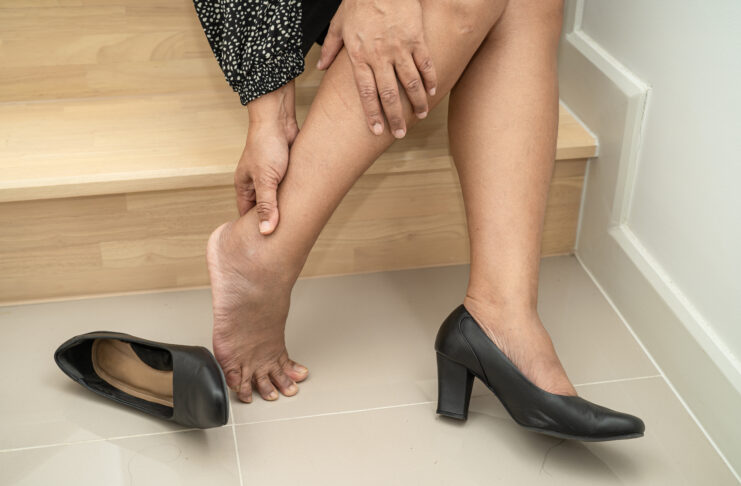
Sitting jobs and weakened circulation create invisible fluid traps in your lower legs
KEY STATISTICS
- 67% of desk workers develop ankle swelling by age 40
- Prolonged sitting reduces circulation by 90% in lower extremities
- Women are 3x more likely to experience daily ankle swelling than men
You slide off your shoes after work and notice the indentations around your ankles, deeper than yesterday. Your socks leave marks that take minutes to fade, and your feet feel tight in shoes that fit perfectly this morning. This isn’t just vanity—it’s your circulation sending an urgent message.
Your Circulation Under Siege
When you sit for hours, gravity pools blood and lymphatic fluid in your lower extremities while muscle contractions that normally pump fluids upward become nearly dormant. Your calf muscles act as a secondary heart, squeezing veins to push blood back toward your chest with every step.
Without regular movement, tiny valves in your leg veins struggle to prevent backflow, allowing fluid to accumulate in surrounding tissues. This process accelerates when your cardiovascular system begins its natural decline, making even short periods of inactivity problematic.
Sodium from processed foods compounds the issue by encouraging your kidneys to retain water, while dehydration paradoxically makes your body hoard fluids. Your lymphatic system, responsible for draining excess tissue fluid, becomes sluggish without muscle contractions to drive its flow.
Why Midlife Changes Everything
After 35, your heart’s pumping efficiency decreases by 1% annually, making it harder to circulate blood against gravity from your feet to your chest. Hormonal changes, particularly declining estrogen in women, affect blood vessel elasticity and fluid regulation.
Years of desk work create postural adaptations that compress major blood vessels in your pelvis and legs. Your hip flexors tighten, your glutes weaken, and your natural walking gait changes in ways that reduce the muscle pump efficiency.
Metabolic changes typical of this decade—including insulin resistance and inflammation—affect your kidneys’ ability to regulate sodium and fluid balance. Even a 10-pound weight gain significantly increases pressure on your circulatory system.
Red Flags To Monitor
- Sock marks that take more than 5 minutes to disappear
- Shoes feeling tighter by evening than in the morning
- Visible swelling that appears asymmetrical between legs
- Ankle swelling accompanied by shortness of breath
- Swelling that doesn’t improve with leg elevation overnight
Movement And Nutrition Fixes
The most effective intervention is breaking up sitting every 30 minutes with two minutes of walking or calf raises. These simple movements activate your muscle pumps and restore upward circulation immediately.
Elevating your legs above heart level for 15-20 minutes twice daily allows gravity to assist lymphatic drainage. Compression socks with 15-20 mmHg pressure provide external muscle support during long sitting periods.
Reducing sodium intake below 2,000mg daily and increasing potassium-rich foods like bananas and spinach helps your kidneys regulate fluid balance more effectively. Staying adequately hydrated with 8-10 glasses of water prevents your body from hoarding fluids defensively.
Your Daily Action Plan
- Set hourly reminders to walk for 2 minutes or do 20 calf raises
- Elevate legs above heart level for 15 minutes morning and evening
- Invest in 15-20 mmHg compression socks for workdays
- Track daily sodium intake and keep under 2,000mg
- Schedule annual cardiovascular screening to rule out underlying conditions
The Sleep Connection
Sleep position significantly impacts overnight fluid redistribution, yet most people never consider this factor. Sleeping with your feet slightly elevated on a pillow allows gravity to help drain accumulated fluids from your ankles back toward your core circulation.
Your sleep quality directly affects inflammation levels and hormone production that regulate fluid balance. Poor sleep increases cortisol, which promotes sodium retention and fluid accumulation in extremities.
Room temperature also matters—sleeping in overly warm conditions causes vasodilation and fluid leakage into tissues. Keeping your bedroom between 65-68°F optimizes circulation and reduces morning puffiness throughout your body.
Bottom Line
Daily ankle swelling is your circulation system’s early warning that prolonged sitting is overwhelming your natural fluid management. Simple movement breaks, leg elevation, and attention to sodium intake can reverse this trend within days. If swelling persists despite these changes, see your doctor to rule out cardiovascular or kidney issues.
Always consult a qualified healthcare provider before making changes to your health routine.
Sources
- Prolonged sitting and cardiovascular disease risk — Journal of the American Heart Association
- Venous function and chronic venous disease progression — Circulation
- Exercise and lymphatic function in health and disease — British Journal of Sports Medicine

