
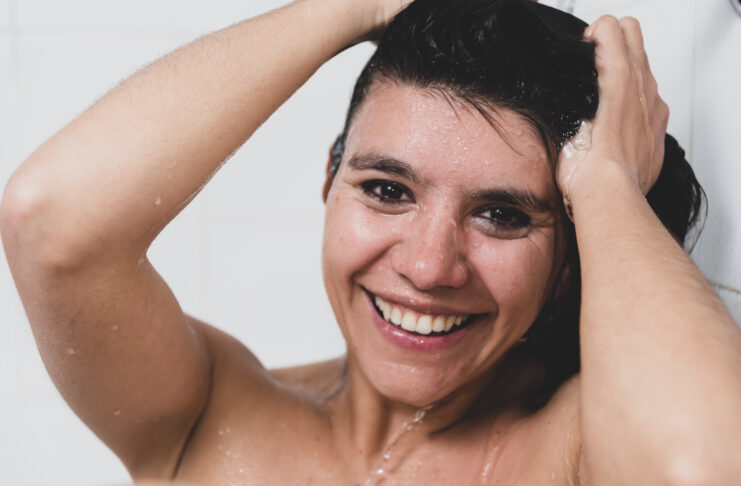
Common hair products migrate to facial skin and clog pores along your hairline.
KEY STATISTICS
- 73% of adults experience hairline acne caused by hair product ingredients
- Sulfates can remain on skin for up to 8 hours after shampooing
- Adults over 35 are 2.5x more likely to develop product-induced breakouts
You’ve tried every face wash and acne treatment, but those stubborn bumps along your hairline keep returning. The culprit might be sitting in your shower caddy right now. Your shampoo and conditioner could be the hidden cause of your persistent forehead breakouts.
How Products Clog Pores
Sulfates like sodium lauryl sulfate create the rich lather in most shampoos, but they’re also powerful detergents that strip natural oils. When these chemicals rinse down your face during shampooing, they remove your skin’s protective barrier and irritate pores. The damaged skin becomes more susceptible to bacterial invasion and inflammation.
Silicones in conditioners form a coating on hair to add shine and reduce frizz. These same silicones transfer to your pillowcase, hands, and forehead throughout the day. They create an occlusive layer that traps dead skin cells, oil, and bacteria inside your pores, leading to comedones and inflammatory acne.
Why Adults Are Vulnerable
After 35, your skin’s natural cell turnover rate slows significantly, taking 45-60 days instead of the typical 28-day cycle. This means dead skin cells linger longer on your face, making it easier for hair product residues to combine with these cells and form clogs. Your skin also produces less natural oil, paradoxically making it more sensitive to harsh sulfates.
Hormonal changes during this life stage affect sebum composition, making your pores more reactive to external irritants. The combination of slower healing, increased sensitivity, and altered oil production creates the perfect storm for product-induced breakouts that persist longer than they did in your twenties.
Telltale Signs to Recognize
- Small bumps or whiteheads concentrated along your hairline and temples
- Breakouts that worsen after washing your hair or trying new products
- Acne that appears primarily on your forehead but rarely on your cheeks or chin
- Persistent skin irritation or redness where hair touches your face
- Breakouts that don’t respond to traditional acne treatments or face washes
Product Swaps That Work
Switch to sulfate-free shampoos that use gentler cleansing agents like coco-glucoside or decyl glucoside. These alternatives clean effectively without stripping your skin’s protective barrier when they rinse down your face. Look for products labeled as “sulfate-free” or “gentle cleansing” on the bottle.
Choose silicone-free conditioners or apply conditioner only from mid-length to ends, avoiding the roots near your scalp. When rinsing, tilt your head back to minimize product contact with your face. Always wash your face after shampooing to remove any residual product that may have dripped down.
Change your pillowcase twice weekly, as hair products transfer to fabric and then back to your skin during sleep. Consider using a silk or bamboo pillowcase, which is less likely to harbor product buildup and bacteria than cotton.
Your Clear Skin Checklist
- Read ingredient lists and avoid products containing sodium lauryl sulfate, sodium laureth sulfate, or dimethicone
- Wash your face with a gentle cleanser immediately after shampooing and conditioning
- Apply conditioner only to hair lengths, keeping it away from roots and scalp area
- Use a clean towel for your face that’s separate from your hair towel
- Schedule a two-week trial period with sulfate-free products to assess improvement
The Styling Product Factor
Your styling routine plays a crucial role in preventing product-induced breakouts. Hair oils, leave-in treatments, and styling creams containing heavy ingredients can migrate to your skin throughout the day. Even products applied hours earlier can transfer when you touch your hair and then your face.
Pay attention to where you apply styling products and how often your hair touches your forehead. Pulling hair back during workouts or while sleeping can prevent product transfer. Consider using a headband or hair tie during exercise to keep treated hair away from sweaty skin.
The timing of your hair washing routine matters more than you might think. Washing your hair at night allows product residues to settle into your pillowcase, while morning washing can leave active ingredients on your skin all day.
Bottom Line
Your skincare routine might be flawless, but if you’re not considering your hair products, you could be fighting a losing battle against forehead acne. Making simple swaps to sulfate-free shampoos and silicone-free conditioners can eliminate the root cause of persistent hairline breakouts. Small changes to your washing routine and product application can deliver clearer skin within weeks.
Always consult a qualified healthcare provider before making changes to your health routine.
Sources
- Contact dermatitis and cosmetic ingredients — Journal of the American Academy of Dermatology
- Hair care products and facial acne — British Journal of Dermatology
- Sulfates in personal care products and skin irritation — Contact Dermatitis Journal

