
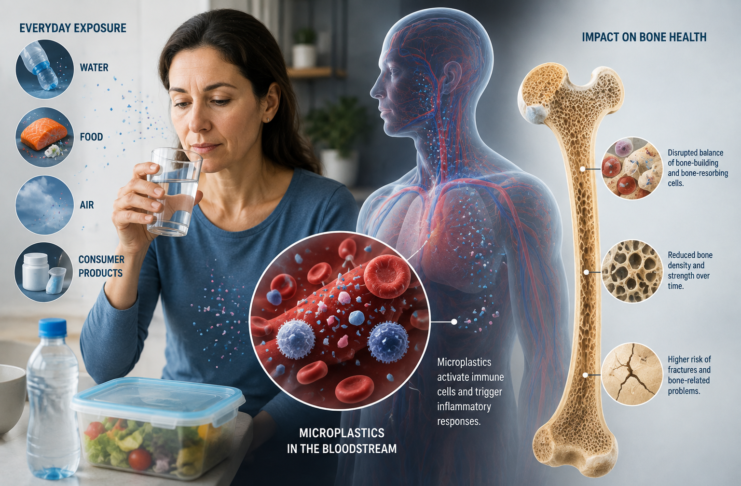
Micro and nanoplastics may trigger inflammation and disrupt bone remodeling—here’s what you need to know.
KEY STATISTICS
- Micro and nanoplastics can cross into the bloodstream and circulate systemically throughout the body.
- These particles trigger inflammatory immune responses that may interfere with normal bone cell turnover.
- Adults aged 35–45 face cumulative exposure risk during peak bone-maintenance years.
You probably don’t think about plastic when you think about bone health. But recent research suggests that the microplastics and nanoplastics you’re exposed to daily—from food, water, air, and consumer products—don’t just pass through your body harmlessly. Some reach your bloodstream, activate your immune system, and may disrupt the delicate process your bones use to stay strong.
For adults in your age group, this happens during a critical window when bone density is still being maintained but beginning to decline. Understanding this emerging risk matters now, before it becomes harder to reverse.
The science: how plastics enter bone
Micro and nanoplastics are fragments smaller than 5 millimeters—many invisible to the naked eye. Recent research shows that these particles can cross from your gut into your bloodstream, a process called translocation. Once circulating, they trigger immune cells to mount an inflammatory response, which can interfere with bone remodeling—the ongoing process your body uses to repair and strengthen bone.
- Nanoplastics (under 0.1 micrometers) cross the intestinal barrier and enter systemic circulation.
- Circulating particles activate immune cells, generating inflammatory cytokines that disrupt bone cell balance.
- Chronic inflammation suppresses osteoblasts (bone-building cells) while activating osteoclasts (bone-resorbing cells).
- Sustained imbalance between bone breakdown and formation can weaken bone structure over time.
Why your age group is at risk
Your 35–45 age group occupies a unique biological window. Bone density typically peaks around age 30, then gradually declines. During this decade, your bones are still resilient but entering a phase where maintenance becomes critical—especially before women approach menopause, when bone loss accelerates.
Cumulative plastic exposure compounds the problem.
- Peak bone density has passed; your body now prioritizes maintenance over new bone formation.
- Decades of plastic accumulation means your total body burden is higher than younger adults.
- Chronic inflammatory response from particle exposure compounds age-related bone remodeling slowdown.
- For women, this decade precedes hormonal shifts that further accelerate bone loss.
Warning signs to watch for
- Unexplained joint or bone pain, especially in knees, hips, or lower back.
- Increased muscle fatigue or weakness during activities you once found easy.
- Poor wound healing or slower recovery from minor injuries or exercise.
- Changes in posture or a subtle loss of height over 1–2 years.
- Elevated inflammatory markers (C-reactive protein) on routine blood work.
- Digestive changes including bloating, altered bowel habits, or food sensitivities.
- Persistent low energy despite adequate sleep and exercise.
What actually helps: realistic steps
There is no pill to remove plastics already in your body, but you can reduce ongoing exposure and support your immune and bone systems. The goal is both harm reduction and active protection—cutting new sources while strengthening the biological systems that resist plastic-related inflammation.
- Minimize single-use plastics: choose glass, stainless steel, or ceramic for food and beverages.
- Eat a high-antioxidant, anti-inflammatory diet rich in leafy greens, fatty fish, berries, and legumes.
- Ensure adequate calcium and vitamin D intake to support active bone maintenance.
- Regular weight-bearing exercise (walking, strength training, dancing) signals your bones to rebuild.
Action plan checklist
- Audit your kitchen: replace plastic food storage containers and water bottles this week.
- Request a baseline bone density scan (DEXA) during your next physical if you haven’t had one.
- Add one serving of fatty fish (salmon, mackerel) per week for omega-3 anti-inflammatory support.
- Start or maintain 150 minutes of moderate weight-bearing activity weekly (spread across days).
- Track inflammatory markers: ask your doctor to include C-reactive protein in your next blood panel.
- Reduce processed and packaged foods, which often have higher plastic contact and inflammatory ingredients.
- Schedule follow-up with your provider in 6 months to reassess bone and inflammatory status.
The overlooked factor: sleep and stress
Sleep and stress directly influence both immune inflammation and bone remodeling. Poor sleep amplifies inflammatory responses to foreign particles; chronic stress elevates cortisol, which accelerates bone loss. These two factors may amplify the damage that circulating nanoplastics cause.
- Sleep deprivation (under 7 hours nightly) increases inflammatory markers and reduces bone repair capacity.
- Chronic stress elevates cortisol, which directly suppresses osteoblast activity and accelerates resorption.
- Combined stress + plastic exposure may create a compounding inflammatory state that weakens bones faster.
- Prioritize 7–9 hours sleep and add stress-reduction practice (meditation, walking, or yoga) 3–4× weekly.
Bottom Line
Micro and nanoplastics are now an unavoidable part of modern life, but they are not irreversible. By reducing new exposure, eating to reduce inflammation, staying physically active, and protecting your sleep and stress levels, you can mitigate the impact during this critical decade for bone health. The evidence is still emerging, but the protective steps—better food, less plastic, more movement—serve your overall health regardless.
Act now to set yourself up for stronger bones in the decades ahead.
Live Long Daily — always consult a qualified healthcare provider before making changes to your health routine.
Sources
- Osteoimmunological impacts of micro/nanoplastics: systemic translocation, inflammatory responses, and bone remodeling disruption — Frontiers in Immunology
- General guidance on bone health and aging — Mayo Clinic
- Environmental health and inflammatory markers — CDC

