
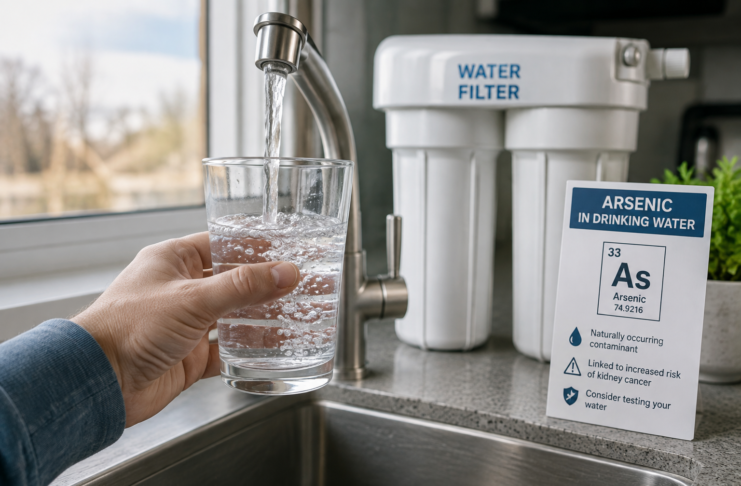
*New research shows even low arsenic levels in drinking water raise kidney cancer risk—and most people don’t know they’re exposed*
KEY STATISTICS
- Arsenic is a naturally occurring element found in groundwater supplies across the United States, affecting millions of people who rely on wells or municipal systems with limited arsenic removal.
- Kidney cancer incidence has been rising in adults aged 35 to 45, with environmental toxin exposure now recognized as a contributing factor alongside traditional risk factors.
- Even arsenic concentrations below the EPA’s current safety standard of 10 parts per billion have been linked to measurable increases in kidney cancer risk in recent studies.
You probably don’t think about arsenic when you pour a glass of water—but a growing body of research suggests you should. A recent study has found that exposure to even low levels of arsenic in drinking water raises the risk of kidney cancer, even at concentrations currently considered safe by U. S.
regulations. For adults in their 40s and 50s who have been drinking contaminated water for decades, this discovery carries real weight. Understanding where arsenic comes from, how it damages your kidneys, and what you can do today could reshape your long-term health strategy.
How Arsenic Injures Kidney Cells
Arsenic damages kidney tissue through a process of cellular inflammation and genetic injury that accumulates over years of exposure. The metal infiltrates the bloodstream through drinking water and settles in the kidneys, where it disrupts normal cellular function and triggers oxidative stress.
- Arsenic binds to sulfhydryl groups in proteins, disrupting normal enzyme function and causing cell-level damage that builds over decades of exposure.
- Chronic low-dose exposure triggers persistent inflammation in kidney tissue, creating an environment where abnormal cells are more likely to develop into tumors.
- The metal interferes with DNA repair mechanisms, meaning cells are less able to fix damage and more prone to malignant transformation.
- Kidneys cannot excrete arsenic efficiently, so it accumulates in tissue rather than passing through the body, amplifying long-term risk.
Why Your Age Bracket Matters
Adults aged 35 to 45 face a particular vulnerability because many have spent 20 to 30 years consuming arsenic-contaminated water without knowing it. Your kidneys’ cumulative exposure matters more than a single measurement at any point in time.
- People in their 40s have typically had longer exposure to contaminated water than younger adults, allowing arsenic to accumulate in kidney tissue.
- Kidney function naturally declines with age, making older tissue more vulnerable to toxic injury and less able to repair cellular damage.
- This age group often grew up in areas with unregulated groundwater or municipal systems before modern arsenic removal became standard practice.
Watch for These Early Signals
- Blood in urine or unusually dark urine—may signal kidney injury or tumor presence.
- Persistent lower back or flank pain unrelated to injury or strain—a classic early kidney cancer symptom.
- Unexplained fatigue or weakness that doesn’t improve with rest—can indicate kidney dysfunction or anemia from blood loss.
- High blood pressure that develops suddenly or becomes harder to control—often an early sign of kidney damage.
- Swelling in ankles, feet, or around the eyes—suggests kidneys aren’t filtering fluid properly.
- Loss of appetite or unintended weight loss—can accompany kidney disease or cancer.
What Actually Protects Your Kidneys
You cannot reverse past arsenic exposure, but you can prevent future harm and support your kidneys’ health through targeted dietary choices and healthy habits. What matters now is stopping new exposure and giving your kidneys the tools they need to function well.
- Install a certified point-of-use water filter (reverse osmosis or activated alumina) that removes arsenic—regular carbon filters do not reduce arsenic effectively.
- Eat antioxidant-rich foods like leafy greens, berries, and fatty fish to counter oxidative stress that arsenic creates in kidney tissue.
- Limit sodium intake to reduce kidney workload and blood pressure, which compounds arsenic-related kidney damage over time.
- Stay consistently hydrated with filtered water to support kidney filtration and help flush out accumulated toxins more efficiently.
Your Action Plan Starting Today
- Test your drinking water for arsenic—contact your local health department for approved testing labs or use an EPA-certified home test kit.
- If you use a well, have it tested by a certified laboratory; municipal water reports are available online but don’t guarantee your home’s tap water.
- Install a point-of-use arsenic filter on your kitchen tap or whole-house system if testing shows levels above 5 ppb (even below the 10 ppb EPA standard).
- Schedule a baseline kidney function test (serum creatinine and estimated GFR) with your doctor to establish your kidney health status.
- Discuss arsenic exposure risk with your healthcare provider and ask about screening intervals for kidney cancer if you live in a high-arsenic area.
- Track any warning signs (blood in urine, persistent flank pain, unexplained fatigue) and report them to your doctor promptly.
- Review your medications—some can increase kidney stress when combined with arsenic exposure, so ask your pharmacist for a safety check.
Sleep and Stress Shape Kidney Health
Sleep quality and stress management directly affect kidney function and your body’s ability to process and eliminate toxins. Poor sleep weakens immune surveillance, making it harder for your body to detect and eliminate abnormal cells before they become cancerous.
- Chronic sleep deprivation impairs the immune system’s ability to detect early-stage kidney cancer cells, making consistent 7-9 hours nightly essential.
- Prolonged stress elevates cortisol, which reduces kidney blood flow and compounds the tissue damage that arsenic is already causing.
- Regular physical activity (150 minutes of moderate exercise weekly) improves kidney filtration and reduces inflammation—counteracting arsenic’s inflammatory effects.
- Mindfulness practices and stress reduction lower blood pressure naturally, protecting kidney tissue from the dual injury of arsenic exposure plus hypertension.
Bottom Line
Arsenic in drinking water is a silent, long-term threat that most adults don’t actively manage—but you can starting today. Testing your water, installing appropriate filtration, and supporting your kidneys through diet and stress management are practical steps that reduce your cancer risk without requiring dramatic life changes. At 35 to 45, you still have time to prevent damage that could develop into serious disease in your 50s and 60s.
Knowledge about where your water comes from and what it contains is the first step toward protecting yourself.
Live Long Daily — always consult a qualified healthcare provider before making changes to your health routine.
Sources
- Study: Even Low Levels of Arsenic in Drinking Water Raise Kidney Cancer Risk — Texas A&M University News
- General guidance on arsenic and drinking water — CDC
- Kidney cancer risk factors and prevention — Mayo Clinic

