
Insecticide resistance is rising fast — here’s what actually works now.
KEY STATISTICS
- Over 98% of bed bug populations tested in the U.S. show resistance to at least one common class of pesticide, according to CDC entomology reports.
- Bed bug infestations have increased by more than 500% in the past two decades across North American cities, per the National Pest Management Association.
- A single female bed bug can lay up to 500 eggs in her lifetime, meaning one missed insect can restart a full infestation within weeks.
You followed the instructions. You bought the spray, treated the mattress, bagged the linens — and two weeks later, they were back. If that sounds familiar, you are not doing it wrong; the bugs have simply evolved faster than the products designed to kill them.
Bed bug resistance to common insecticides is now one of the most pressing urban pest-control challenges facing households across North America and Europe.
How Resistance Actually Works
Bed bugs develop resistance through a mechanism researchers call target-site insensitivity, where genetic mutations change the nerve receptors that pyrethroids — the most widely used insecticide class — are designed to attack. When the chemical can no longer bind effectively to the receptor, it simply does not kill the insect, even at high concentrations.
This resistance is not hypothetical. Studies published in the Journal of Medical Entomology have documented that field-collected bed bug populations exposed to permethrin, a common pyrethroid, survived at rates exceeding 95% in controlled laboratory conditions. The bugs are not becoming stronger in a general sense — they are becoming specifically immune to the tools most consumers and even some pest control operators still rely on.
Resistance spreads rapidly through populations because it is heritable. Survivors of a pesticide treatment pass their resistant genetics to offspring, meaning each generation is more difficult to eliminate than the last. This evolutionary pressure, combined with global travel and dense urban housing, has created a near-perfect storm for infestation persistence.
Why This Age Group Struggles
Adults aged 35 to 45 face a particular vulnerability because this demographic is statistically among the most mobile — frequent business travel, hotel stays, and second-hand furniture purchases all represent high-risk exposure points. A single overnight in an infested hotel room is enough to carry bugs home in luggage, and most people do not notice until the infestation is already established.
Homeowners in this age group are also more likely to have children, pets, and complex household schedules that make rigorous, consistent treatment protocols harder to follow. Gaps in treatment — missing one laundry cycle or not sealing one furniture seam — give resistant survivors the window they need to rebuild.
There is also a psychological toll that tends to hit this age group hard. Managing a bed bug infestation while balancing careers and family is acutely stressful, and studies in the journal Parasites and Vectors have linked persistent infestations to clinically significant anxiety and sleep disruption in adults — compounding the physical effects of disrupted rest.
Warning Signs To Watch
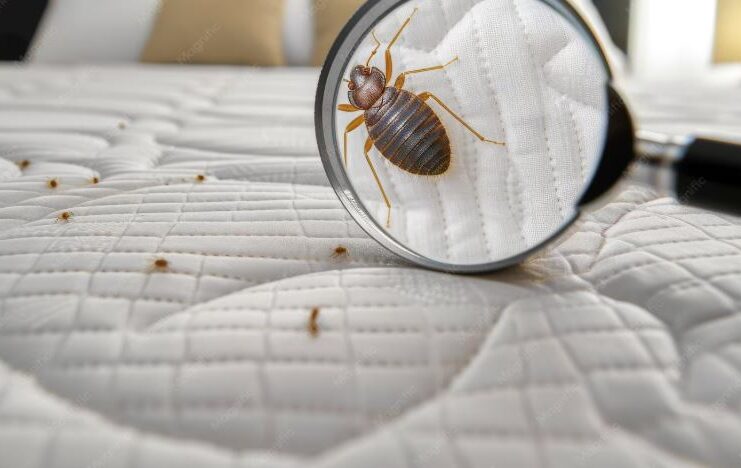
- Small rust-colored or dark brown stains on sheets, mattress seams, or pillowcases — this is bed bug excrement and a reliable early indicator
- Itchy, red welts appearing in clusters or lines on exposed skin after waking, commonly on arms, neck, shoulders, or legs
- A faint, musty, sweet odor near your bed or upholstered furniture — large infestations produce a detectable scent from their scent glands
- Tiny pale yellow shed skins or eggshells visible in mattress folds, box spring joints, or behind headboards
- Live bugs visible to the naked eye — flat, oval, reddish-brown insects roughly the size of an apple seed, especially active at night near sleeping areas
What Actually Eliminates Them
The most effective current strategy against resistant bed bugs is not a single spray — it is an integrated pest management approach that combines heat, physical barriers, and targeted chemical use. Heat treatment, where a licensed professional raises room temperatures to above 120°F (49°C), kills all life stages of bed bugs regardless of chemical resistance, and is currently considered the gold standard by the EPA.
For those managing early-stage infestations or working alongside professional treatment, mattress encasements are non-negotiable. These zippered covers trap any surviving bugs inside and prevent new ones from colonizing the mattress, cutting off one of their primary harborage sites entirely.
Laundering all bedding, clothing, and soft furnishings at high heat — at least 60°C or 140°F — and drying on high for 30 minutes kills both bugs and eggs. This is not optional maintenance; it is an active treatment step. Vacuuming seams, baseboards, and furniture joints regularly, then immediately sealing and disposing of the vacuum bag outside, further reduces population pressure between professional treatments.
Your Action Plan Checklist
- Book a licensed pest control professional who offers heat treatment or a combination approach — ask specifically whether they test for pyrethroid resistance before choosing a chemical protocol
- Purchase high-quality, fully encasing mattress and box spring protectors with zipper guards and seal them immediately after any treatment
- Launder all bedding, pillowcases, and nearby clothing at 60°C or above and dry on the highest heat setting for a minimum of 30 minutes after any suspected exposure
- When returning from travel, inspect luggage outdoors and store it in sealed plastic bags or a dedicated space away from sleeping areas — never place suitcases on the bed
- Install bed bug interceptor cups under all four bed legs to monitor for activity and physically prevent bugs from climbing onto the bed frame
The Clutter Factor Nobody Mentions
One factor most homeowners overlook entirely is the role of clutter in treatment failure. Bed bugs do not live only in beds — they colonize any dark, undisturbed space within 8 feet of where a person sleeps regularly, including piles of clothes, stacked books, loose electrical outlet covers, and the backs of picture frames.
A cluttered bedroom is essentially a network of protected harborage zones that shield resistant survivors from heat, vacuuming, and even professional chemical application. Decluttering before and during treatment is not about aesthetics — it is a direct intervention that significantly improves treatment success rates, according to guidance from the EPA’s integrated pest management framework.
The psychological dimension also deserves acknowledgment. The stigma around bed bugs causes many adults to delay reporting infestations to landlords or seeking professional help, allowing populations to grow exponentially. Early action, even if imperfect, consistently outperforms delayed but thorough responses — the biology simply does not wait for the perfect moment.
Bottom Line
Bed bugs have outpaced the chemicals once used to reliably eliminate them, and reaching for another can of spray is no longer a viable strategy on its own. The combination of professional heat treatment, physical barriers, disciplined laundering, and clutter reduction gives you a genuinely effective defense that resistance cannot overcome. Act early, act systematically, and do not let stigma delay the response your home and your sleep quality both deserve.
Always consult a qualified healthcare provider before making changes to your health routine.
Sources
- Pyrethroid Resistance in the Common Bed Bug: Mechanisms and Field Implications — Journal of Medical Entomology
- Integrated Pest Management for Bed Bugs in Residential Settings — U.S. Environmental Protection Agency
- Psychological Impact of Bed Bug Infestations on Urban Households — Parasites and Vectors
- Bed Bug Resurgence and Insecticide Resistance: A Public Health Perspective — CDC Environmental Health Reports
- National Bed Bug Summit: Findings and Recommendations — National Pest Management Association

