
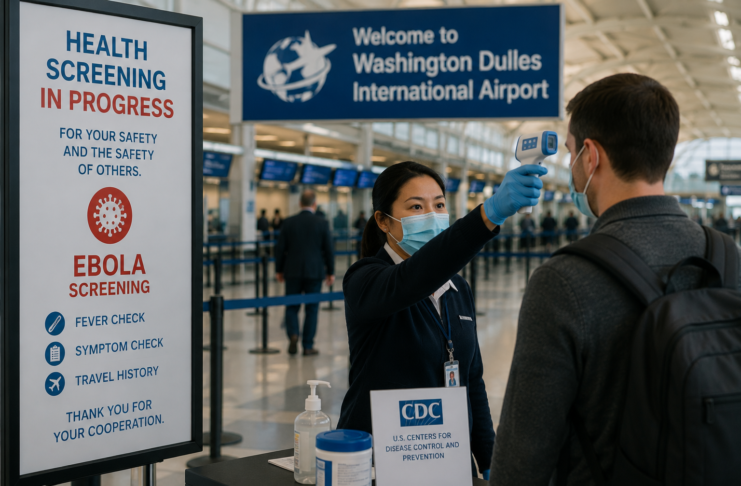
Enhanced screening at major U.S. hubs is changing how travelers are assessed for infectious disease risk—here’s what you need to know.
KEY STATISTICS
- Enhanced Ebola screening protocols have been implemented at Washington Dulles International Airport as part of expanded CDC disease monitoring efforts.
- Airport health screening focuses on travelers from regions with active disease transmission to identify potential cases before they spread.
- Adults aged 35 to 45 who travel frequently should understand current screening procedures and their role in community disease prevention.
If you’ve traveled through a major U. S. airport recently or plan to soon, you may have noticed new health screening measures in place.
Washington Dulles International Airport is now implementing enhanced Ebola screening—a practical step that reflects how the CDC responds to infectious disease threats in real time. Understanding what this screening involves, why it matters, and what it means for your health and travel plans can help you move through airports confidently and stay informed about disease prevention.
How Airport Screening Works
Ebola is a rare but serious viral infection spread through direct contact with blood or body fluids of infected people or animals. Airport screening aims to identify symptomatic travelers early and prevent disease transmission into the broader population. This is why screening focuses on recent travel history and observable symptoms rather than blanket testing.
- Screening identifies travelers from regions where Ebola transmission is active and asks about symptoms like fever, muscle pain, or weakness.
- Health screeners assess fever using temperature checks and visual observation; travelers with symptoms are referred for further evaluation.
- The CDC uses a risk-based approach—only travelers meeting specific criteria (travel history + symptoms) undergo additional assessment.
- Screening does not diagnose Ebola but rather flags individuals who need medical evaluation to rule out infection.
Why Travel Frequency Matters Now
Adults in midlife typically have higher rates of international business and leisure travel than younger adults, increasing their exposure to airport screening procedures. Your age group is also more likely to have existing health conditions that could complicate any illness, making early detection particularly relevant. Understanding screening protocols helps you navigate travel with awareness rather than anxiety.
- Adults 35–45 represent a high proportion of international business travelers, making airport screening experience more common for this group.
- Pre-existing conditions (hypertension, diabetes, heart disease) increase health risk if any infectious illness develops, making prevention awareness critical.
- This age group balances work travel with family obligations, so understanding screening helps manage travel schedules and health precautions.
- Familiarity with screening procedures reduces travel stress and allows you to plan more efficiently through airport health checkpoints.
Symptoms Requiring Medical Attention
- Fever (body temperature 38.3°C / 101°F or higher) appearing 2–10 days after travel to an affected region.
- Severe muscle or joint pain, headache, or weakness that develops suddenly after recent international travel.
- Unexplained bleeding or bruising, or blood in vomit or stool, even if appearing mild at first.
- Diarrhea, rash, or digestive symptoms combined with fever, especially if other travelers from the same region are ill.
- Any combination of fever and muscle pain that lasts more than a few days after travel—seek medical evaluation and mention your travel history.
Practical Prevention While Traveling
Preventing infection begins with understanding the actual transmission route and taking proportionate precautions. Since Ebola spreads through direct contact with blood or body fluids—not through air or casual contact—standard travel hygiene is your primary defense. Hand hygiene, wound protection, and awareness of your travel environment are practical steps within your control.
- Wash hands frequently with soap and water, especially after touching public surfaces, before eating, and after using restrooms.
- Avoid touching your face, especially in airports and on aircraft where respiratory illness spreads easily via droplets.
- Keep any cuts or scrapes covered during travel; use barrier protection if handling first aid supplies or assisting injured travelers.
- Monitor your health for 21 days after international travel; keep a simple symptom log if visiting regions with known infectious disease activity.
What to Do Before and After Travel
- Know your travel destinations: Check CDC travel advisories before departure to understand current disease activity in regions you’re visiting.
- Prepare documentation: Keep vaccine records and any required health certificates easily accessible for airport screening personnel.
- Plan extra time: Allow 15–20 minutes extra at airport check-in when screening protocols are in place; arrive earlier than usual.
- Communicate clearly: When asked about recent travel or symptoms during screening, provide honest, specific answers to help screeners assess your risk accurately.
- Follow up if needed: If you develop symptoms within 3 weeks of international travel, contact your doctor and mention your recent travel before arriving in person.
Managing Travel Anxiety Effectively
Anxiety about disease screening is common, but understanding the actual logistics can reduce stress significantly. Many travelers worry that a fever from an unrelated cold will trigger unnecessary quarantine or isolation. In reality, CDC screening distinguishes between travelers at genuine risk and those with minor symptoms, using geography and symptom timing as key filters.
- Screening is brief and routine at most airports; most travelers pass through without additional assessment or delay.
- A single symptom (like a cough) without relevant travel history typically does not trigger referral; screeners use multiple criteria to assess risk.
- If referred for further evaluation, this is a precautionary step, not a diagnosis—medical staff will rule out infection through brief assessment.
- Knowing the screening criteria in advance helps you distinguish genuine health concerns from normal travel stress and mild illness.
Bottom Line
Enhanced airport screening at major U. S. hubs represents a practical, evidence-based response to disease transmission risk.
For adults 35 to 45 who travel internationally, understanding these procedures—how they work, what they assess, and what your role is—transforms screening from a source of anxiety into a straightforward health safeguard. By staying informed about symptoms to watch for, practicing basic travel hygiene, and communicating clearly with screeners, you can travel confidently while supporting broader public health efforts. The screening process is designed to catch genuine risk early; knowing this allows you to focus on your health rather than the procedure itself.
Live Long Daily — always consult a qualified healthcare provider before making changes to your health routine.
Sources
- Enhanced Ebola Airport Screening Begins at Washington-Dulles International Airport — CDC — Online Newsroom
- Ebola virus disease — General information and prevention — CDC
- Infectious disease travel health guidance — CDC

